
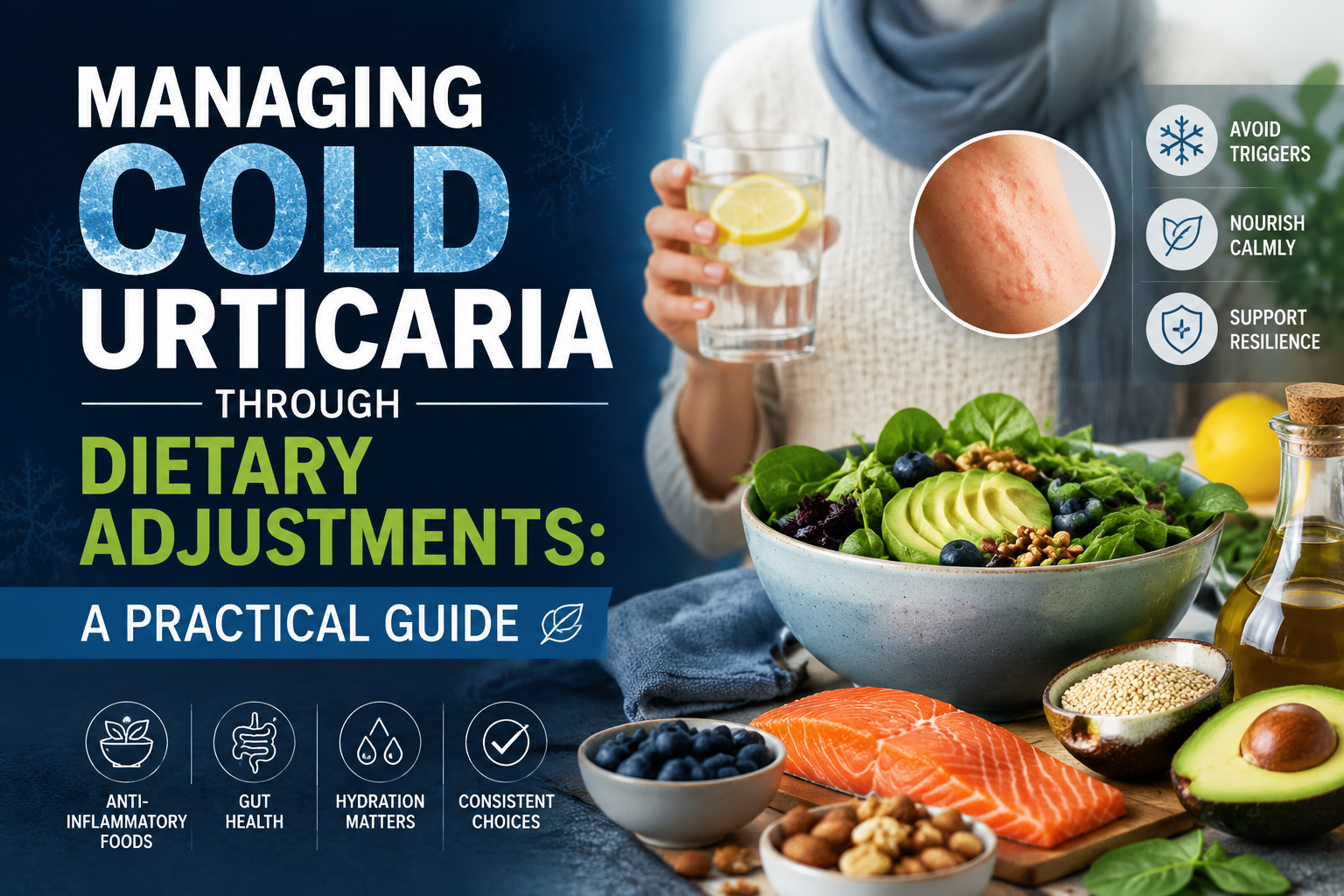
{“cover”:”Professional landscape format (1536×1024) hero image with bold text overlay: ‘Managing Cold Urticaria Through Dietary Adjustments’ in extra large 70pt white bold sans-serif font with dark drop shadow, centered upper-third composition. Background shows a beautifully arranged flat-lay of anti-inflammatory foods: fresh ginger root, turmeric, colorful berries, leafy greens, omega-3 rich salmon, and herbal teas on a clean white marble surface. Cool blue and white color palette with warm golden accents. Magazine cover aesthetic, editorial quality, high contrast, professional health and wellness style.”,”content”:[“Detailed landscape format (1536×1024) editorial illustration showing a split-scene comparison: on the left, a person reacting to cold exposure with visible hive-like skin irritation on forearm, and on the right, a colorful spread of natural anti-inflammatory foods including quercetin-rich onions, vitamin C citrus fruits, omega-3 fish, and green tea. A subtle arrow connects the two scenes suggesting dietary intervention. Cool blue tones on the left transition to warm, natural earth tones on the right. Clean medical-editorial style, informational health graphic aesthetic, 1536×1024 landscape format.”,”Detailed landscape format (1536×1024) overhead flat-lay photograph of a structured weekly meal plan chart laid on a wooden table, surrounded by foods relevant to cold urticaria management: fresh turmeric root, wild-caught salmon fillet, a bowl of mixed berries, vitamin D supplement capsules, a glass of water with lemon, and printed dietary notes. A hand holds a pen marking items on the plan. Warm natural lighting, top-down perspective, clean health-journal aesthetic, soft shadows, professional food and wellness photography style, 1536×1024 landscape.”]
Key Takeaways
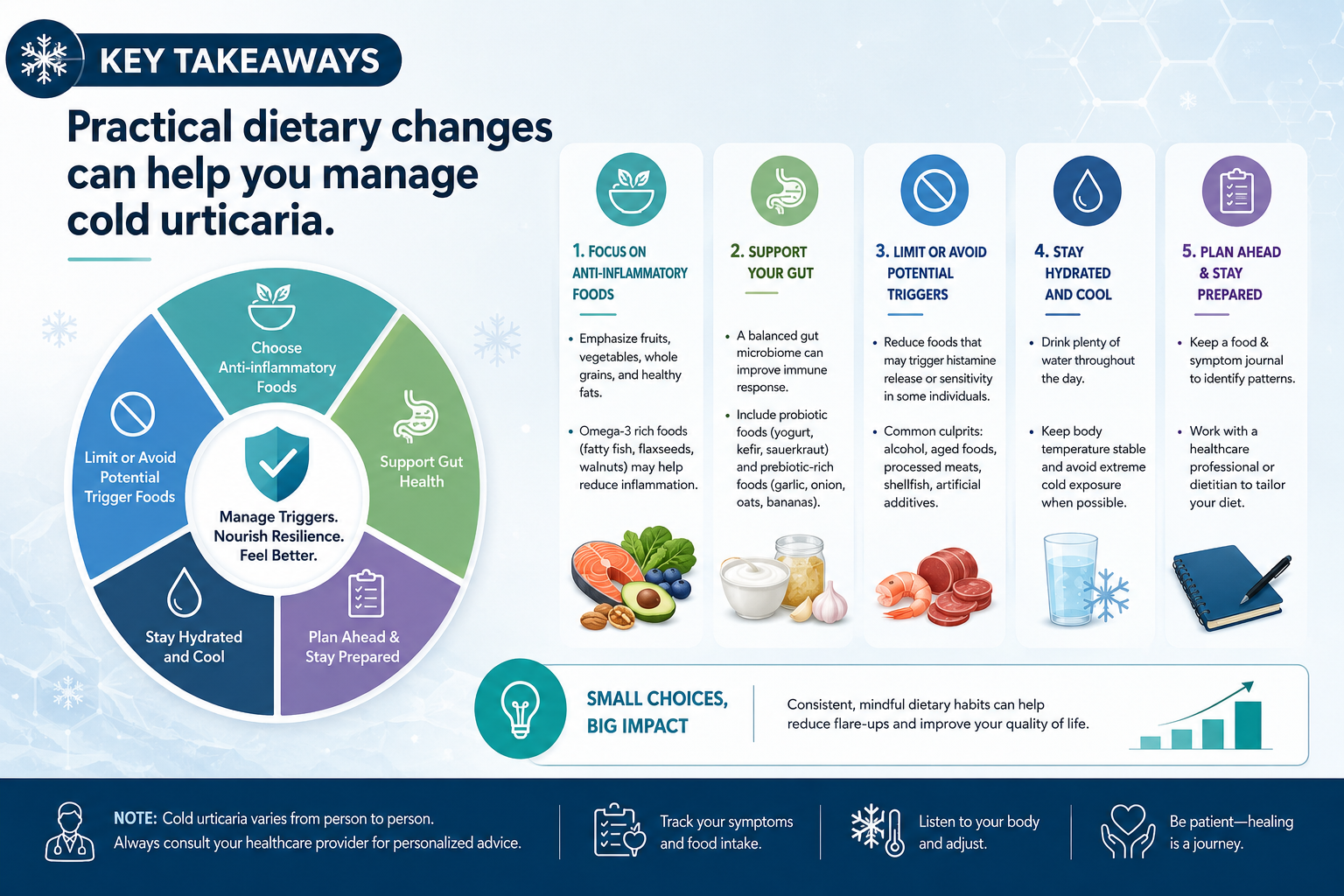
- Cold urticaria causes hives and swelling in response to cold exposure; diet influences how reactive your immune system is to these triggers.
- High-histamine foods such as aged cheeses, fermented products, alcohol, and processed meats can worsen cold urticaria symptoms.
- Anti-inflammatory foods including omega-3-rich fish, quercetin-containing onions and apples, and vitamin C-rich produce may help reduce reaction severity.
- A low-histamine diet is the most studied dietary approach for urticaria management, though evidence is still emerging.
- Supplements such as vitamin D, quercetin, and omega-3 fatty acids show promise as supportive tools, but should be discussed with a doctor before use.
- Dietary changes typically take four to six weeks to show measurable improvement in symptom frequency.
- Children with cold urticaria can follow similar dietary principles as adults, with portion sizes and food choices adjusted for age and nutritional needs.
- Diet manages symptoms; antihistamine medications (especially second-generation H1 antihistamines) remain the primary medical treatment.
- The biggest dietary mistake people make is eliminating too many foods at once without tracking, making it impossible to identify real triggers.
- Always work with an allergist or dietitian when making significant dietary changes for cold urticaria management.
What Exactly Is Cold Urticaria and How Does Diet Impact It
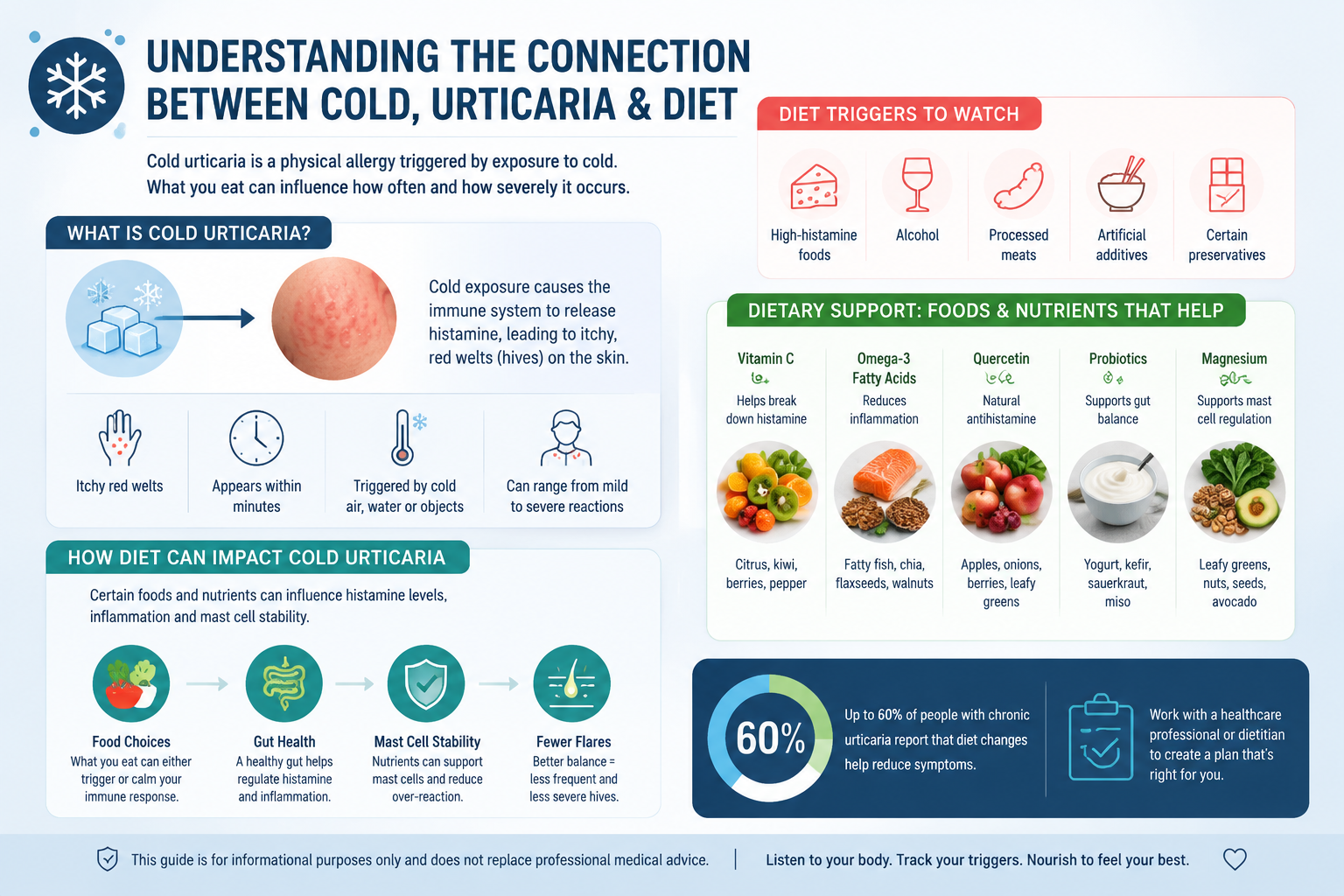
Cold urticaria is a physical urticaria in which mast cells in the skin release histamine and other inflammatory chemicals when exposed to cold air, cold water, or cold objects. This release causes the classic symptoms: red, itchy welts (hives), swelling, and in severe cases, anaphylaxis.
Diet affects cold urticaria through two main pathways. First, certain foods add to the body’s total histamine burden, which means the immune system is already primed before cold exposure even occurs. Second, foods with pro-inflammatory or anti-inflammatory properties influence how aggressively mast cells respond to stimuli.
Think of it this way: your mast cells have a threshold. If your diet keeps that threshold low through reduced histamine intake and anti-inflammatory eating, a cold trigger may not push you over the edge into a full reaction. If your diet is high in histamine-releasing foods, even mild cold exposure can tip the balance.
Key facts about cold urticaria:
- It affects an estimated 0.05% of the general population, though prevalence in cold-climate regions is higher (Magerl et al., 2010).
- Symptoms typically appear within minutes of cold contact and resolve within one to two hours.
- It can be primary (no known cause) or secondary (linked to infections, medications, or underlying conditions).
- Mast cell activation is central to every reaction, making histamine management through diet a logical supportive strategy.
Which Foods Might Trigger or Worsen Cold Urticaria Symptoms
Foods that are high in histamine, or that trigger the body to release histamine, can lower your reaction threshold and make cold urticaria worse. This does not mean these foods cause cold urticaria directly, but they can make each episode more severe or more frequent.
High-histamine foods to be cautious with:
| Food Category | Examples |
|---|---|
| Fermented/aged foods | Aged cheese, sauerkraut, kimchi, miso, soy sauce |
| Alcohol | Red wine, beer, champagne |
| Processed meats | Salami, pepperoni, smoked fish, canned tuna |
| Certain vegetables | Spinach, tomatoes, eggplant, avocado |
| Certain fruits | Strawberries, citrus fruits, bananas, pineapple |
| Leftovers | Any protein dish stored more than 24 hours |
Histamine-releasing foods (they don’t contain high histamine themselves but prompt the body to release it):
- Alcohol (especially red wine)
- Strawberries
- Tomatoes
- Chocolate and cocoa
- Shellfish
- Egg whites
Diamine oxidase (DAO) blockers are foods that reduce the enzyme responsible for breaking down histamine in the gut:
- Alcohol
- Energy drinks
- Black and green tea in large quantities
A practical rule: if a food is fermented, aged, smoked, or has been sitting in your fridge for more than a day, its histamine content is likely elevated.
Are There Specific Diets That Can Help Reduce Cold Urticaria Reactions
Yes. The low-histamine diet is the most evidence-supported dietary approach for chronic urticaria, including cold urticaria. An anti-inflammatory diet is also widely recommended as a complementary strategy.
The low-histamine diet focuses on eliminating or reducing high-histamine and histamine-releasing foods for four to six weeks, then systematically reintroducing them to identify personal triggers. A 2013 review published in the Journal of the Academy of Nutrition and Dietetics found that a low-pseudoallergen diet (which overlaps significantly with low-histamine eating) reduced urticaria symptoms in a meaningful subset of patients (Magerl et al., 2010; Zuberbier et al., 2022).
The anti-inflammatory diet emphasizes:
- Fatty fish (salmon, mackerel, sardines) for omega-3 fatty acids
- Colorful vegetables and fruits for polyphenols and antioxidants
- Olive oil as the primary fat
- Whole grains over refined carbohydrates
- Limited sugar, processed foods, and trans fats
What to eat more of when managing cold urticaria through dietary adjustments:
- Fresh (not leftover) lean proteins: chicken, turkey, fresh fish
- Vegetables low in histamine: broccoli, zucchini, sweet potatoes, carrots
- Fruits low in histamine: apples, pears, mangoes, blueberries
- Healthy fats: olive oil, coconut oil
- Herbal teas: chamomile, peppermint (in moderation)
- Plenty of water
Choose the low-histamine diet if you notice your reactions are worse after eating fermented or aged foods. Choose the broader anti-inflammatory approach if your symptoms are more diffuse and not clearly linked to specific foods.
How Much Do Antihistamine Foods Actually Help with Cold Hives
Foods with natural antihistamine or mast-cell-stabilizing properties can provide modest support, but they are not a substitute for prescription antihistamines. Think of them as a way to reduce baseline inflammation rather than a treatment for acute reactions.
Quercetin is the most studied natural compound in this context. Found in onions, apples, capers, and broccoli, quercetin has demonstrated mast cell-stabilizing effects in laboratory studies (Mlcek et al., 2016). It may reduce the amount of histamine mast cells release when triggered.
Vitamin C helps break down histamine in the body. Foods rich in vitamin C include bell peppers, kiwi, and broccoli. Some small studies suggest that higher vitamin C intake is associated with lower blood histamine levels.
Omega-3 fatty acids from fatty fish reduce the production of pro-inflammatory prostaglandins and leukotrienes, which are involved in allergic reactions.
“Natural antihistamine foods work slowly and cumulatively. They are not going to stop an acute hive outbreak, but consistent intake over weeks may reduce how often and how severely reactions occur.”
Realistic expectations:
- These foods support, they do not replace, medical treatment.
- Benefits are cumulative and take weeks to become noticeable.
- Individual responses vary significantly.
What’s the Difference Between Managing Cold Urticaria Through Diet Versus Medication
Medication treats the acute reaction; diet modifies the underlying inflammatory environment. Both have a role, and they work best together.
Medications for cold urticaria:
- Second-generation H1 antihistamines (cetirizine, loratadine, fexofenadine) are the first-line treatment recommended by international urticaria guidelines (Zuberbier et al., 2022).
- Omalizumab (Xolair), a biologic, is used for antihistamine-resistant cases.
- Epinephrine auto-injectors are prescribed for those at risk of anaphylaxis.
Diet’s role:
- Reduces the histamine load the body must manage before cold exposure occurs.
- Lowers baseline inflammation, which may reduce mast cell reactivity.
- Supports overall immune health.
| Factor | Medication | Dietary Adjustment |
|---|---|---|
| Speed of action | Minutes to hours | Weeks to months |
| Acute reaction control | Strong | Minimal |
| Long-term symptom reduction | Moderate to strong | Moderate (supportive) |
| Side effects | Possible (drowsiness, etc.) | Minimal if well-planned |
| Cost | Variable | Low to moderate |
| Requires prescription | Yes (for most) | No |
Bottom line: Do not stop or reduce medication to “test” whether diet alone can manage cold urticaria. Work with your doctor to adjust medications as dietary changes take effect over time.
Can People with Cold Urticaria Still Eat Normal Foods, or Do They Need Special Diets
Most people with cold urticaria do not need to follow a highly restrictive diet. The goal is targeted reduction of high-histamine and pro-inflammatory foods, not the elimination of entire food groups.
A typical person managing cold urticaria through dietary adjustments can still eat:
- Fresh fruits and vegetables (with some exceptions noted above)
- Fresh meat and poultry
- Rice, oats, and most whole grains
- Legumes and beans
- Most dairy products (fresh, not aged)
- Eggs (yolks are lower in histamine than whites)
- Nuts and seeds (in moderation)
The adjustments are more about food preparation and freshness than about eliminating broad categories. For example, fresh chicken is fine; leftover chicken from two days ago is not ideal because histamine accumulates in protein-rich foods as they age.
Common practical adjustments:
- Cook and eat proteins fresh rather than storing leftovers.
- Choose fresh or frozen vegetables over canned.
- Limit fermented and aged products rather than eliminating them entirely.
- Read labels on processed foods for hidden fermented ingredients.
What Common Mistakes Do People Make When Managing Cold Urticaria Through Nutrition
The most common mistake is eliminating too many foods at once without a tracking system, which makes it impossible to identify which changes are actually helping.
Other frequent errors:
Expecting immediate results. Dietary changes for urticaria take weeks, not days. Stopping after two weeks because “nothing changed” is premature.
Ignoring food freshness. People focus on food type but forget that histamine builds up in any protein-rich food over time. Even “safe” foods become problematic when stored too long.
Overlooking beverages. Alcohol, especially red wine and beer, is one of the highest histamine and histamine-releasing substances available. Many people track food carefully but continue drinking alcohol freely.
Not keeping a food and symptom diary. Without a written record, it’s nearly impossible to identify patterns between what you eat and when reactions occur.
Self-diagnosing food triggers without professional guidance. Some people cut out nutritionally important foods (like all citrus or all dairy) based on general lists rather than their own documented reactions.
Treating diet as the only intervention. Diet supports medical treatment; it does not replace it. Skipping antihistamines because you’ve “cleaned up” your diet is risky.
Are There Any Supplements That Can Reduce Cold Urticaria Inflammation
Several supplements show promise for supporting cold urticaria management, though evidence is still building and none are approved as treatments. Always discuss supplements with your doctor before starting, especially if you take prescription medications.
Supplements with the most supporting evidence:
Vitamin D: Low vitamin D levels have been associated with increased severity of chronic urticaria in several studies. A 2014 study in Annals of Allergy, Asthma and Immunology found that vitamin D supplementation reduced urticaria symptom scores in deficient patients (Rorie et al., 2014). Testing your vitamin D level before supplementing is advisable.
Quercetin: Available as a supplement (typically 500-1000mg daily), quercetin may help stabilize mast cells. It’s generally well-tolerated, though it can interact with certain medications including cyclosporine and some antibiotics.
Omega-3 fatty acids (fish oil): Anti-inflammatory effects are well-documented. Standard doses of 1-3g EPA/DHA daily are commonly used.
DAO enzyme supplements: Diamine oxidase supplements taken before meals may help break down dietary histamine in the gut, reducing absorption. Evidence is limited but preliminary results are encouraging.
Vitamin C: Doses of 500-1000mg daily may help the body break down histamine more efficiently.
Supplements to approach with caution:
- Zinc in high doses can suppress immune function.
- Probiotics are generally beneficial for gut health but some strains actually produce histamine, so strain selection matters.
How Long Does It Take for Dietary Changes to Show Improvement in Cold Urticaria Symptoms
Most people notice a meaningful reduction in symptom frequency or severity after four to six weeks of consistent dietary changes. Some individuals see improvement sooner (two to three weeks), particularly if they had a high intake of histamine-rich foods before making changes.
A realistic timeline:
- Weeks 1-2: Adjustment period. Some people temporarily feel worse as their body adapts. This is not a sign the diet isn’t working.
- Weeks 3-4: Many people begin noticing fewer or milder reactions.
- Weeks 5-8: The clearest picture of whether dietary changes are helping becomes visible.
- After 8 weeks: Systematic reintroduction of eliminated foods can begin to identify specific personal triggers.
Factors that affect how quickly you see results:
- How strictly you follow the low-histamine approach
- Whether you’re also managing cold exposure and medication consistently
- Your baseline level of systemic inflammation
- Whether an underlying condition (such as a gut issue affecting DAO production) is present
What Are the Risks of Not Adjusting Diet When You Have Cold Urticaria
Not adjusting diet does not directly cause cold urticaria to worsen, but it can mean that reactions are more frequent, more severe, and harder to control with medication alone. The main risk is a persistently high histamine load that keeps the immune system in a heightened reactive state.
In people with severe cold urticaria who are at risk for anaphylaxis, keeping systemic inflammation and histamine burden as low as possible through diet is a meaningful safety measure. It reduces the likelihood that a cold exposure event will push the body into a severe reaction.
Additionally, chronic low-grade inflammation from a poor diet is associated with reduced effectiveness of antihistamine medications over time, though this is a general observation rather than a cold-urticaria-specific finding.
Can Children with Cold Urticaria Follow the Same Dietary Guidelines as Adults
Children with cold urticaria can follow the same core dietary principles as adults, with adjustments for age-appropriate nutrition. The low-histamine approach and anti-inflammatory eating patterns are safe for children when implemented carefully.
Key differences for children:
- Nutritional completeness is critical. Children should not have entire food groups removed without dietitian oversight.
- Calcium intake must be maintained if dairy is being reduced; alternatives like fortified plant milks or calcium-rich vegetables (broccoli, kale) should be included.
- Supplement doses differ significantly from adult doses. Vitamin D supplementation for children, for example, follows pediatric guidelines.
- Children may have more limited food preferences, making dietary adjustments more challenging practically.
What pediatric allergists generally recommend:
- Work with a pediatric dietitian to implement any dietary changes.
- Focus on adding anti-inflammatory foods rather than restricting broadly.
- Keep a symptom diary to identify genuine food-reaction patterns in the child.
- Do not delay or reduce antihistamine treatment in favor of dietary changes alone.
What Do Doctors Recommend for Diet-Based Cold Urticaria Management
Most allergists and dermatologists view dietary adjustment as a supportive measure within a broader management plan. The 2022 international EAACI/GA2LEN/EuroGuiDerm/APAAACI guidelines for urticaria acknowledge the role of pseudoallergen-free and low-histamine diets as options for patients with chronic urticaria who do not respond fully to antihistamines (Zuberbier et al., 2022).
What a typical doctor-recommended approach looks like:
- Confirm the diagnosis with a cold stimulation test (ice cube test or TempTest).
- Start second-generation H1 antihistamines as the primary treatment.
- Identify and avoid cold triggers where possible.
- Discuss dietary modifications as a supportive strategy, particularly a low-histamine diet trial.
- Test vitamin D levels and supplement if deficient.
- Refer to a registered dietitian if significant dietary changes are planned.
- For severe or antihistamine-resistant cases, consider omalizumab.
The consensus is that diet alone is insufficient for managing cold urticaria, but it is a meaningful and low-risk addition to a comprehensive plan.
FAQ
Q: Can eating cold foods trigger cold urticaria? A: Yes, in some people. Cold foods and drinks can trigger oral or gastrointestinal symptoms if the mucous membranes react to the temperature. Avoiding very cold foods and drinks is a reasonable precaution for people with cold urticaria.
Q: Is a gluten-free diet helpful for cold urticaria? A: There is no strong evidence that a gluten-free diet specifically helps cold urticaria unless the person also has celiac disease or non-celiac gluten sensitivity. Focus on the low-histamine and anti-inflammatory approaches instead.
Q: Can I drink coffee if I have cold urticaria? A: Coffee itself is not high in histamine, but it can act as a DAO blocker in some individuals, reducing the body’s ability to break down histamine. Moderate consumption is generally fine; monitor your own response.
Q: Does drinking more water help with cold urticaria? A: Adequate hydration supports overall immune function and helps the kidneys clear histamine metabolites. It’s a simple, low-risk habit worth maintaining, though it won’t prevent reactions on its own.
Q: Are probiotics safe for people with cold urticaria? A: Some probiotic strains (such as Lactobacillus rhamnosus) may help reduce allergic reactivity, while others produce histamine. Choose histamine-degrading strains and discuss with your doctor before starting.
Q: Should I do an elimination diet to find my food triggers? A: A structured elimination diet (starting with low-histamine foods and reintroducing one food at a time) is the most reliable way to identify personal triggers. Do this with dietitian guidance to avoid nutritional deficiencies.
Q: How do I know if my cold urticaria is getting better from dietary changes? A: Track reaction frequency, severity, and duration in a diary. Improvement typically looks like fewer reactions per week, milder hives, or faster resolution of symptoms after cold exposure.
Q: Can stress make cold urticaria worse, and does diet help with that? A: Yes, stress can worsen urticaria by increasing mast cell reactivity. An anti-inflammatory diet that includes magnesium-rich foods (leafy greens, nuts, seeds) and limits sugar may support stress resilience indirectly.
Q: Is it safe to try a low-histamine diet while pregnant? A: A low-histamine diet can be followed during pregnancy, but it requires careful planning to ensure adequate nutrient intake. Always work with an obstetrician and dietitian before making significant dietary changes during pregnancy.
Q: What is the single most impactful dietary change for cold urticaria? A: Reducing or eliminating alcohol is consistently cited as the most impactful single dietary change, because alcohol both contains histamine and blocks the DAO enzyme that breaks it down.
Conclusion
Managing cold urticaria through dietary adjustments is not a cure, but it is a practical, low-risk strategy that can meaningfully reduce how often and how severely reactions occur. The core approach is straightforward: reduce high-histamine and histamine-releasing foods, increase anti-inflammatory foods, maintain food freshness, and consider targeted supplements like vitamin D and quercetin under medical guidance.
Actionable next steps:
- Start a food and symptom diary this week. Track everything you eat and every reaction you have for at least two weeks before making changes.
- Identify your top three high-histamine foods (alcohol, aged cheese, and fermented products are the most common culprits) and reduce them first.
- Add one or two anti-inflammatory foods to each meal: a handful of berries, fresh salmon twice a week, or an apple as a snack.
- Ask your doctor to test your vitamin D level at your next appointment.
- Request a referral to a registered dietitian if you want to do a formal low-histamine elimination diet.
- Continue your prescribed antihistamines. Dietary changes complement medication; they do not replace it.
Give the process at least six weeks before evaluating results. Cold urticaria management is a long game, and consistent small changes in what you eat can make a real difference in day-to-day quality of life.
References
- Magerl, M., Altrichter, S., Borzova, E., et al. (2010). The definition, diagnostic testing, and management of chronic inducible urticarias. Allergy, 65(10), 1215-1227. https://doi.org/10.1111/j.1398-9995.2010.02367.x
- Mlcek, J., Jurikova, T., Skrovankova, S., & Sochor, J. (2016). Quercetin and its anti-allergic immune response. Molecules, 21(5), 623. https://doi.org/10.3390/molecules21050623
- Rorie, A., Goldner, W. S., Lyden, E., & Poole, J. A. (2014). Beneficial role for supplemental vitamin D3 treatment in chronic urticaria: A randomized study. Annals of Allergy, Asthma and Immunology, 112(4), 376-382. https://doi.org/10.1016/j.anai.2014.01.010
- Zuberbier, T., Abdul Latiff, A. H., Abuzakouk, M., et al. (2022). The international EAACI/GA2LEN/EuroGuiDerm/APAAACI guideline for the definition, classification, diagnosis, and management of urticaria. Allergy, 77(3), 734-766. https://doi.org/10.1111/all.15090
Read next: The Connection Between TMJ Disorders and Tinnitus Management: A Complete Guide. A closer look at tmj and tinnitus.