
Key Takeaways
- Most leftover wax types, including soy, paraffin, and beeswax, can be recycled into new candles, though mixing wax types requires care.
- Recycling old candle wax can save an estimated 50 to 80 percent compared to buying new candles, depending on the scents and containers you choose.
- Mixing different wax types is generally safe for container candles but can affect burn quality and scent throw.
- You need only basic equipment to start: a double boiler, a thermometer, wicks, and containers.
- The most common beginner mistakes involve overheating wax, skipping the cleaning step, and using the wrong wick size.
- Essential oils can be added to recycled wax, but the amount and timing matter for a strong, safe scent.
- Autumn scents like cedarwood, cinnamon, clove, and vanilla work especially well in homemade recycled-wax candles.
- Candles made from recycled wax typically burn for 20 to 50 hours, depending on container size and wax composition.
- People with fragrance sensitivities can make unscented recycled-wax candles, which are often gentler than commercial options.
- Avoid reusing wax from candles that contain lead-core wicks, unknown dyes, or strong artificial fragrances you cannot identify.
Why Candle Making from Leftover Wax Is Worth Your Time This Autumn
Roughly 10,000 tons of candle wax end up in landfills each year in the United States alone, according to estimates from the National Candle Association (2022). That figure is striking when you consider how easy it is to melt those leftover stubs into something new. Candle making from leftover wax: sustainable coziness for autumn is not just a craft trend; it is a practical response to real waste.
Autumn is the ideal season for this project. The shorter days and cooler temperatures make candles feel essential rather than decorative. When I first started collecting wax stubs from burned-down candles around my home, I was skeptical that the results would be worth the effort. After my first successful pour, a small mason jar filled with recycled soy wax and a few drops of cedarwood oil, I stopped buying candles from the store almost entirely.
This guide covers everything you need to know, from identifying which wax types work best to troubleshooting common problems, so you can create candles that are genuinely good rather than just “good enough.”
What Kinds of Leftover Wax Work Best for Making New Candles
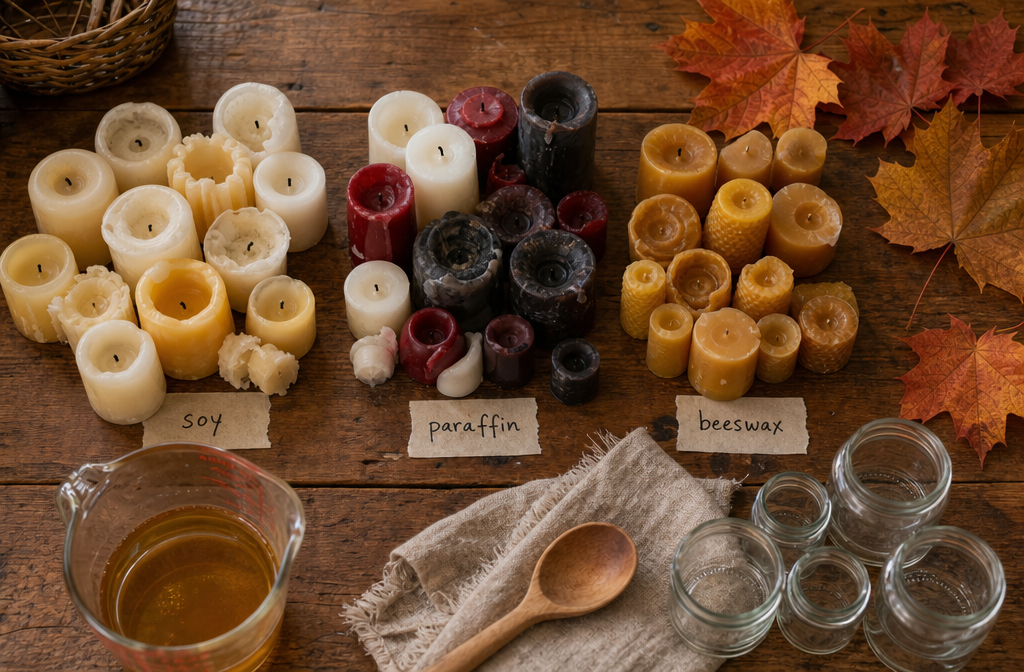
The best leftover wax for recycling is soy wax, followed by beeswax and standard paraffin. Each type melts cleanly, holds fragrance well, and performs reliably in container candles. Wax from gel candles or heavily dyed novelty candles is harder to work with and often not worth the effort.
Here is a quick breakdown by wax type:
| Wax Type | Recycle-Friendly | Notes |
|---|---|---|
| Soy wax | Excellent | Clean burn, easy to melt, holds scent well |
| Beeswax | Excellent | Natural, long burn time, mild honey scent |
| Paraffin | Good | Very common, melts easily, may produce more soot |
| Palm wax | Fair | Can be mixed with soy; sourcing concerns exist |
| Gel wax | Poor | Requires specific containers; not ideal for mixing |
| Novelty/dyed wax | Poor | Unknown additives; skip if you cannot identify the source |
Decision rule: If the original candle came from a reputable brand and burned cleanly without heavy soot, the leftover wax is almost certainly worth recycling. If the candle left heavy black residue on its jar, the wax quality is lower and may not perform well in a new candle.
How Much Money Can I Save by Recycling Old Candle Wax
Recycling old candle wax can reduce your candle spending by 50 to 80 percent. A standard soy candle from a mid-range retailer costs between $15 and $35 in 2026. Making the equivalent at home using recycled wax costs roughly $3 to $8 per candle once you account for wicks, containers, and any added fragrance oils.
The savings are most significant after your first batch, when you already own the basic equipment. Here is a rough cost comparison for a single 8-ounce container candle:
- Store-bought: $18 to $30 average
- Homemade with recycled wax: $2 to $5 for wick and container (wax is free)
- Homemade with purchased soy wax: $6 to $10 total
Over a full autumn season, a household that burns three to four candles per month could save $50 to $100 by switching to recycled-wax candles. That estimate assumes you already have leftover wax from previous candles and are reusing glass jars or tins you have around the house.
Is It Safe to Mix Different Types of Wax Together
Mixing different wax types is generally safe for container candles, but it can affect how the candle burns and how well it holds fragrance. Soy and paraffin blend well together and are commonly combined in commercial candles. Beeswax can be mixed with soy but may cause the surface to look uneven as it cools.
What to watch for when mixing waxes:
- Different wax types have different melting points. Beeswax melts at around 145 to 147 degrees Fahrenheit, while soy wax melts at 120 to 125 degrees Fahrenheit. Mixing them requires you to melt the higher-temperature wax first.
- Blended waxes may need a larger wick than a single-wax candle of the same size.
- Fragrance oil binds differently across wax types, so scent throw can be unpredictable in a mixed-wax candle.
- Avoid mixing gel wax with any other type. Gel wax is mineral-oil based and does not blend cleanly with plant or animal waxes.
Common mistake: Pouring mixed waxes at too high a temperature. Let the blend cool to around 130 to 135 degrees Fahrenheit before adding fragrance oil and pouring.
What Basic Equipment Do I Need to Start Making Candles at Home
You need five basic items to start making candles from leftover wax at home: a double boiler (or a heat-safe glass measuring cup set in a pot of water), a candy or wax thermometer, candle wicks, a container, and something to hold the wick upright while the wax sets.
Full starter equipment list:
- Double boiler or makeshift version (large pot plus a heat-safe pitcher or glass measuring cup)
- Wax or candy thermometer (accurate to at least 5-degree increments)
- Pre-tabbed candle wicks (sized for your container diameter)
- Containers: glass jars, ceramic mugs, metal tins, or terracotta pots
- Wick centering tool or two pencils and a rubber band
- Wooden stir stick or silicone spatula
- Kitchen scale (optional but helpful for measuring wax volume)
- Fine mesh strainer or cheesecloth (for cleaning the wax)
Total startup cost for equipment, if you buy everything new, is roughly $20 to $40. Many items, like the pot, measuring cup, and stirring spoon, are likely already in your kitchen.
How Do Professional Crafters Clean and Prepare Used Wax
Professional crafters clean used wax by melting it completely, then straining it through a fine mesh strainer or cheesecloth to remove wick debris, dust, and any burned particles. This step is not optional if you want a clean-burning candle.
Step-by-step wax cleaning process:
- Collect all leftover wax stubs and remove any visible wick fragments by hand.
- Place wax in a double boiler and melt slowly over medium-low heat.
- Monitor temperature with a thermometer. Do not exceed 185 degrees Fahrenheit for soy or paraffin.
- Once fully melted, pour the liquid wax through a fine mesh strainer lined with cheesecloth into a clean heat-safe container.
- Let the strained wax cool slightly (to about 150 degrees Fahrenheit) before adding fragrance.
- If the wax looks cloudy or has a layer of discolored residue at the bottom after cooling, melt it again and skim the surface before pouring your final candle.
Edge case: If your leftover wax has a strong burned smell, it may have been overheated in its original candle. You can mask mild burned odors with a higher fragrance load (up to 10 percent of wax weight), but heavily scorched wax is better discarded.
Can I Add Essential Oils to Homemade Candles from Leftover Wax
Yes, you can add essential oils to homemade candles made from leftover wax, but fragrance oils (synthetic) typically perform better in candles than pure essential oils. Essential oils have lower flash points and can evaporate quickly during the pour, resulting in a weaker scent throw once the candle is lit.
Guidelines for adding scent to recycled wax:
- Use fragrance oil or essential oil at 6 to 10 percent of the total wax weight. For 100 grams of wax, that is 6 to 10 grams of scent.
- Add scent when the melted wax has cooled to 130 to 140 degrees Fahrenheit. Adding it too hot causes the scent to evaporate before the candle sets.
- Stir gently for at least 2 minutes to fully incorporate the oil.
- Essential oils with higher flash points, such as cedarwood (above 140 degrees Fahrenheit) and patchouli (above 150 degrees Fahrenheit), hold up better in candles than citrus oils like lemon or orange, which have flash points below 115 degrees Fahrenheit.
For people sensitive to synthetic fragrances: Unscented recycled-wax candles are a perfectly valid option and often burn cleaner than heavily fragranced commercial candles.
What Autumn Scents Work Best for Homemade Sustainable Candles
The best autumn scents for homemade sustainable candles made from leftover wax are cedarwood, cinnamon, clove, vanilla, sandalwood, and cardamom. These fragrances have warm, earthy profiles that suit the season and also tend to have higher flash points, making them more stable in melted wax.
Top autumn scent combinations for recycled-wax candles:
- Woodland walk: Cedarwood + sandalwood + a hint of black pepper
- Spiced kitchen: Cinnamon + clove + orange peel (use orange sparingly due to low flash point)
- Cozy evening: Vanilla + amber + cardamom
- Harvest field: Patchouli + vetiver + nutmeg
- Fireside: Smoky birch + cedarwood + vanilla
Start with single-note fragrances if you are new to candle making. Blending scents is rewarding but requires some trial and error to get the ratios right.
What Surfaces or Containers Are Best for Pouring Recycled Wax
Glass jars, metal tins, and ceramic containers are the best choices for pouring recycled wax. They are heat-stable, widely available, and look attractive on an autumn table or mantel. Avoid plastic containers entirely, as they can warp or melt when hot wax is poured in.
Container options ranked by practicality:
- Glass mason jars (most versatile, easy to find, good heat tolerance)
- Metal tins (excellent heat tolerance, portable, great for gifting)
- Ceramic mugs or ramekins (attractive, thick walls slow cooling for a smoother finish)
- Terracotta pots (seasonal look, porous so seal the inside with a thin wax layer first)
- Vintage teacups (charming but check for cracks before use)
Tip for terracotta: Pour a thin layer of melted wax into the pot, let it set, then pour your full candle on top. This prevents the porous clay from absorbing the wax unevenly.
Are There Any Waxes I Should Absolutely Avoid Reusing
Yes. Avoid reusing wax from candles that had lead-core wicks, unknown synthetic dyes, or strong chemical odors. Lead-core wicks were banned in the United States in 2003 by the Consumer Product Safety Commission, but older candles or imported candles may still contain them. Burning lead-contaminated wax releases harmful particles.
Wax to skip:
- Candles with wicks that left a gray or metallic residue at the base
- Heavily pigmented novelty candles with unidentified colorants
- Candles that smelled chemical or plastic-like when burned
- Gel candles (not compatible with standard wax types)
- Any candle purchased from an unknown source without ingredient labeling
Quick test for lead wicks: Rub the tip of an unused wick on white paper. A gray metallic streak indicates a lead or zinc core. Zinc-core wicks are safe; lead-core wicks are not.
How Long Will a Candle Made from Recycled Wax Typically Last
A candle made from recycled wax in an 8-ounce container will typically burn for 30 to 50 hours, which is comparable to a new commercial candle of the same size. Burn time depends on wax type, wick size, container diameter, and whether the candle is kept away from drafts.
Factors that affect burn time:
- Wick size: A wick that is too large creates a large melt pool and burns wax faster. A wick that is too small tunnels down the center and wastes wax on the sides.
- Wax blend: Beeswax burns slower and longer than paraffin. Soy falls in between.
- Fragrance load: High fragrance oil percentages (above 10 percent) can slightly reduce burn time.
- Draft exposure: Candles near open windows or vents burn unevenly and faster.
Rule of thumb: Trim the wick to one-quarter inch before every burn. This single habit extends burn life and reduces soot significantly.
Is Candle Making from Leftover Wax Good for People with Allergies
Candle making from leftover wax can be an excellent option for people with fragrance or chemical sensitivities, because you control every ingredient. Commercial candles often contain synthetic fragrance blends with undisclosed chemicals that can trigger allergic reactions. When you make your own candles from recycled wax, you choose whether to add any scent at all.
Allergy-friendly candle making tips:
- Use unscented recycled soy or beeswax for the cleanest burn.
- If you want scent, choose single-ingredient essential oils rather than synthetic fragrance blends.
- Avoid candles with artificial dyes, which can release irritating compounds when burned.
- Soy and beeswax produce less soot than paraffin, which is better for people with respiratory sensitivities.
- Always burn candles in a well-ventilated room, regardless of wax type.
People with bee-related allergies should avoid beeswax entirely and stick to soy or coconut wax alternatives.
What Are the Most Common Mistakes Beginners Make When Recycling Wax
The most common mistakes beginners make are overheating the wax, skipping the cleaning step, using the wrong wick size, and pouring at too high a temperature. Each of these problems is easy to avoid once you know what to watch for.
Mistake-by-mistake breakdown:
- Overheating wax: Wax above 185 degrees Fahrenheit can discolor, lose fragrance, and become a fire hazard. Always use a thermometer.
- Skipping the strain: Debris from old wicks causes uneven burning and can block the new wick.
- Wrong wick size: Use a wick guide based on your container’s diameter. Most wick suppliers provide sizing charts. A general rule: for a 3-inch diameter container, use a medium wick rated for that size.
- Pouring too hot: Pouring above 150 degrees Fahrenheit causes sinkholes and uneven surfaces as the wax cools.
- Not centering the wick: An off-center wick burns unevenly and can cause the candle to tunnel.
- Burning too soon: Let the candle cure for at least 24 to 48 hours before the first burn. Soy wax benefits from up to 72 hours of cure time for the best scent throw.
Conclusion
Candle making from leftover wax: sustainable coziness for autumn is one of the most accessible and genuinely satisfying home crafts you can take up this season. The process is low-cost, low-risk, and produces results you will actually use and enjoy.
Your actionable next steps:
- Start collecting wax stubs now. Keep a dedicated jar or tin in your kitchen for leftover wax from burned-down candles.
- Gather your basic equipment: a double boiler setup, a thermometer, and a few pre-tabbed wicks.
- Choose two or three containers you already own, such as glass jars or ceramic mugs.
- Pick one autumn scent to start with. Cedarwood or vanilla are forgiving and widely loved.
- Make your first small batch (two to three candles), note what works, and adjust from there.
The goal is not perfection on the first pour. It is building a habit that keeps usable material out of the trash and brings warm, handmade light into your home each autumn. Once you make that first candle from wax you would have otherwise thrown away, the process tends to stick.
Frequently Asked Questions
Can I reuse wax from a candle that has a strong old scent? Yes, but the old scent will carry through to your new candle. If the original fragrance is unpleasant or too strong, blend it with a complementary scent to mask it, or use a higher fragrance load of a new scent (up to 10 percent of wax weight).
Do I need to buy special wicks for recycled-wax candles? Standard pre-tabbed cotton wicks from any craft supplier work fine. Match the wick diameter to your container size using the supplier’s sizing chart.
How do I remove leftover wax from a glass jar? Pour boiling water into the jar and let it sit for 10 minutes. The wax will float to the top as it cools. Remove it, wipe the jar clean, and the glass is ready to reuse.
Can I use a microwave to melt leftover wax? You can melt small amounts of wax in a microwave-safe glass measuring cup in 30-second intervals, but a double boiler gives you better temperature control and is safer for larger quantities.
What is the best container size for a first batch? An 8-ounce glass mason jar is ideal for beginners. It is a standard size, easy to find wick guides for, and produces a candle that burns long enough to test your results properly.
How do I know if my wick is the right size? After the first burn of at least two hours, check the melt pool. It should reach the edges of the container but not be deeper than half an inch. A shallow melt pool means the wick is too small; a very deep pool or a large flame means it is too large.
Can I add dried herbs or flowers to recycled-wax candles? Dried botanicals can be pressed against the inside of the container before pouring for a decorative effect. Do not embed them in the wax itself, as plant material near a flame is a fire hazard.
Is soy wax always better than paraffin for recycled candles? Not always. Soy burns cleaner and is plant-based, but paraffin has a stronger scent throw and is more forgiving for beginners. Both are safe when used correctly.
How many candle stubs do I need to make one new candle? For an 8-ounce candle, you need roughly 6 to 7 ounces of wax. That is typically four to six average-sized candle stubs, depending on how much wax remains in each.
Can children help with candle making from leftover wax? Children aged 12 and older can help with supervised steps like measuring, scenting, and pouring (with adult handling of the hot wax). Younger children should not be near hot wax or open flames.
References
- National Candle Association. (2022). Candle industry statistics and facts. https://candles.org/facts-figures-faq/
- U.S. Consumer Product Safety Commission. (2003). CPSC bans lead-containing candle wicks. https://www.cpsc.gov/Newsroom/News-Releases/2003/CPSC-Bans-Lead-Containing-Candle-Wicks
- Brambleberry Soap & Candle Making Supplies. (2023). Wick guide for container candles. https://www.brambleberry.com
Read next: Cold Showers in Winter: Mental Hacks for Overcoming the Chill Daily. A closer look at cold showers in winter.