
Key Takeaways
- Nightshades include a wide family of plants. Common tea ingredients like goji berries, ashwagandha, and spice-infused blends can all be nightshades or nightshade-adjacent.
- Many tea manufacturers use botanical Latin names on labels, making it harder for consumers to spot nightshade ingredients without prior knowledge.
- People with autoimmune conditions such as rheumatoid arthritis, lupus, or inflammatory bowel disease are most likely to benefit from avoiding nightshades in teas.
- Symptoms of accidental nightshade consumption range from mild digestive discomfort to joint flares and skin reactions, depending on individual sensitivity.
- A nightshade allergy (immune-mediated) is clinically distinct from nightshade sensitivity (non-immune inflammatory response), but both warrant label vigilance.
- Chamomile, peppermint, rooibos, ginger, and lemon balm teas are reliably nightshade-free when purchased as single-ingredient products.
- Contacting manufacturers directly and choosing certified organic single-herb teas are the most reliable ways to confirm a blend is nightshade-free.
- Spice-infused chai blends and “superfood” teas are the highest-risk categories for hidden nightshade ingredients.
What Exactly Are Nightshades and Why Do Some People Avoid Them
Nightshades are plants in the Solanaceae family, a group of roughly 2,700 species that includes both edible foods and toxic plants. Common edible nightshades include tomatoes, potatoes, eggplant, bell peppers, and chili peppers. People avoid them primarily because they contain alkaloid compounds, particularly solanine, capsaicin, and tomatine, which some research suggests may promote gut permeability and inflammation in sensitive individuals.
The avoidance of nightshades is especially common among people following autoimmune-focused diets, such as the Autoimmune Protocol (AIP) or the Wahls Protocol. Dr. Terry Wahls, a clinical professor of medicine at the University of Iowa, has written about nightshade restriction as part of her dietary framework for managing multiple sclerosis, though the broader scientific evidence for nightshade avoidance in autoimmune disease remains an active area of research rather than settled consensus.
Key alkaloids in nightshades to know:
- Solanine – found in potatoes and some peppers; associated with gut lining disruption in animal studies
- Capsaicin – the active compound in chili peppers; triggers TRPV1 receptors and can cause GI irritation in sensitive people
- Nicotine – present in trace amounts in several nightshade plants including tobacco, tomatoes, and eggplant
- Calystegines – glycoalkaloids found in many Solanaceae species; may inhibit certain digestive enzymes
Not everyone reacts to nightshades. For people without sensitivities, these plants are nutritious and pose no problem. Avoidance is most relevant for those with confirmed sensitivities, autoimmune diagnoses, or persistent inflammatory symptoms that correlate with nightshade consumption.
Which Popular Herbal Teas Might Secretly Contain Nightshade Ingredients
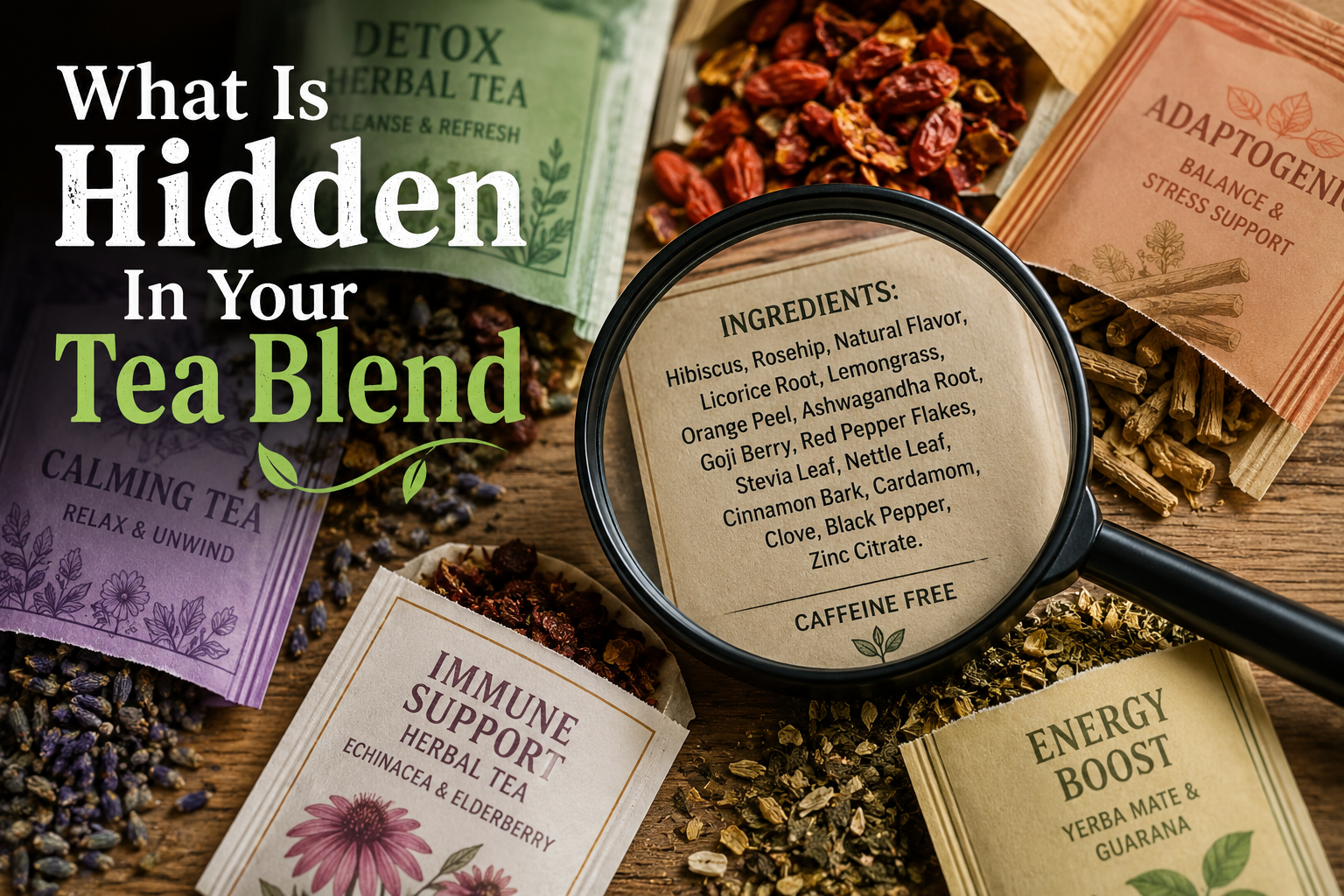
Several widely sold herbal teas contain nightshade-family ingredients, often without obvious labeling. Identifying hidden nightshades in common herbal teas starts with knowing which ingredients to flag.
High-risk tea categories and their hidden nightshade sources:
| Tea Type | Potential Nightshade Ingredient | Nightshade Species |
|---|---|---|
| Goji berry tea | Goji berries | Lycium barbarum (Solanaceae) |
| Ashwagandha tea | Ashwagandha root | Withania somnifera (Solanaceae) |
| Chai blends | Paprika, cayenne, chili | Capsicum annuum |
| “Superfood” blends | Goji, golden berry | Physalis peruviana |
| Detox/cleanse teas | Bittersweet nightshade | Solanum dulcamara |
| Warming spice teas | Red pepper extract | Capsicum species |
Goji berries are the most commonly overlooked nightshade in herbal teas. They are marketed as antioxidant superfoods and appear in wellness, energy, and anti-aging tea blends. Yet goji berries (Lycium barbarum) are fully within the Solanaceae family.
Ashwagandha (Withania somnifera) is another Solanaceae member that has become a popular adaptogen ingredient in stress-relief and sleep teas. Many people following nightshade-free diets are unaware of its botanical classification.
Golden berries (Physalis peruviana), sometimes called Cape gooseberries, appear in tropical or immunity-focused blends and are also nightshades.
Chai and spice teas frequently include cayenne, paprika, or chili extracts for warmth and flavor. These are Capsicum species, which are true nightshades.
Common mistake: Assuming that “herbal” or “natural” on the label means nightshade-free. These terms have no regulatory definition that excludes nightshade plants.
How Can I Test If a Tea Has Nightshade Components Before Drinking
The most reliable method for identifying hidden nightshades in common herbal teas is a combination of label analysis, direct manufacturer inquiry, and cross-referencing botanical names against a verified nightshade species list.
Step-by-step process for checking a tea before drinking:
- Read the full ingredient list. Do not stop at the front-of-pack description. Turn the box over and read every listed ingredient, including “natural flavors.”
- Look for Latin botanical names. Many teas list herbs by their scientific name. Cross-reference any Solanaceae family names (see table above).
- Flag vague terms. “Spice blend,” “natural flavor,” and “botanical extract” can conceal nightshade-derived compounds. Treat these as unknowns.
- Search the manufacturer’s website. Many brands publish full botanical sourcing information or allergen statements online.
- Contact the brand directly. Email or call customer service and ask specifically: “Does this product contain any plants from the Solanaceae family?” A reputable brand will answer clearly.
- Use a nightshade plant database. The USDA PLANTS Database (plants.usda.gov) and the Kew Gardens Plants of the World Online database both allow you to verify whether a species belongs to Solanaceae.
Edge case: “Natural flavors” is a legally broad category in the United States under FDA regulations. Capsicum (pepper) extract is commonly used as a natural flavoring in teas and may not be individually listed. If you have a severe sensitivity, contact the manufacturer about natural flavor sources specifically.
Are There Health Risks for People With Nightshade Sensitivities
For people with nightshade sensitivities, consuming nightshade-containing teas can trigger inflammatory responses, digestive discomfort, and in some cases, flares of autoimmune symptoms. The severity depends on the individual’s sensitivity level and the concentration of alkaloids in the tea.
People most at risk include those with:
- Rheumatoid arthritis or psoriatic arthritis – joint inflammation may worsen with regular nightshade alkaloid exposure, according to anecdotal reports and some functional medicine practitioners, though large-scale clinical trials are limited
- Inflammatory bowel disease (Crohn’s disease, ulcerative colitis) – capsaicin and solanine may irritate the gut lining
- Leaky gut syndrome – a condition characterized by increased intestinal permeability, which some practitioners link to nightshade alkaloids
- Lupus and other autoimmune conditions – nightshade avoidance is a common recommendation in AIP dietary protocols
“The challenge with nightshade reactions in tea is that the symptom onset is often delayed by several hours, making it difficult to connect the cause to the cup.” This delayed response is why many sensitive individuals drink nightshade teas for weeks before identifying the source of their symptoms.
It is worth noting that the alkaloid content in a steeped tea is generally lower than in eating the whole food. However, for highly sensitive individuals, even trace amounts can be enough to provoke a response, particularly with daily consumption.
What Symptoms Should I Watch for If I Accidentally Drink a Nightshade Tea
Symptoms of accidental nightshade tea consumption vary based on whether the person has an allergy (immune-mediated) or a sensitivity (inflammatory, non-immune). In either case, symptoms typically appear within 30 minutes to several hours after drinking.
Common symptoms in nightshade-sensitive individuals:
- Digestive symptoms: bloating, gas, nausea, diarrhea, or stomach cramping
- Joint stiffness or increased pain, particularly in people with pre-existing arthritis
- Skin reactions: itching, redness, or eczema flares
- Headaches or brain fog
- Fatigue that feels disproportionate to activity level
Allergy-specific symptoms (more immediate, immune-mediated):
- Hives or urticaria
- Throat tightness or swelling
- Runny nose and watery eyes
- In rare, severe cases: anaphylaxis (requires immediate emergency care)
When to seek medical attention: If you experience throat tightness, difficulty breathing, or swelling of the lips or tongue after drinking any herbal tea, call emergency services immediately. These are signs of anaphylaxis, which is a medical emergency.
For milder sensitivity reactions, stopping consumption and tracking symptoms in a food-symptom diary for two to four weeks can help confirm the connection.
What Is the Difference Between a Nightshade Allergy and Nightshade Sensitivity
A nightshade allergy is an immune-mediated reaction in which the body’s immune system produces IgE antibodies in response to nightshade proteins. A nightshade sensitivity is a broader, non-immune inflammatory response, often driven by alkaloid compounds rather than proteins. Both are real and can significantly affect quality of life, but they require different diagnostic approaches.
Allergy vs. sensitivity at a glance:
| Feature | Nightshade Allergy | Nightshade Sensitivity |
|---|---|---|
| Mechanism | IgE immune response | Alkaloid-driven inflammation |
| Onset | Minutes to 2 hours | Hours to days |
| Diagnosis | Skin prick test, IgE blood test | Elimination diet, symptom tracking |
| Severity | Can be life-threatening | Rarely life-threatening |
| Management | Strict avoidance, carry epinephrine | Dietary restriction, symptom monitoring |
True nightshade allergies are relatively uncommon. Nightshade sensitivity, particularly in people with autoimmune conditions, is more widely reported but harder to confirm through standard lab testing. An elimination diet, conducted ideally under the guidance of a registered dietitian, remains the gold standard for identifying sensitivity.
How Do Manufacturers Hide Nightshade Ingredients in Tea Blends
Manufacturers do not always intentionally conceal nightshade ingredients, but several common labeling and formulation practices make them easy to miss. Understanding these practices is central to identifying hidden nightshades in common herbal teas.
Four main ways nightshades appear without obvious labeling:
- Latin botanical names only. A label listing “Lycium barbarum” or “Withania somnifera” is technically accurate but unrecognizable to most consumers who don’t know these are nightshades.
- “Natural flavors” catch-all. Capsicum extract, a nightshade derivative, is widely used as a natural flavoring and warming agent in teas. It may not be individually named.
- Marketing language that overshadows ingredients. Terms like “superfood blend,” “adaptogen tea,” or “immunity boost” draw attention away from the ingredient list. Goji and ashwagandha are frequently included in these blends.
- Spice blends listed as a single ingredient. A “warming spice blend” may contain cayenne or paprika without listing them individually, depending on the regulatory jurisdiction.
Practical tip: In the United States, the FDA requires that all ingredients be listed by their common or usual name. If a tea is sold domestically, “goji berry” should appear on the label rather than just the Latin name. However, imported teas or teas sold as supplements may follow different labeling standards.
Which Herbal Tea Brands Are Safest for Nightshade-Sensitive People
No single brand can be universally certified as nightshade-free across all products, since formulations change. However, certain brands and product types carry lower risk due to their ingredient transparency and simple formulations.
Lower-risk choices:
- Single-herb teas from brands like Traditional Medicinals, Harney and Sons, or Pukka Herbs, where the only ingredient is the named herb (e.g., pure chamomile, pure peppermint)
- Certified organic single-ingredient teas, which tend to have simpler supply chains and clearer labeling
- Brands that publish full botanical sourcing on their website or upon request
Higher-risk product lines to scrutinize carefully:
- Any tea labeled “adaptogen,” “superfood,” “immunity,” or “energy blend”
- Chai and masala-style teas with spice blends
- “Detox” or “cleanse” teas, which sometimes include bittersweet nightshade (Solanum dulcamara) as a traditional ingredient
Choose single-ingredient teas if you have a confirmed nightshade sensitivity and want to minimize risk without contacting every manufacturer. A pure chamomile or pure peppermint tea with one ingredient listed is far easier to verify than a 12-herb blend.
What Alternative Herbal Teas Are Completely Nightshade-Free
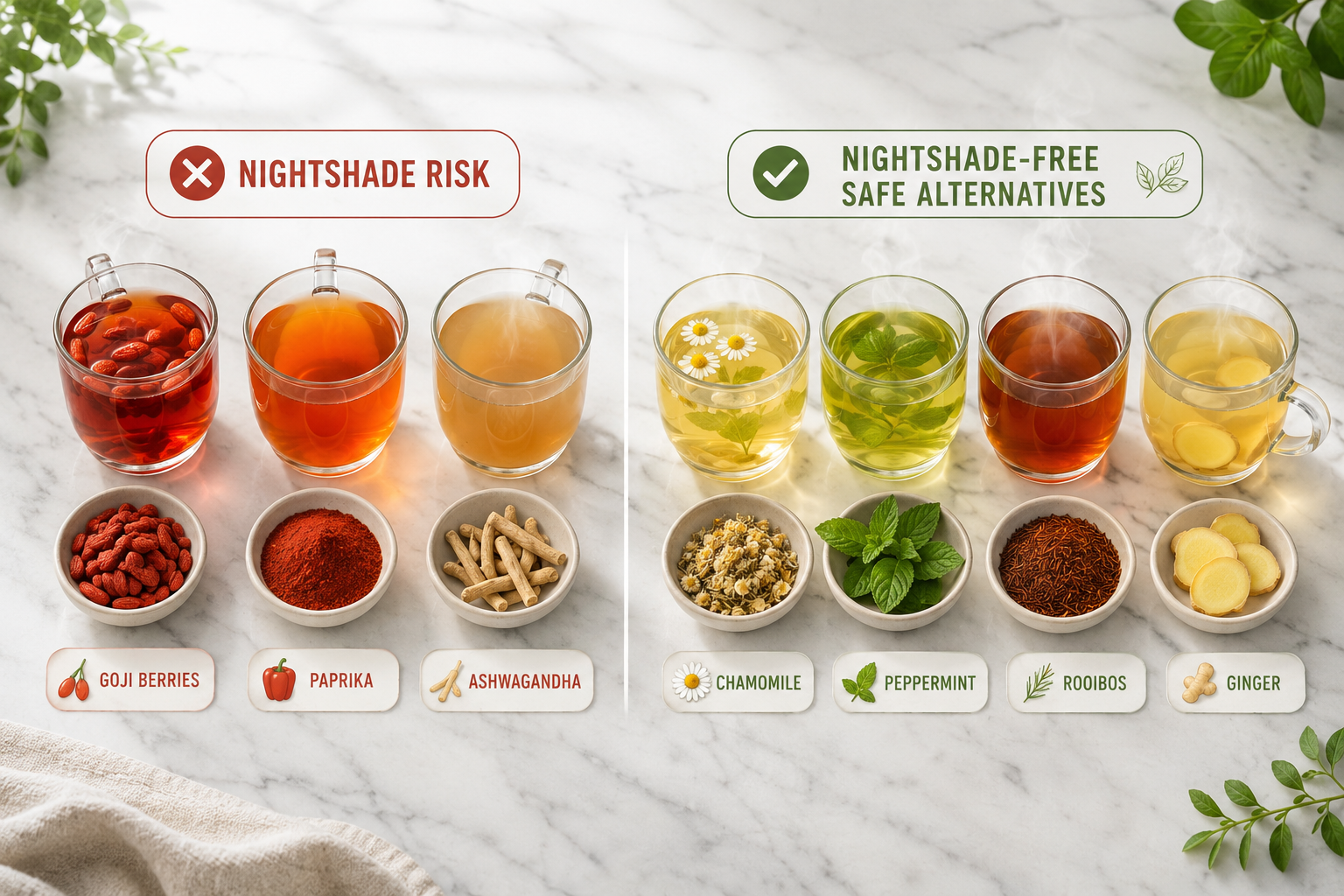
Many popular herbal teas are naturally nightshade-free and safe for people with sensitivities, as long as they are purchased as pure single-herb products without added blends or flavorings.
Reliably nightshade-free herbal teas:
- Chamomile (Matricaria chamomilla) – calming, anti-inflammatory, widely available
- Peppermint (Mentha piperita) – digestive support, cooling
- Ginger (Zingiber officinale) – warming, anti-nausea, anti-inflammatory
- Rooibos (Aspalathus linearis) – caffeine-free, antioxidant-rich, South African red bush
- Lemon balm (Melissa officinalis) – calming, mild lemon flavor
- Hibiscus (Hibiscus sabdariffa) – tart, high in vitamin C
- Tulsi/Holy Basil (Ocimum tenuiflorum) – adaptogenic, but NOT a nightshade (it’s in the mint family)
- Dandelion root (Taraxacum officinale) – liver support, earthy flavor
- Nettle (Urtica dioica) – mineral-rich, allergy support
Important note: Tulsi (holy basil) is sometimes confused with nightshades because it is also called an adaptogen, like ashwagandha. However, tulsi belongs to the Lamiaceae (mint) family, not Solanaceae, and is safe for nightshade-sensitive individuals.
Do Common Tea Ingredients Like Peppers or Paprika Count as Nightshades
Yes, peppers and paprika are true nightshades. All Capsicum species, including bell peppers, cayenne, paprika, chili powder, and red pepper flakes, belong to the Solanaceae family. When these appear in herbal tea blends, they are nightshade ingredients by definition.
This matters most in:
- Chai and masala teas, which often include black pepper (not a nightshade, it’s Piperaceae) alongside cayenne or paprika (which are nightshades)
- “Warming” or “fire” teas marketed for circulation or metabolism support
- Ayurvedic blends, which may include trikatu (a combination of black pepper, long pepper, and ginger) alongside Capsicum species
Quick clarification: Black pepper (Piper nigrum) is NOT a nightshade. It belongs to the Piperaceae family. Only Capsicum peppers (chili, cayenne, paprika, bell pepper) are nightshades. This distinction trips up many people reading tea labels.
How Serious Are Nightshade Reactions for People With Autoimmune Conditions
For people with autoimmune conditions, nightshade reactions can be significant enough to disrupt disease management, though the evidence base varies by condition. The concern centers on alkaloids potentially increasing intestinal permeability, which may allow partially digested proteins to enter the bloodstream and trigger immune responses.
Functional medicine practitioners and researchers like Dr. Sarah Ballantyne, author of “The Paleo Approach,” have written extensively about nightshade restriction in autoimmune disease management. Her work, while influential in patient communities, is based partly on mechanistic reasoning and case reports rather than large randomized controlled trials.
What the current evidence suggests:
- Capsaicin has well-documented effects on gut permeability in animal models (Clapham, 2003, Nature Reviews Neuroscience)
- Solanine has shown cytotoxic effects on intestinal cells in laboratory studies
- Clinical trials specifically on nightshade-free diets for autoimmune disease remain limited as of 2026
- Patient-reported outcomes in AIP diet studies frequently include nightshade avoidance as a variable, making it difficult to isolate nightshades as the sole factor
Practical guidance: If you have an autoimmune condition and suspect nightshades are affecting your symptoms, work with a rheumatologist or registered dietitian to conduct a structured elimination and reintroduction protocol. Self-diagnosis based on symptoms alone is unreliable.
Can I Still Enjoy Herbal Tea If I’m Sensitive to Nightshades
Absolutely. Nightshade sensitivity does not mean giving up herbal tea. It means being more selective about which teas and brands you choose. The nightshade-free tea options listed above cover a wide range of flavors, from light and floral to bold and spicy (using ginger rather than pepper for heat).
Practical strategies for nightshade-sensitive tea drinkers:
- Build a small collection of verified single-herb teas you trust
- When trying a new blend, read the ingredient list before purchasing and contact the brand if anything is unclear
- Keep a symptom diary for two weeks when introducing any new tea
- Explore rooibos-based blends, which are naturally caffeine-free and easy to find in simple formulations
- Use loose-leaf teas from reputable herbalists who can confirm ingredient sourcing
The tea world is rich enough that avoiding nightshades costs you very little in terms of variety or enjoyment.
FAQ
Q: Is ashwagandha a nightshade? Yes. Ashwagandha (Withania somnifera) belongs to the Solanaceae family and is a true nightshade. It appears frequently in stress, sleep, and adaptogen tea blends.
Q: Are goji berries nightshades? Yes. Goji berries (Lycium barbarum and Lycium chinense) are members of the Solanaceae family. They are one of the most common hidden nightshades in herbal teas marketed as superfoods or antioxidant blends.
Q: Is black tea or green tea a nightshade? No. Black tea and green tea both come from Camellia sinensis, which belongs to the Theaceae family. Neither is a nightshade.
Q: Can I develop a nightshade sensitivity over time? Yes. Some people develop sensitivities to nightshades after prolonged exposure, particularly if they have underlying gut permeability issues. Sensitivity can also emerge or worsen alongside autoimmune diagnoses.
Q: How do I know if my reaction is from nightshades specifically or another ingredient in a tea blend? The most reliable method is a structured elimination diet. Remove all nightshades for four to six weeks, then reintroduce one at a time while tracking symptoms. A registered dietitian can guide this process.
Q: Does cooking or steeping reduce nightshade alkaloids? Steeping in hot water does extract some alkaloids from plant material. However, the extent of extraction varies by alkaloid type, water temperature, and steeping time. For highly sensitive individuals, it is safer to avoid nightshade ingredients entirely rather than relying on reduced alkaloid content in brewed tea.
Q: Is paprika in a tea blend enough to cause a reaction? For highly sensitive individuals, yes. Even small amounts of capsaicin from paprika or cayenne can trigger symptoms, particularly with daily consumption over time.
Q: Are there any nightshade-free certified tea brands? As of 2026, no major certification body specifically audits for nightshade-free status in teas. Your best option is to choose single-ingredient teas and verify with the manufacturer directly.
Q: Is tobacco a nightshade? Yes. Tobacco (Nicotiana tabacum) is a member of the Solanaceae family. It does not appear in food-grade herbal teas, but it is a useful reminder of how broad the nightshade family is.
Q: Can children have nightshade reactions from herbal teas? Yes. Children with autoimmune conditions or known food sensitivities can react to nightshade-containing teas. Herbal teas marketed for children should be checked for goji, ashwagandha, or spice blend ingredients.
Conclusion
Identifying hidden nightshades in common herbal teas is a practical skill that matters most for people managing autoimmune conditions, inflammatory diseases, or confirmed nightshade sensitivities. The core challenge is that nightshade plants like goji berries, ashwagandha, and Capsicum spices are marketed as health-promoting superfoods, making them easy to overlook.
Actionable next steps:
- Audit your current tea collection today. Pull out every blend and read the full ingredient list against a nightshade species reference (USDA PLANTS Database is free and reliable).
- Replace any high-risk blends with single-ingredient teas such as chamomile, peppermint, rooibos, or ginger until you have time to verify each product.
- If you suspect a current tea is causing symptoms, stop drinking it for four weeks and track whether symptoms improve.
- Contact manufacturers directly for any tea with “natural flavors,” “spice blend,” or unrecognized botanical names in the ingredient list.
- Work with a registered dietitian if you want to conduct a formal nightshade elimination protocol, especially if you have an autoimmune diagnosis.
The tea aisle does not have to be a minefield. With a clear understanding of which plants belong to the Solanaceae family and a habit of reading labels carefully, you can build a tea routine that is both enjoyable and consistent with your health needs.
References
- Clapham, D.E. (2003). TRP channels as cellular sensors. Nature, 426(6966), 517-524. https://doi.org/10.1038/nature02196
- Ballantyne, S. (2013). The Paleo Approach: Reverse Autoimmune Disease and Heal Your Body. Victory Belt Publishing.
- Wahls, T., & Adamson, E. (2014). The Wahls Protocol. Avery Publishing.
- USDA PLANTS Database. Solanaceae family listings. https://plants.usda.gov
- Royal Botanic Gardens, Kew. Plants of the World Online. https://powo.science.kew.org
- U.S. Food and Drug Administration. (2018). Guidance for Industry: Ingredients Declared as Evaporated Cane Juice. FDA.gov.
- Konishi, Y., et al. (2004). Transepithelial transport of solanine through Caco-2 cells. Journal of Agricultural and Food Chemistry, 52(9), 2765-2767.
Read next: Gentle Exercises for Sluggish Gallbladder Motility: A Complete Guide. A closer look at exercises for gallbladder motility.