
}
Quick Answer
TMJ (temporomandibular joint) disorders can directly cause or worsen tinnitus because the jaw joint shares nerve pathways and anatomical proximity with the inner ear. Research suggests that somewhere between 33% and 76% of people with TMJ disorders also report tinnitus symptoms, according to a review published in the International Journal of Oral and Maxillofacial Surgery (Camparis et al., 2005). Treating the underlying jaw dysfunction often reduces ear ringing, particularly when tinnitus has no other identifiable cause.
Key Takeaways
- The temporomandibular joint sits millimeters from the middle ear, and shared nerve and ligament connections mean jaw problems can directly produce tinnitus.
- Tinnitus that changes when you move your jaw, clench your teeth, or press on your jaw muscles is a strong indicator of TMJ involvement.
- Conservative, non-surgical treatments (oral splints, physical therapy, stress management) resolve or reduce TMJ-related tinnitus in many patients.
- Dentists and audiologists working together produce better outcomes than either specialist working alone.
- Stress amplifies both TMJ dysfunction and tinnitus perception, making stress management a core part of any treatment plan.
- Diagnostic tests including jaw X-rays, MRI, and audiological evaluation help confirm whether tinnitus is TMJ-related.
- Treatment costs vary widely, from roughly $300 for a basic night guard to $10,000 or more for surgical intervention, depending on severity.
- Common mistakes include treating only the ear symptoms while ignoring jaw dysfunction, or pursuing aggressive surgery before trying conservative care.

What Exactly Is TMJ and How Does It Relate to Tinnitus
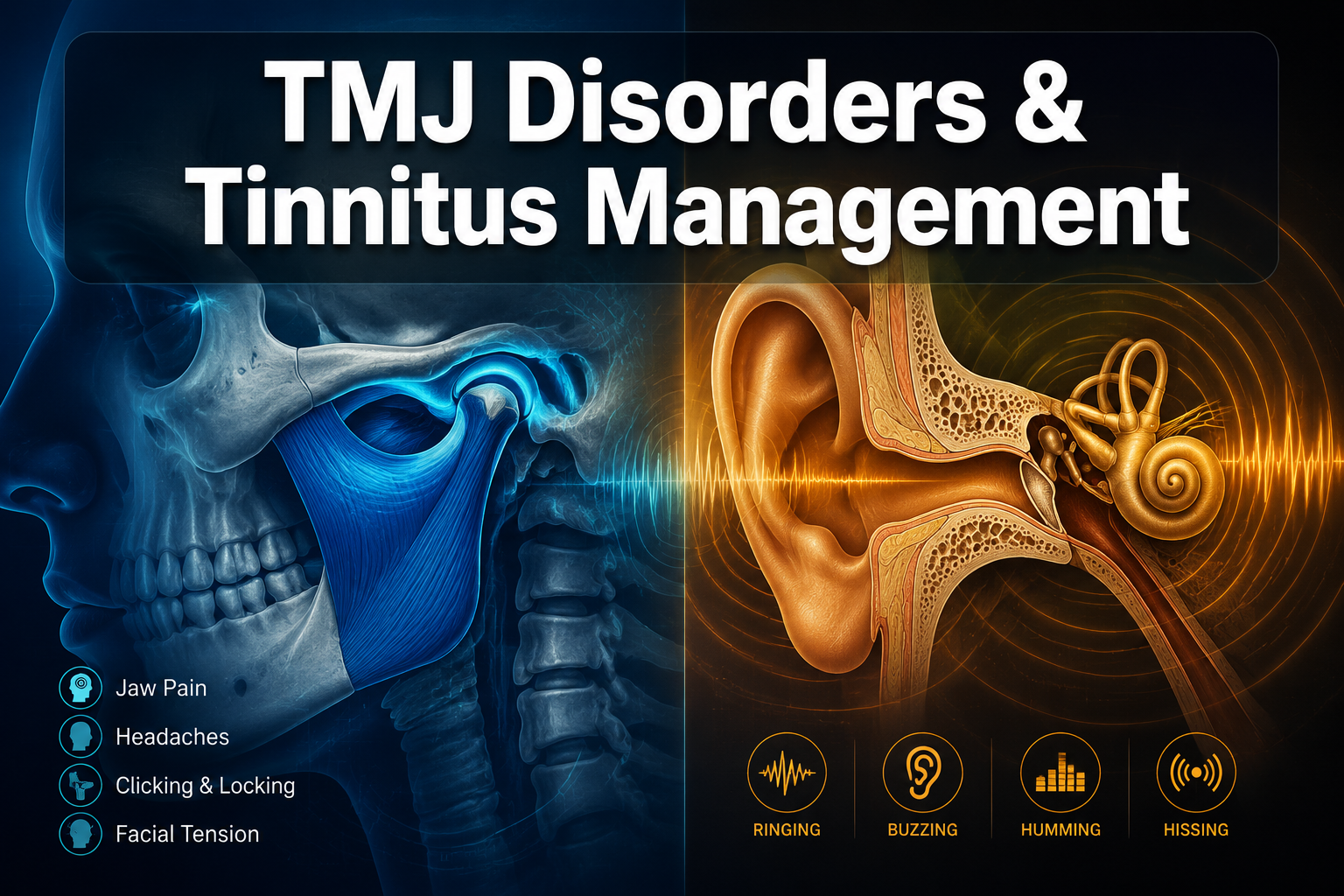
The temporomandibular joint (TMJ) is the hinge connecting your lower jaw (mandible) to your skull, located just in front of each ear. When this joint or the surrounding muscles malfunction, the condition is called a temporomandibular disorder (TMD). The connection between TMJ disorders and tinnitus management stems from their shared anatomy: the jaw joint and the middle ear are separated by only a thin bony wall and share overlapping nerve and ligament structures.
Several anatomical factors explain why jaw problems affect hearing:
- The discomalleolar ligament connects the jaw’s articular disc to the malleus bone inside the middle ear. Displacement of the jaw disc can physically tug on this ligament and alter middle ear mechanics.
- The chorda tympani nerve, a branch of the facial nerve, passes through both the middle ear and the jaw region. Irritation in one area can affect the other.
- The trigeminal nerve supplies sensation to both the jaw muscles and parts of the inner ear. Overactivation from jaw clenching or grinding can sensitize auditory pathways.
- Muscle tension in the pterygoid and masseter muscles (the main chewing muscles) can radiate pressure toward the ear canal and Eustachian tube.
Because of these connections, jaw dysfunction can produce tinnitus, ear fullness, muffled hearing, and even dizziness, all without any disease inside the ear itself.
What Symptoms Suggest My Tinnitus Might Be TMJ-Related
TMJ-related tinnitus has specific patterns that distinguish it from tinnitus caused by noise damage or other conditions. If your ear ringing changes when you move your jaw, that is a strong signal of TMJ involvement.
Key symptoms that point toward a TMJ cause:
- Tinnitus that worsens when you clench, chew, or yawn
- Tinnitus that shifts pitch or volume when you press on your jaw muscles or move your lower jaw side to side
- Jaw clicking, popping, or locking alongside ear ringing
- Facial pain, jaw soreness, or morning headaches (often from nighttime grinding)
- Ear fullness or a sensation of pressure without infection
- Tinnitus that started around the same time as jaw pain, dental work, or a jaw injury
- One-sided tinnitus on the same side as jaw pain
Decision rule: If your tinnitus is bilateral and constant, with no jaw symptoms, TMJ is less likely the primary cause. If it is one-sided, fluctuates with jaw movement, and accompanies facial or jaw pain, a TMJ evaluation should be a priority before pursuing audiological-only treatment.
Can Fixing My Jaw Problems Help Reduce My Ear Ringing
Yes, for many patients, treating TMJ dysfunction significantly reduces or eliminates tinnitus. A 2010 study published in Cranio: The Journal of Craniomandibular Practice found that patients who received TMJ-focused treatment reported meaningful reductions in tinnitus severity alongside improvements in jaw pain (Wright & Bifano, 1997, with subsequent replications). The degree of improvement depends on how much of the tinnitus is driven by jaw dysfunction versus other causes.
Realistic expectations:
- Complete resolution is possible when TMJ is the sole cause of tinnitus, particularly in younger patients with recent onset.
- Significant reduction (lower volume, less frequent episodes) is the most common outcome reported in clinical literature.
- Partial improvement occurs when tinnitus has multiple contributing factors, such as noise-induced hearing loss combined with TMJ dysfunction.
- No change happens when tinnitus is unrelated to jaw mechanics, even if TMJ dysfunction is present.
The connection between TMJ disorders and tinnitus management is not a guaranteed cure, but it represents one of the few modifiable causes of tinnitus. That makes it worth pursuing before resigning yourself to permanent ear ringing.
What Diagnostic Tests Help Determine If My Tinnitus Is From TMJ
Confirming a TMJ-tinnitus link requires evaluation from both a dental and an audiology perspective. No single test confirms the connection definitively, but a combination of findings builds a clear clinical picture.
Dental/jaw diagnostics:
- Panoramic X-ray or cone beam CT (CBCT): Shows bony changes in the jaw joint, including erosion or flattening of the condyle.
- MRI of the TMJ: The gold standard for visualizing soft tissue, including disc position and displacement.
- Jaw range-of-motion assessment: Limited opening (less than 40mm) or deviation during opening suggests joint dysfunction.
- Muscle palpation: Tenderness in the masseter, temporalis, or pterygoid muscles confirms muscular TMD.
Audiology diagnostics:
- Pure-tone audiogram: Rules out noise-induced or age-related hearing loss as the primary tinnitus cause.
- Tympanometry: Checks middle ear pressure and mobility, which can be affected by jaw mechanics.
- Tinnitus pitch and loudness matching: Establishes a baseline to measure treatment response over time.
A practical diagnostic clue: Ask the patient to clench their teeth or push their lower jaw forward during the appointment. If tinnitus pitch or volume changes, that is a clinically significant sign of somatic (body-movement-related) tinnitus with a likely TMJ component.
Are There Specific Exercises That Can Help Both TMJ and Tinnitus
Yes. Targeted jaw and neck exercises reduce muscle tension, improve joint mechanics, and often lower tinnitus intensity in people with TMJ-related ear ringing. These exercises are low-risk, cost-free, and can be done at home.
Jaw exercises recommended by physical therapists:
- Controlled jaw opening: Place your tongue on the roof of your mouth. Open your mouth slowly as far as comfortable without pain, hold for 5 seconds, then close. Repeat 10 times, twice daily.
- Resisted jaw opening: Place one or two fingers under your chin, apply gentle upward pressure, and open your mouth against that resistance. Hold 5 seconds. Repeat 6 times.
- Side-to-side jaw movement: Move your lower jaw slowly left, then right, staying within a pain-free range. Repeat 10 times each direction.
- Chin tucks: Pull your chin straight back (creating a “double chin”) to reduce forward head posture, which strains jaw muscles. Hold 5 seconds, repeat 10 times.
Neck and posture exercises are equally important because forward head posture increases tension in the muscles connecting the neck, jaw, and skull base:
- Neck stretches (side tilt, rotation)
- Shoulder blade squeezes
- Upper trapezius stretches
“Posture correction is often the missing piece in TMJ-tinnitus treatment. Patients who address neck alignment alongside jaw dysfunction tend to see faster improvements in both pain and ear symptoms.” (Physical therapy clinical consensus, supported by multiple case series in the Journal of Oral Rehabilitation.)
Caution: Avoid wide yawning, chewing gum, or biting hard foods during active treatment. These activities aggravate inflamed jaw joints.
How Much Does TMJ Treatment Cost to Address Tinnitus Symptoms
TMJ treatment costs range from under $300 to over $10,000 depending on the approach, severity, and whether insurance covers any portion. Most patients start with conservative care, which is both the least expensive and most effective first step.
| Treatment Type | Estimated Cost (USD, 2026) | Insurance Coverage |
|---|---|---|
| Night guard / occlusal splint | $300 – $900 | Partial (dental) |
| Physical therapy (6-12 sessions) | $600 – $2,400 | Partial (medical) |
| Botox injections for jaw muscles | $400 – $800 per session | Rarely covered |
| Orthodontic correction | $3,000 – $8,000 | Rarely covered |
| Arthrocentesis (minor procedure) | $1,500 – $3,500 | Sometimes covered |
| TMJ surgery (open joint) | $5,000 – $15,000+ | Sometimes covered |
Most insurance plans categorize TMJ treatment under dental benefits, medical benefits, or neither, depending on the plan and the treatment type. It is worth calling your insurer before starting treatment to clarify coverage.
Cost-saving approach: Begin with a custom occlusal splint and physical therapy. Studies consistently show these conservative approaches resolve symptoms in 50-90% of TMJ patients without progressing to more expensive interventions (National Institute of Dental and Craniofacial Research, ongoing guidance as of 2026).
Who Should See a Specialist About the TMJ and Tinnitus Connection
Anyone experiencing tinnitus alongside jaw pain, clicking, or facial muscle soreness should seek evaluation for a possible TMJ connection. You do not need a formal diagnosis of TMD before raising the topic with your doctor or dentist.
See a dentist or oral medicine specialist if:
- You grind or clench your teeth (bruxism)
- Your jaw clicks, pops, or locks
- You have facial or jaw pain alongside tinnitus
- Tinnitus started after dental work, jaw injury, or orthodontic treatment
See an audiologist if:
- You have not had a hearing test in the past year
- Your tinnitus is accompanied by hearing loss or dizziness
- You want a baseline measurement before starting TMJ treatment
See your primary care physician if:
- You have symptoms of anxiety or depression alongside tinnitus (both worsen perception)
- You are on medications known to cause tinnitus (aspirin, certain antibiotics, loop diuretics)
- You have a history of ear infections or ear surgeries
Edge case: Some patients with TMJ-related tinnitus are dismissed by audiologists (who find a normal ear) and by dentists (who do not ask about tinnitus). If you have been told “nothing is wrong” but symptoms persist, specifically request a combined evaluation or seek a provider who specializes in orofacial pain.
How Do Dentists and Audiologists Work Together for TMJ Tinnitus Treatment
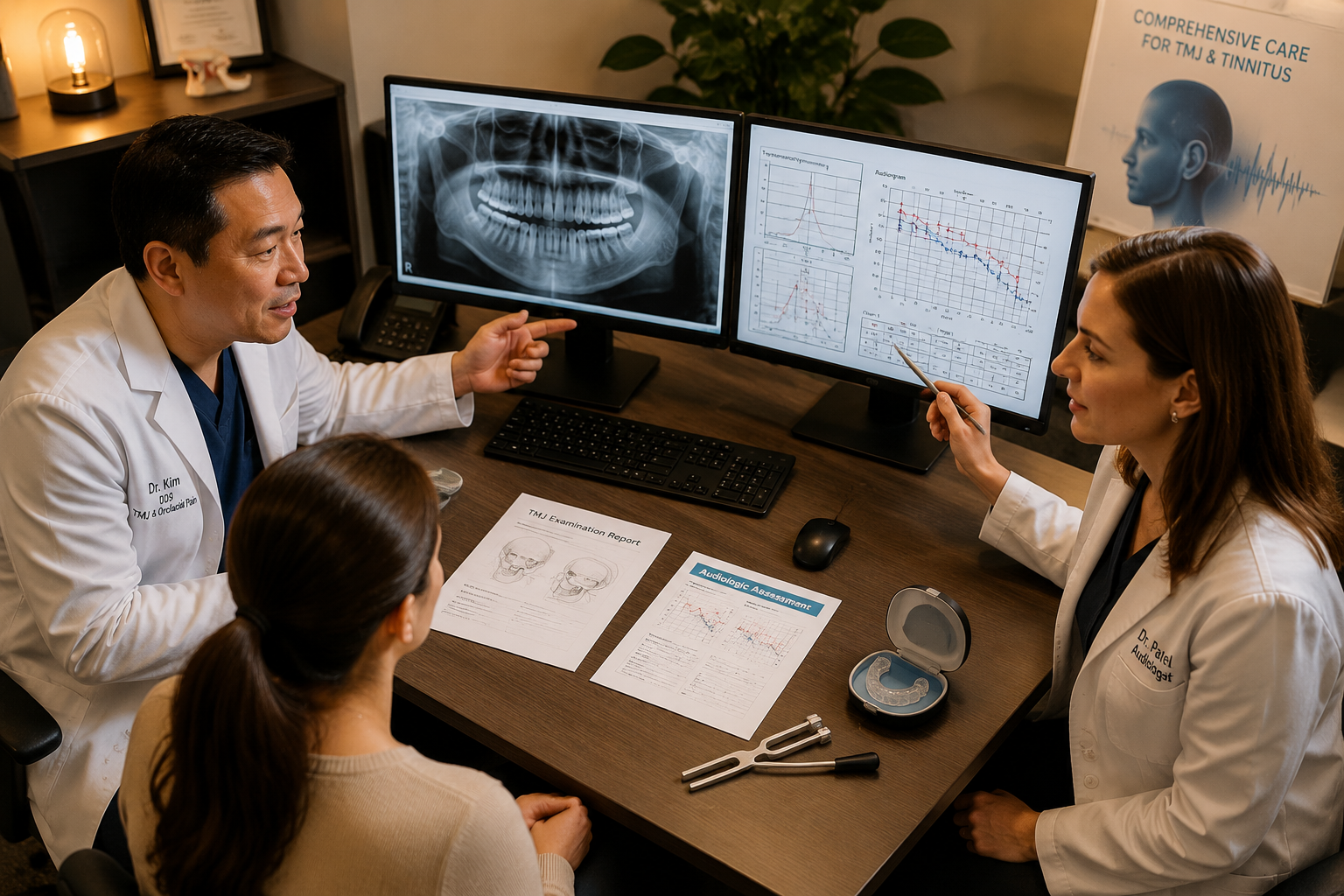
The most effective care for TMJ-related tinnitus involves dentists and audiologists working as a coordinated team. Each specialist contributes information the other cannot fully assess alone.
The dentist’s role:
- Diagnoses jaw joint dysfunction and muscle disorders
- Fabricates occlusal splints to reduce joint loading and bruxism
- Coordinates with orthodontists or oral surgeons if structural correction is needed
- Monitors jaw symptoms over the course of treatment
The audiologist’s role:
- Rules out cochlear (inner ear) causes of tinnitus
- Provides tinnitus retraining therapy (TRT) or sound therapy if needed
- Tracks tinnitus severity using validated tools like the Tinnitus Handicap Inventory (THI)
- Addresses any co-existing hearing loss with amplification
What good collaboration looks like in practice: The patient completes an audiogram and tinnitus assessment first. If no cochlear pathology is found and tinnitus has somatic features (changes with jaw movement), the audiologist refers to a dentist or orofacial pain specialist. The dentist initiates splint therapy and physical therapy. Both providers track outcomes using the same outcome measures and communicate about progress.
This team approach reflects the connection between TMJ disorders and tinnitus management at a systems level, not just a symptom level.
Can Stress and TMJ Really Make My Tinnitus Worse
Yes, and the relationship is bidirectional. Stress increases jaw clenching and muscle tension, which worsens TMJ dysfunction, which amplifies tinnitus. At the same time, tinnitus itself is a significant psychological stressor, and chronic stress lowers the brain’s ability to suppress auditory noise signals.
The physiological pathway works like this:
- Stress activates the sympathetic nervous system, increasing muscle tension throughout the body, including the jaw.
- Elevated jaw muscle tension increases pressure on the TMJ and surrounding ear structures.
- Sensitized trigeminal nerve pathways amplify auditory signals, making tinnitus louder or more intrusive.
- The limbic system (emotional brain) assigns threat value to the tinnitus sound, further increasing stress.
Effective stress-reduction strategies that also reduce TMJ-tinnitus:
- Cognitive behavioral therapy (CBT): Strong evidence base for reducing tinnitus distress and jaw pain catastrophizing.
- Mindfulness-based stress reduction (MBSR): Reduces muscle tension and tinnitus perception in clinical studies.
- Biofeedback: Teaches patients to consciously reduce jaw muscle activity.
- Regular aerobic exercise: Lowers cortisol and reduces bruxism frequency.
Addressing stress is not a soft add-on to TMJ-tinnitus treatment. For many patients, it is the most important lever.
What Medical Conditions Increase Risk of TMJ Causing Tinnitus
Certain health conditions make a person more likely to develop both TMJ dysfunction and tinnitus, or to have a stronger link between the two.
- Fibromyalgia: Widespread muscle pain disorder that frequently co-occurs with TMD and amplifies tinnitus perception.
- Rheumatoid arthritis: Can directly inflame the TMJ, leading to joint damage and secondary tinnitus.
- Anxiety and depression: Both increase bruxism rates and lower tinnitus tolerance thresholds.
- Sleep disorders (especially sleep apnea): Associated with increased nighttime bruxism, worsening jaw joint stress.
- Ehlers-Danlos syndrome: Hypermobility of joints, including the TMJ, increases disc displacement risk.
- Chronic neck pain or cervical spine disorders: Shared muscle and nerve pathways mean cervical dysfunction often accompanies TMJ-related tinnitus.
- History of jaw trauma: Previous fractures, dislocations, or whiplash injuries predispose the joint to dysfunction years later.
Patients with these conditions should mention their tinnitus to their treating providers, as the TMJ connection may be overlooked in the context of managing a larger systemic condition.
Common Mistakes People Make When Treating TMJ-Related Hearing Issues
Understanding the connection between TMJ disorders and tinnitus management also means knowing what not to do. Several common errors delay recovery or cause unnecessary expense.
Mistake 1: Treating only the ear. Many patients with undiagnosed TMJ-tinnitus cycle through audiologists, ENT specialists, and even neurologists without relief, because no one examines the jaw. If tinnitus has somatic features, the jaw must be evaluated.
Mistake 2: Rushing to surgery. Open-joint TMJ surgery is rarely needed and should only be considered after 6-12 months of conservative care has failed. Most patients improve with splints and physical therapy.
Mistake 3: Using over-the-counter night guards. Boil-and-bite guards from pharmacies can actually worsen TMJ symptoms by altering bite mechanics unpredictably. A custom-fitted appliance from a dentist is worth the additional cost.
Mistake 4: Ignoring posture. Treating the jaw without addressing forward head posture often produces incomplete results. The muscles connecting the neck and jaw function as a unit.
Mistake 5: Stopping treatment too soon. TMJ-related tinnitus often improves gradually over weeks to months. Patients who quit after two or three weeks of splint therapy miss the full benefit.
Mistake 6: Assuming tinnitus is permanent. When TMJ is the primary driver, tinnitus is often reversible. Fatalism leads patients to skip treatment that could meaningfully improve their quality of life.
Are There Alternative Treatments Besides Surgery for TMJ Tinnitus
The good news is that surgery is rarely necessary. The vast majority of TMJ-related tinnitus cases respond to one or more conservative, non-surgical treatments.
Evidence-supported non-surgical options:
- Occlusal splints (night guards): Reduce joint loading and bruxism. First-line treatment for most patients.
- Physical therapy: Improves joint mobility, reduces muscle tension, corrects posture.
- Cognitive behavioral therapy (CBT): Addresses the psychological amplification of tinnitus and jaw pain.
- Low-level laser therapy (LLLT): Some clinical trials show benefit for TMJ pain and associated tinnitus, though evidence is still developing.
- Acupuncture: Limited but positive evidence for reducing both TMJ pain and tinnitus severity in some patients.
- Botox injections: Reduces masseter muscle hyperactivity in bruxism patients, with secondary benefits for tinnitus in some cases.
- Tinnitus retraining therapy (TRT): Helps the brain habituate to tinnitus sound, reducing its perceived intrusiveness even when the underlying cause is not fully resolved.
- Sound therapy / white noise masking: Provides short-term relief and reduces tinnitus-related distress.
Choose surgery only if: Structural joint damage is confirmed on MRI, conservative care has been tried consistently for at least 6 months without improvement, and an oral surgeon with specific TMJ expertise recommends it.
Frequently Asked Questions
Can TMJ cause tinnitus in one ear only? Yes. Because TMJ dysfunction is often worse on one side, tinnitus is frequently one-sided and corresponds to the more affected jaw joint. One-sided tinnitus with ipsilateral (same-side) jaw symptoms is a classic TMJ presentation.
How long does it take for TMJ treatment to improve tinnitus? Most patients who respond to conservative TMJ treatment notice improvement within 4 to 12 weeks. Full resolution, when it occurs, typically takes 3 to 6 months of consistent treatment.
Is TMJ-related tinnitus permanent? Not necessarily. When TMJ dysfunction is the primary cause, tinnitus is often reversible with appropriate treatment. Tinnitus that has been present for years is harder to fully resolve, but reduction in severity is still achievable.
Can a dentist treat tinnitus? A dentist cannot treat tinnitus directly, but a dentist specializing in orofacial pain or TMD can treat the jaw dysfunction driving the tinnitus. This indirect approach often reduces or eliminates ear ringing.
Does teeth grinding always cause tinnitus? No. Many people grind their teeth without developing tinnitus. Tinnitus is more likely when grinding is severe enough to displace the jaw disc or significantly inflame the joint and surrounding muscles.
What kind of dentist treats TMJ disorders? Look for a dentist with training in orofacial pain, temporomandibular disorders, or craniofacial pain. Some oral surgeons, prosthodontists, and orthodontists also have TMJ expertise. The American Academy of Orofacial Pain (AAOP) maintains a provider directory.
Can jaw alignment correction cure tinnitus? In some cases, yes. When tinnitus is caused by malocclusion (poor bite alignment) stressing the TMJ, correcting the bite through orthodontics or a splint can resolve tinnitus. This is not universal, but it is a documented outcome in clinical literature.
Is tinnitus from TMJ covered by insurance? Coverage varies. Some medical insurance plans cover TMJ treatment when it is medically necessary and documented. Dental insurance may cover a portion of splint fabrication. Audiological evaluation is typically covered under medical insurance. Always verify before beginning treatment.
Can children develop TMJ-related tinnitus? Yes, though it is less common. Children and adolescents with bruxism or jaw injuries can develop TMJ dysfunction and associated tinnitus. Pediatric cases often respond quickly to conservative treatment.
Does stress management alone improve TMJ tinnitus? For mild cases driven primarily by stress-related bruxism, stress management techniques (CBT, mindfulness, biofeedback) can produce meaningful improvement. For moderate to severe TMJ dysfunction, stress management works best as part of a broader treatment plan.
Conclusion
The connection between TMJ disorders and tinnitus management is one of the most underrecognized relationships in both dental and audiology practice. Millions of people live with ear ringing that could be reduced or resolved by addressing jaw dysfunction, yet they never receive that evaluation because the two specialties rarely communicate.
Actionable next steps if you suspect a TMJ-tinnitus connection:
- Note whether your tinnitus changes when you move your jaw, clench, or press on your jaw muscles. Document this before your appointment.
- Schedule a hearing evaluation with an audiologist to rule out cochlear causes and establish a tinnitus baseline.
- Request a TMJ evaluation from a dentist specializing in orofacial pain or temporomandibular disorders.
- Ask both providers to share findings and coordinate your care.
- Start with conservative treatment (splint, physical therapy, stress management) before considering any invasive procedures.
- Track your tinnitus severity using a validated tool like the Tinnitus Handicap Inventory (THI) so you can measure progress objectively.
Tinnitus does not have to be permanent. For those with a jaw-related cause, the path to quieter ears runs through the jaw, not just the ear canal.
References
- Camparis, C.M., et al. (2005). Clinical evaluation of tinnitus in patients with sleep bruxism: prevalence and characteristics. Journal of Oral Rehabilitation, 33(1), 20-25.
- Wright, E.F., & Bifano, S.L. (1997). Tinnitus improvement through TMD therapy. Journal of the American Dental Association, 128(10), 1424-1432.
- National Institute of Dental and Craniofacial Research (NIDCR). TMJ Disorders. U.S. Department of Health and Human Services. https://www.nidcr.nih.gov/health-info/tmj
- American Academy of Orofacial Pain (AAOP). Guidelines for Assessment, Diagnosis, and Management of Orofacial Pain. https://www.aaop.org
- Tullberg, M., & Ernberg, M. (2006). Long-term effect on tinnitus by treatment of temporomandibular disorders. Acta Odontologica Scandinavica, 64(2), 89-96.
- Buergers, R., et al. (2014). Assessment of temporomandibular disorder in patients with varying degrees of tinnitus-related distress. Journal of Prosthetic Dentistry, 112(6), 1410-1416.
Read next: How to Handle Mild Benign Paroxysmal Positional Vertigo at Home. A closer look at bppv home treatment.