
Key Takeaways
- SAD affects an estimated 10% of people in northern regions above 60 degrees latitude, compared to roughly 1-2% in sunnier climates, according to research published by the American Psychiatric Association.
- Light therapy using a 10,000-lux lamp for 20-30 minutes each morning is the most evidence-backed first-line treatment for Arctic SAD.
- SAD and the “winter blues” are distinct conditions: SAD meets full clinical criteria for a major depressive episode, while the winter blues is milder and does not significantly impair daily functioning.
- Untreated SAD can escalate into chronic depression, anxiety disorders, and substance misuse, particularly in isolated Arctic communities.
- Indigenous Arctic populations have used community-based, social, and cultural practices for centuries to buffer the psychological effects of polar darkness.
- Prescription antidepressants, particularly SSRIs and bupropion, are effective for moderate-to-severe SAD in low-sunlight environments.
- Professional treatment for SAD without insurance can range from roughly $100 to $300 per therapy session in 2026, though telehealth options have expanded access significantly.
- Common treatment mistakes include starting light therapy too late in the season, using the wrong lamp intensity, and stopping treatment prematurely when symptoms ease.
What Exactly Is Seasonal Affective Disorder and How Does It Impact People in Extreme Northern Regions
Seasonal Affective Disorder is a subtype of major depressive disorder with a seasonal pattern, most commonly occurring in autumn and winter when daylight hours shrink dramatically. In extreme northern regions above the Arctic Circle, the impact is magnified because the sun may not rise at all for weeks, a phenomenon called polar night.
The disorder disrupts the body’s circadian rhythm, the internal 24-hour clock that regulates sleep, appetite, energy, and mood. Without adequate light exposure, the brain produces excess melatonin (a sleep hormone) and reduced serotonin (a mood-regulating neurotransmitter). This biochemical imbalance is the core driver of SAD symptoms.
In Arctic latitudes, the specific challenges include:
- Polar night lasting from a few days (at 66 degrees latitude) to nearly two months (at 90 degrees latitude)
- Extreme cold that limits outdoor activity and social interaction
- Geographic isolation, which compounds feelings of loneliness
- Limited access to specialized mental health professionals
A person living in Tromsø, Norway, or Barrow, Alaska, faces a qualitatively different challenge than someone in Seattle dealing with cloudy winters. The near-total absence of daylight is not just inconvenient; it is physiologically disruptive in ways that require deliberate management.
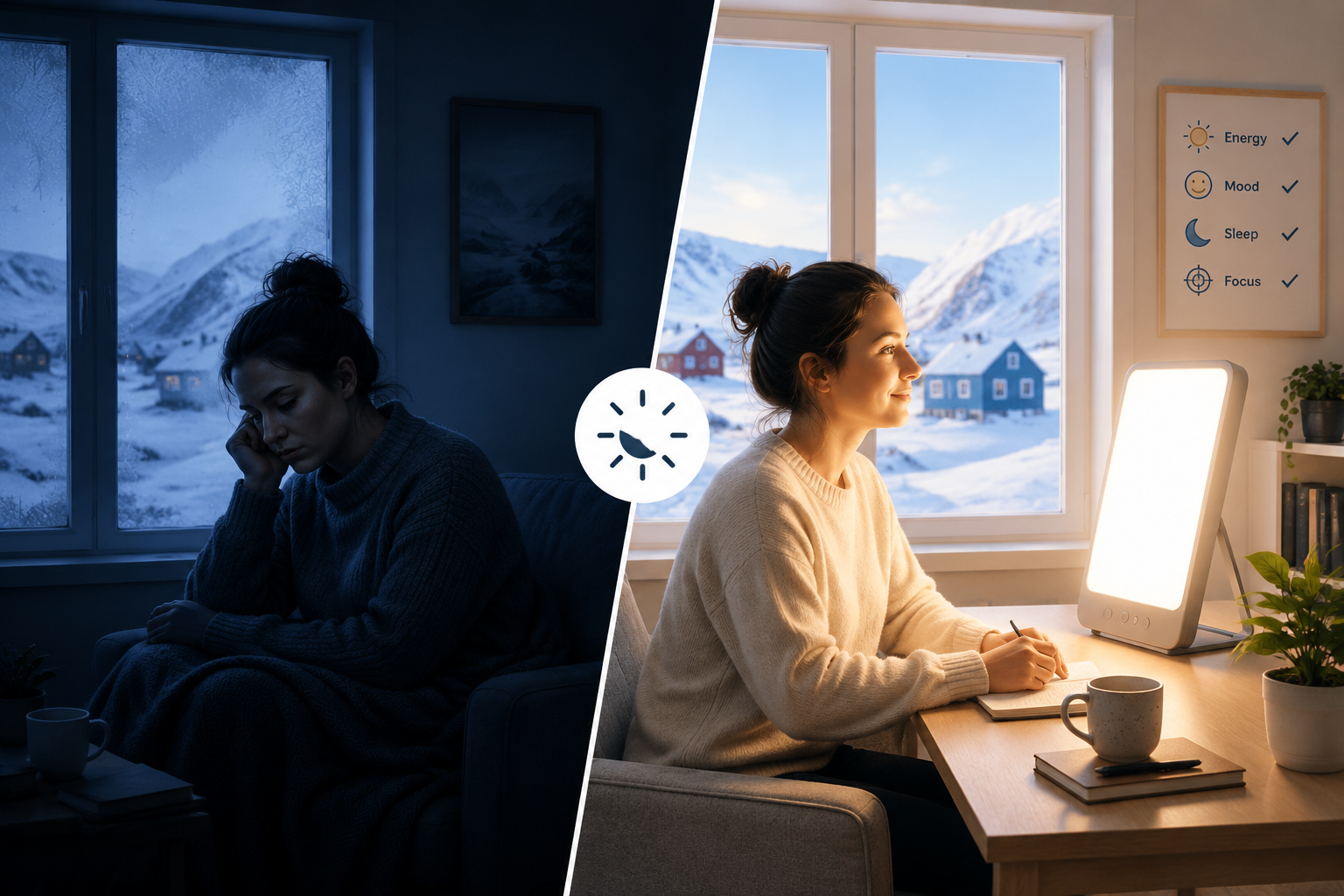
How Can I Tell If I Have SAD or Just Regular Winter Blues
SAD and the winter blues share some symptoms, but they differ in severity and clinical impact. The winter blues (sometimes called subsyndromal SAD) causes mild low mood, sluggishness, and a preference for comfort food, but it does not significantly interfere with work, relationships, or daily functioning. SAD, by contrast, meets the full diagnostic criteria for a major depressive episode.
Key differences at a glance:
| Feature | Winter Blues | Seasonal Affective Disorder |
|---|---|---|
| Mood impact | Mild, manageable | Severe, persistent |
| Functional impairment | Minimal | Significant (work, relationships) |
| Sleep changes | Slightly more sleep | Hypersomnia, difficulty waking |
| Appetite changes | Mild carb cravings | Strong cravings, notable weight gain |
| Duration | A few weeks | Most of autumn/winter season |
| Requires clinical treatment | Usually not | Yes, professional evaluation advised |
To meet the clinical threshold for SAD, symptoms must occur for at least two consecutive years in the same seasonal pattern, and they must resolve completely in spring or summer. If you are unsure, a primary care physician or mental health professional can administer validated screening tools such as the Seasonal Pattern Assessment Questionnaire (SPAQ).
Common mistake: Many people in Arctic regions dismiss their symptoms as normal winter fatigue and never seek evaluation. If your mood, sleep, or productivity drops significantly every winter, that pattern warrants a professional conversation.
Who Is Most at Risk for Developing SAD in Arctic Locations
People living above 60 degrees north latitude are at the highest baseline risk for SAD, but several additional factors increase individual vulnerability. Women are diagnosed with SAD at roughly four times the rate of men, though men often experience more severe episodes when they do develop it (American Psychiatric Association, 2013).
High-risk groups in Arctic communities include:
- People with a personal or family history of depression or bipolar disorder
- Individuals who moved to Arctic regions from lower latitudes (the body does not fully adapt)
- Young adults aged 18-30, who show the highest prevalence in population studies
- People with limited social networks or who live alone
- Those in professions with indoor schedules that prevent any natural light exposure
- Individuals with vitamin D deficiency, which is common in northern populations
One important edge case: people with bipolar disorder can experience SAD-like winter depressions followed by spring hypomania or mania. Treatment in this group requires careful management, because standard antidepressants without mood stabilizers can trigger manic episodes. A psychiatrist familiar with bipolar disorder should guide treatment in these cases.
Difference Between SAD and Clinical Depression in Extreme Latitude Regions
SAD is a seasonal subtype of major depressive disorder, not a separate diagnosis. The key distinction is the predictable seasonal pattern: symptoms begin and end at roughly the same time each year, and there are periods of full remission (typically spring and summer). Non-seasonal clinical depression can occur at any time of year, persist year-round, and does not remit with the return of sunlight.
In Arctic regions, this distinction matters clinically because:
- SAD responds particularly well to light therapy, which has limited evidence for non-seasonal depression
- The treatment window for SAD is time-bound, so starting interventions in early autumn (before symptoms peak) is more effective
- Year-round depression in Arctic residents may require different medication strategies and longer-term psychotherapy
If someone in an Arctic location experiences depression that does not lift in spring or summer, that is a strong signal the condition is not SAD alone, and a comprehensive psychiatric evaluation is warranted.
Best Light Therapy Devices That Actually Work for Arctic Climate Depression
Light therapy is the most evidence-supported first-line treatment for SAD, and it is especially critical for managing Seasonal Affective Disorder in Arctic Latitudes where natural light is unavailable for extended periods. A 10,000-lux full-spectrum fluorescent or LED lamp used for 20-30 minutes each morning has the strongest clinical backing.
What to look for in a light therapy device:
- Intensity of exactly 10,000 lux (devices rated lower require longer sessions)
- UV-filtered light (UV rays are not necessary and can damage eyes and skin)
- A screen size large enough to sit comfortably at arm’s length (roughly 12 inches diagonal or larger)
- Certification or testing by a reputable body (look for devices used in published clinical trials)
How to use it correctly:
- Place the lamp at eye level or slightly above, at a distance of 16-24 inches.
- Use it within the first hour of waking up, ideally between 6:00 and 9:00 a.m.
- Start with 20-30 minutes daily and adjust based on response.
- Do not stare directly into the light; normal activities like eating or reading are fine.
- Begin in early autumn, before symptoms appear, for best results.
Well-researched brands used in clinical studies include Philips (the Philips goLITE BLU and Bright Light Therapy lamp lines) and Carex. Prices in 2026 range from roughly $40 for basic units to $200 or more for premium models. Dawn simulators, which gradually increase light intensity to mimic sunrise, are a useful complement but are not a substitute for a full 10,000-lux session.
Common mistake: Buying a “SAD lamp” that emits only 2,500 lux and using it for 30 minutes produces far less therapeutic effect. Always verify the lux rating.
Are There Specific Medications Recommended for People Living in Low-Sunlight Environments
Yes. For moderate-to-severe SAD, or when light therapy alone is insufficient, medication is an effective and well-studied option. The antidepressant bupropion (brand name Wellbutrin XL) has specific FDA approval for the prevention of seasonal major depressive episodes and is often the first medication considered for SAD in low-sunlight environments.
Selective serotonin reuptake inhibitors (SSRIs) such as sertraline (Zoloft), fluoxetine (Prozac), and escitalopram (Lexapro) are also widely used and have clinical evidence supporting their effectiveness in SAD. A psychiatrist or primary care physician familiar with SAD will typically recommend starting medication in early autumn, before symptoms emerge, and tapering off in spring.
Key considerations for Arctic residents:
- Vitamin D supplementation is frequently recommended alongside medication because deficiency is nearly universal in Arctic populations during winter and may worsen mood symptoms (though vitamin D alone is not a proven SAD treatment)
- Melatonin taken in low doses (0.5-3 mg) in early evening may help reset circadian rhythm disruption, particularly for people who have relocated to Arctic regions
- Avoid self-medicating with alcohol; alcohol worsens depressive symptoms and is a significant risk factor in isolated Arctic communities
Always consult a licensed healthcare provider before starting or stopping any medication. Telehealth services have made this far more accessible in remote Arctic locations in 2026.
How Much Does Professional SAD Treatment Cost Without Insurance
Professional SAD treatment costs vary widely depending on location, provider type, and treatment modality. In 2026, a single session with a licensed therapist or psychologist in the United States or Canada typically ranges from $100 to $300 without insurance. Psychiatrist appointments, which include medication management, often run $200 to $500 for an initial evaluation and $100 to $250 for follow-up visits.
Cost-reduction strategies for Arctic residents:
- Telehealth platforms (BetterHelp, Talkspace, and regional health authority virtual care programs) offer therapy at $60-$100 per session in many cases
- Community mental health centers in northern regions often use sliding-scale fees based on income
- Light therapy devices are a one-time purchase ($40-$200) and are cost-effective over multiple seasons
- Some provincial and territorial health authorities in Canada, as well as state programs in Alaska, offer subsidized mental health services for remote residents
- Group therapy for SAD is often available at lower per-session costs than individual therapy
Important note: In Norway, Iceland, Finland, and other Nordic countries with universal healthcare, most SAD treatment costs are covered under national health systems, though wait times for specialist care can be long in remote areas.
Natural Alternatives to Manage SAD Symptoms Without Expensive Treatments
Several evidence-informed lifestyle strategies can meaningfully reduce SAD symptoms, particularly for mild-to-moderate cases or as complements to clinical treatment. These approaches are especially relevant for managing Seasonal Affective Disorder in Arctic Latitudes where access to professional care may be limited.
Strategies with the strongest evidence base:
- Regular aerobic exercise: Studies published in the journal Psychiatry Research have found that 30-45 minutes of moderate aerobic exercise three to five times per week reduces depressive symptoms comparably to antidepressants in some populations. In Arctic winters, indoor options like treadmills, stationary cycling, or community recreation centers are practical.
- Consistent sleep scheduling: Going to bed and waking at the same time every day, even in total darkness, helps stabilize circadian rhythm. Avoid sleeping in on weekends, which worsens the disruption.
- Social connection: Isolation amplifies SAD symptoms. Regular scheduled contact with friends, family, or community groups, even virtually, provides measurable mood protection.
- Diet: Reducing refined carbohydrates and sugar (which SAD sufferers often crave) and increasing omega-3 fatty acids from fish, nuts, and seeds may support mood regulation.
- Mindfulness-based cognitive therapy (MBCT): This structured program has evidence for preventing depressive relapse and is available through apps and online courses for those without local access.
What does not work well: Spending more time in bed, increasing alcohol consumption, and withdrawing from social activities are common responses to winter depression that reliably make symptoms worse.
How Do Indigenous Arctic Populations Traditionally Cope With Seasonal Mood Changes
Indigenous Arctic peoples, including Inuit, Yupik, Sami, and other groups, have lived in extreme northern environments for thousands of years and developed community-centered practices that appear to buffer the psychological effects of polar darkness. These are not merely cultural curiosities; they represent adaptive strategies with real psychological value.
Traditional coping mechanisms include:
- Communal gathering and storytelling: Extended family and community gatherings during dark months reduce isolation and provide shared meaning and purpose.
- Craft and creative work: Activities like sewing, carving, drum dancing, and beading provide structured engagement and a sense of accomplishment during long indoor periods.
- Seasonal ceremonies and celebrations: Festivals tied to the return of sunlight (such as the Inuit celebration of the first sunrise after polar night) create positive anticipatory events that counteract hopelessness.
- Physical activity: Traditional hunting, fishing through ice, and travel by dog sled maintained physical fitness and purposeful outdoor activity even in extreme cold.
Contemporary research by public health scholars working with Arctic Indigenous communities has noted that disruption of these traditional practices, often caused by colonization, forced relocation, and cultural suppression, correlates with higher rates of depression and substance use. Reconnecting with cultural practices is increasingly recognized as a legitimate component of mental health support in these communities.

Can SAD Lead to More Serious Mental Health Conditions If Left Untreated
Yes. Untreated SAD is not simply a temporary inconvenience. When left unaddressed across multiple seasons, it can escalate into year-round major depressive disorder, anxiety disorders, and in Arctic communities specifically, significantly elevated rates of substance misuse and suicidal ideation.
Research published in the Journal of Affective Disorders has documented that people with recurrent untreated SAD show progressive worsening of episode severity over time. The social and occupational impairment that accumulates across years of untreated winter depression can damage relationships, careers, and physical health in ways that persist beyond the seasonal cycle.
Signs that SAD may be escalating to something more serious:
- Depression that does not fully lift in spring or summer
- Thoughts of self-harm or suicide at any point
- Significant weight loss or gain (more than 10 pounds in a season)
- Inability to perform basic daily functions such as hygiene, eating, or work
- Increasing use of alcohol or other substances to manage mood
If any of these signs are present, professional evaluation is not optional; it is urgent.
Signs That I Should Seek Professional Help for My SAD Symptoms
Seek professional help if your symptoms are interfering with work, relationships, or basic self-care, or if they have persisted for more than two weeks. You do not need to wait until you are in crisis. Early intervention is more effective than treatment after symptoms have become severe.
Specific indicators that warrant a professional evaluation:
- You have missed work or school multiple times due to low mood or fatigue
- You are sleeping more than 10-11 hours and still feel exhausted
- You have lost interest in activities you normally enjoy for more than two consecutive weeks
- You are having thoughts of death or suicide (seek emergency help immediately in this case)
- Light therapy and lifestyle changes have not produced improvement after four weeks
- This is your second or third consecutive winter with significant depressive symptoms
In Arctic regions, telehealth has removed many of the logistical barriers to accessing care. A video appointment with a licensed therapist or physician is a reasonable and effective first step.
Common Mistakes People Make When Trying to Treat Their Winter Depression
The most common mistake is starting treatment too late. Most people wait until symptoms are severe before taking action, but light therapy and preventive medication are significantly more effective when started in early autumn, before the worst of the darkness arrives.
Other frequent errors:
- Using the wrong lamp: A 2,500-lux lamp used for 30 minutes delivers far less therapeutic light than a 10,000-lux lamp. Always check the lux rating.
- Using light therapy at the wrong time: Evening use can disrupt sleep by suppressing melatonin when the body needs it. Morning use is essential.
- Stopping treatment when symptoms improve: Many people feel better after two weeks and stop light therapy or medication. Symptoms typically return. Treatment should continue through the entire dark season.
- Self-medicating with alcohol: Alcohol is a depressant and worsens SAD symptoms significantly, even though it may provide temporary relief.
- Isolating socially: Withdrawing from others feels natural when depressed but reliably deepens the episode.
- Ignoring physical health: Poor sleep, sedentary behavior, and a high-sugar diet all worsen the neurochemical imbalances underlying SAD.
Conclusion: Practical Next Steps for Managing Seasonal Affective Disorder in Arctic Latitudes
Managing Seasonal Affective Disorder in Arctic Latitudes is genuinely challenging, but it is also very treatable when approached systematically. The darkness is not something to simply endure; it is a medical condition trigger that responds well to specific interventions.
Here are your concrete next steps:
- Start early. If you have experienced SAD in previous winters, begin light therapy and any preventive medication in September or October, before symptoms emerge.
- Get the right lamp. Purchase a 10,000-lux, UV-filtered light therapy device and use it for 20-30 minutes every morning within the first hour of waking.
- Talk to a provider. If symptoms are moderate or severe, or if light therapy alone is not enough, consult a physician or psychiatrist about bupropion or an SSRI. Telehealth makes this accessible even in remote locations.
- Protect your social life. Schedule regular contact with friends, family, or community groups throughout the dark months. Do not wait until you feel like it.
- Move your body. Commit to at least 30 minutes of aerobic activity three to five days per week, indoors if necessary.
- Monitor your symptoms. Keep a simple mood diary. If symptoms are not improving after four weeks of consistent treatment, escalate to professional care.
- Know when it is urgent. Thoughts of self-harm require immediate professional attention, not a wait-and-see approach.
The polar night is long, but it is not permanent, and neither is the depression it can trigger. With the right tools and support, most people with SAD in Arctic regions achieve full remission every spring, and many prevent significant episodes altogether with proactive treatment.
Frequently Asked Questions
Does SAD only affect people in the Arctic? No, but prevalence increases sharply with latitude. SAD affects roughly 1-2% of people near the equator and up to 10% or more in populations above 60 degrees north latitude, according to the American Psychiatric Association.
Can children develop SAD in Arctic regions? Yes. SAD can occur in children and adolescents, and symptoms may present as irritability, school refusal, or fatigue rather than classic adult depression. A pediatrician or child psychologist should evaluate persistent seasonal mood changes in children.
How long does it take for light therapy to work? Most people notice improvement within two to four weeks of consistent daily use. Some individuals respond within a few days. If there is no improvement after four weeks of correct use, consult a healthcare provider.
Is vitamin D supplementation a proven SAD treatment? Vitamin D deficiency is common in Arctic populations and may worsen mood, but vitamin D supplementation alone has not been proven to treat SAD in clinical trials. It is a reasonable supplement for general health in northern regions but should not replace evidence-based SAD treatments.
Can I use a tanning bed instead of a light therapy lamp? No. Tanning beds emit UV radiation, which is not the component of light that treats SAD and poses significant skin cancer risk. Therapeutic light therapy lamps are UV-filtered specifically to avoid this.
Does SAD go away permanently after treatment? SAD is typically a recurrent condition. Most people who experience it will continue to be vulnerable in subsequent winters. Proactive annual treatment starting in early autumn is the most effective long-term management strategy.
Is cognitive behavioral therapy (CBT) effective for SAD? Yes. CBT specifically adapted for SAD (CBT-SAD) has strong clinical evidence and may produce more durable long-term benefits than light therapy alone, according to research published in the American Journal of Psychiatry.
What is the fastest way to get relief from SAD symptoms? Combining light therapy (started immediately, every morning) with increased physical activity and social engagement produces the fastest symptom relief without medication. For severe symptoms, medication combined with light therapy typically works faster than either alone.
Can moving to a sunnier climate cure SAD? Relocation to lower latitudes typically resolves SAD symptoms because the trigger (light deprivation) is removed. However, this is not practical for most people, and effective treatment in Arctic locations is achievable without relocation.
Are there any apps that help manage SAD? Several apps offer CBT-based mood tracking, sleep scheduling, and mindfulness exercises relevant to SAD management. Daylio, Woebot, and Sanvello are commonly used, though they are supplements to, not replacements for, clinical care.
References
- American Psychiatric Association. (2013). Diagnostic and Statistical Manual of Mental Disorders (5th ed.). https://www.psychiatry.org/psychiatrists/practice/dsm
- Rohan, K. J., et al. (2015). Randomized trial of cognitive-behavioral therapy versus light therapy for seasonal affective disorder. American Journal of Psychiatry, 172(9), 862-869. https://doi.org/10.1176/appi.ajp.2015.14101293
- Lam, R. W., et al. (2006). The Can-SAD study: A randomized controlled trial of the effectiveness of light therapy and fluoxetine in patients with winter seasonal affective disorder. American Journal of Psychiatry, 163(5), 805-812. https://doi.org/10.1176/ajp.2006.163.5.805
- Magnusson, A., & Partonen, T. (2005). The diagnosis, symptomatology, and epidemiology of seasonal affective disorder. CNS Spectrums, 10(8), 625-634. https://doi.org/10.1017/S1092852900019593
- Blume, C., Garbazza, C., & Spitschan, M. (2019). Effects of light on human circadian rhythms, sleep and mood. Somnologie, 23(3), 147-156. https://doi.org/10.1007/s11818-019-00215-x
- Melrose, S. (2015). Seasonal affective disorder: An overview of assessment and treatment approaches. Depression Research and Treatment, 2015, Article 178564. https://doi.org/10.1155/2015/178564
Read next: Skin Barrier Repair for Outdoor Workers in Sub-Zero Climates. A closer look at cold weather skin barrier.