
Key Takeaways
- Meditative wood carving differs from standard woodworking by prioritizing slow, focused, repetitive cuts over speed or production output.
- A functional beginner set costs between $30 and $80; spending more does not guarantee better results at the start.
- Basswood and butternut are the best woods for beginners because they are soft, consistent, and widely available.
- Sharp tools are safer than dull ones; a leather strop and honing compound are essential from day one.
- Cut-resistant gloves and a thumb guard are the minimum safety equipment required before making a single cut.
- Whittling is a subset of wood carving that uses only a knife; full wood carving also uses gouges, chisels, and V-tools.
- People with arthritis or hand pain should look for tools with wide, cushioned handles and consider palm-style carving tools.
- Most beginners produce recognizable, satisfying work within four to eight weeks of consistent practice.
- No prior crafting experience is needed; the learning curve is gentle when the right tools and wood are chosen from the start.
- Free and low-cost online tutorials are widely available, and structured courses exist on platforms like Skillshare and YouTube.
What Exactly Is Meditative Wood Carving and How Is It Different from Regular Woodworking
Meditative wood carving is the practice of hand-carving wood slowly and with full attention, using the repetitive motion of the tool as a focus point rather than rushing toward a finished product. Unlike standard woodworking, which often relies on power tools, jigs, and efficiency, meditative carving is done entirely by hand and at a deliberate pace.
The distinction matters for beginners. Regular woodworking rewards speed and precision at scale. Meditative carving rewards presence. Each cut is an opportunity to notice the grain of the wood, the resistance of the blade, and the quiet rhythm of the work. Many practitioners describe it as similar to knitting or drawing: the hands stay busy while the mind settles.
Researchers studying craft-based mindfulness have noted that repetitive hand tasks can lower cortisol levels and reduce rumination, though the specific evidence base for wood carving is still developing. What is well-documented is that flow states, the mental condition of full absorption in a task, are commonly reported by carvers of all skill levels.
For anyone exploring meditative wood carving for beginners: choosing the right tools, the most important framing is this: the goal is not a perfect carving. The goal is a calm, focused hour with a piece of wood and a sharp knife.
What Is the Difference Between Whittling and Wood Carving
Whittling uses only a knife. Wood carving uses a broader range of tools including gouges, chisels, and V-tools in addition to knives.
Whittling is actually the easiest entry point for most beginners. A single Mora 120 or Flexcut Whittlin’ Jack knife and a block of basswood is all you need to start. The cuts are simple, the tool is intuitive, and cleanup is just a pile of shavings.
Full wood carving opens up more possibilities: relief carving (carving images into flat panels), chip carving (removing small geometric chips to create patterns), and sculpture in the round (carving three-dimensional figures). These techniques require gouges and chisels, which add cost and a steeper learning curve.
Recommendation: Start with whittling for the first four to six weeks. Once you’re comfortable controlling a knife, add a basic gouge and a V-tool to expand your options.
How Much Do Beginner Wood Carving Tools Typically Cost
A solid beginner set costs between $30 and $80. You do not need to spend more than that to start carving well.
Here is a realistic cost breakdown for 2026:
| Item | Estimated Cost |
|---|---|
| Basic whittling knife (e.g., Mora 120) | $15 – $25 |
| 5-piece beginner carving set (knife, gouges, V-tool) | $35 – $65 |
| Leather strop + honing compound | $10 – $20 |
| Cut-resistant gloves | $10 – $15 |
| Basswood carving blocks (pack of 6) | $12 – $20 |
| Total (basic setup) | $47 – $80 |
Avoid buying large 20-piece or 30-piece sets marketed to beginners. Most of those tools will sit unused, and the quality is often poor. A sharp $20 Mora knife will outperform a dull $5 knife from a bulk set every time.
Mid-range sets from brands like Flexcut, BeaverCraft, and Pfeil (Swiss Made) offer better steel and ergonomics. Pfeil tools, made in Switzerland, run $20 to $40 per tool and are worth the investment once you know you’ll stick with the craft.
What Type of Wood Is Best for Someone Just Starting Out
Basswood is the best wood for beginners. It is soft, has a fine grain, cuts cleanly in all directions, and is widely available in pre-cut carving blocks.
Other good options for new carvers:
- Butternut: Slightly harder than basswood, beautiful grain, excellent for relief carving.
- White pine: Very soft and inexpensive, though it can tear along the grain if your tools aren’t sharp.
- Jelutong: Popular with figure carvers, very consistent texture, easy to find at specialty woodworking stores.
Woods to avoid as a beginner:
- Oak and maple: Too hard for hand tools without significant experience.
- Walnut: Beautiful but dense; save it for when your tool control is solid.
- Found wood from the yard: Unpredictable moisture content, hidden cracks, and variable hardness make it frustrating for beginners.
Pre-dried, pre-cut basswood blocks sold specifically for carving (available from Woodcraft, Amazon, and BeaverCraft’s website) are the most reliable starting point. They’re consistent, affordable, and ready to carve without any preparation.
What Safety Equipment Do I Need Before I Start Wood Carving
At minimum, you need cut-resistant gloves and a thumb guard before making your first cut. Wood carving knives are extremely sharp, and the most common beginner injury is a slip that cuts the hand holding the wood.
Essential safety gear:
- Cut-resistant gloves (Level A4 or higher): Protect the hand holding the wood. Brands like NoCry and DEX FIT make affordable options under $15.
- Thumb guard (leather or rubber): Protects the thumb of your cutting hand during push cuts.
- First aid kit nearby: Cuts happen even to experienced carvers. Keep bandages and antiseptic accessible.
Safe cutting habits matter as much as gear:
- Always cut away from your body.
- Keep both hands behind the cutting edge whenever possible.
- Never carve when tired or distracted. This is especially relevant for meditative carving: if your mind is too scattered to focus, it’s not the right moment to pick up a sharp tool.
A carving vise or bench hook can also help secure your work, reducing the need to grip the wood tightly and lowering injury risk.
What Are the Most Common Mistakes Beginners Make When Choosing Carving Tools
The single most common mistake is buying too many tools too soon. The second most common is buying cheap tools and then blaming themselves when the wood tears instead of cuts.
Other frequent mistakes:
- Skipping the strop: Dull tools are the number one cause of frustration and injury in beginner carvers. A leather strop used for two minutes before each session makes a significant difference.
- Choosing wood that’s too hard: Beginners who start on oak or walnut often quit because they think they lack skill. They don’t; they just have the wrong wood.
- Ignoring handle ergonomics: A tool that causes hand fatigue after 20 minutes will end your sessions early. Hold tools in the store (or check return policies when buying online) before committing.
- Buying sets without researching the brand: Many budget sets use soft steel that dulls quickly and can’t hold an edge. Read reviews specifically mentioning steel quality and edge retention.
Which Wood Carving Tools Are Recommended for People with Arthritis or Hand Pain
People with arthritis or hand pain should prioritize tools with wide, cushioned handles and consider palm-style carving tools, which require less grip force than standard long-handled tools.
Specific recommendations:
- Palm tools (e.g., Flexcut Palm Set): Shorter, wider handles that fit in the palm of the hand. They require less grip strength and reduce strain on finger joints.
- Ergonomic handles: Look for handles with a larger diameter (1.25 inches or wider) and a soft rubber or contoured wood grip.
- Lightweight tools: Heavier tools increase fatigue. Flexcut and BeaverCraft both offer lighter options.
- Razor-sharp edges: A sharper tool requires less force to cut, which directly reduces joint stress. For carvers with hand pain, keeping tools extremely sharp is not optional; it’s essential.
Adaptive carving techniques also help. Securing the wood in a vise and using body weight rather than hand strength to drive cuts reduces the load on painful joints significantly. Some carvers with arthritis also find that warming their hands before a session and keeping sessions shorter (20 to 30 minutes) allows them to carve comfortably for years.
Can I Learn Wood Carving with No Prior Crafting Experience
Yes, completely. Wood carving, especially whittling, is one of the most accessible hand crafts for people with no prior experience. The basic cuts can be learned in a single afternoon, and most beginners produce something recognizable within their first few sessions.
No drawing ability, woodworking background, or artistic training is required. The craft teaches itself through repetition. You learn to read the grain of the wood, to feel when a cut is going with or against the fiber, and to adjust your angle instinctively, all through practice rather than prior knowledge.
The key is starting simple. A small basswood bear, owl, or simple spoon shape gives you clear goals without overwhelming complexity. Many beginner kits come with a pattern and step-by-step instructions, which removes the guesswork entirely.
How Do Professional Carvers Choose Their Initial Tool Set
Professional carvers almost universally recommend starting with fewer, higher-quality tools rather than a large set of mediocre ones. Most working carvers began with three to five tools and added to their collection only as specific projects demanded it.
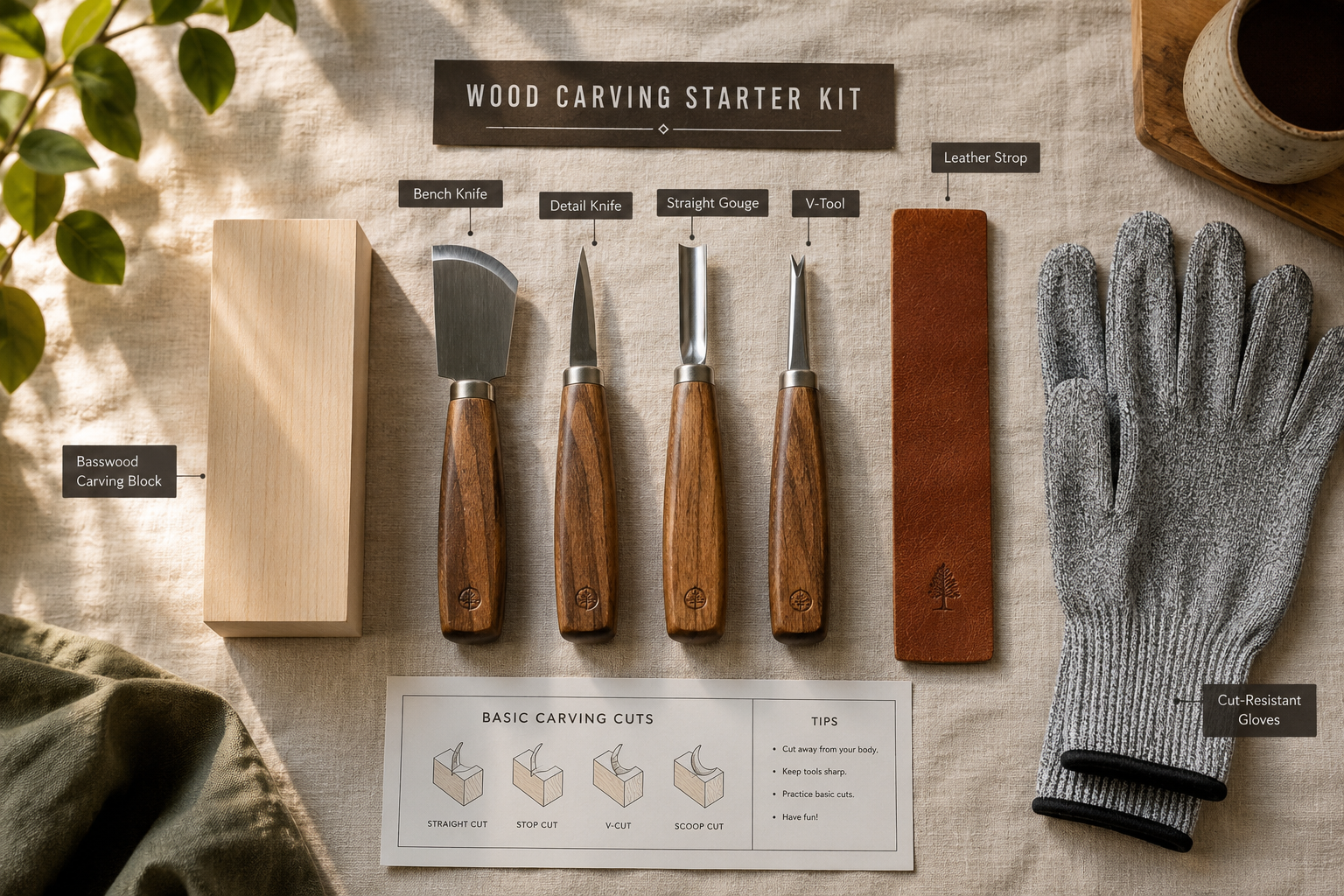
A professional-recommended starter set for meditative wood carving for beginners: choosing the right tools typically includes:
- A bench knife (for general shaping)
- A detail knife (for fine work and tight areas)
- A #5 sweep gouge, 8mm (versatile for relief and figure carving)
- A V-tool, 60 degrees (for line work and texture)
- A leather strop and honing compound
This five-piece kit covers the majority of beginner projects and can handle intermediate work as well. Brands that professionals consistently recommend for beginners include Flexcut (USA), BeaverCraft (Ukraine), and Mora (Sweden) for knives.
Are There Online Classes or Tutorials for Learning Meditative Wood Carving Techniques
Yes, and the quality of free resources available in 2026 is genuinely excellent. YouTube channels like “Mary May – Woodcarver,” “Lora Irish,” and “Doug Linker” offer structured, beginner-friendly tutorials at no cost.
For structured learning with feedback:
- Skillshare hosts several wood carving courses, including beginner whittling and relief carving, available with a monthly subscription.
- Mary May’s School of Traditional Woodcarving (marymaycarving.com) offers paid online courses with video lessons and community access.
- Woodcraft stores (in the US) frequently host in-person beginner workshops for $30 to $60, which are particularly valuable because you get real-time feedback on your grip and cut angle.
For the meditative aspect specifically, some instructors now combine carving instruction with mindfulness guidance, framing each lesson around breath, attention, and the sensory experience of the wood. Searching “mindful wood carving” or “slow carving” on YouTube surfaces this niche but growing category.
What Kind of Maintenance Do Wood Carving Tools Require
Wood carving tools require regular stropping and occasional sharpening to stay effective. A well-maintained tool will outlast its owner; a neglected one becomes frustrating within weeks.
Basic maintenance routine:
- Before each session: Strop each tool 10 to 15 times on a leather strop loaded with honing compound. This realigns the edge without removing metal.
- Every few weeks (or when the tool feels dull): Use a sharpening stone (1000/6000 grit combination stone works well) to re-establish the bevel.
- Periodically: Apply a light coat of camellia oil or mineral oil to the blade to prevent rust, especially in humid climates.
- Handles: Rub wooden handles with linseed oil once or twice a year to prevent cracking.
Sharpening is a skill in itself, and many beginners find it intimidating at first. The good news is that stropping alone, done consistently, keeps tools sharp enough for most carving work between full sharpenings.
How Long Does It Take to Get Decent at Wood Carving as a Beginner
Most beginners produce work they’re genuinely proud of within four to eight weeks of regular practice, defined as two to four sessions per week of 30 to 60 minutes each.
“Decent” is relative, but here’s a realistic timeline:
- Week 1-2: Learning basic cuts, understanding grain direction, completing a simple shape (a small ball or basic animal).
- Week 3-4: Improving tool control, attempting a small figure or spoon, noticing fewer tearouts.
- Week 6-8: Producing clean, intentional cuts, completing multi-step projects, developing a personal pace and rhythm.
The meditative dimension of the practice often develops faster than the technical skill. Many carvers report feeling genuinely calm and absorbed during sessions by their second or third week, even when their carving results are still rough.
Progress accelerates when you carve consistently rather than in long infrequent sessions. Thirty minutes every other day beats a three-hour session once a week, both for skill development and for the mindfulness benefits.
Getting Started with Meditative Wood Carving for Beginners: Choosing the Right Tools — A Simple Checklist
Before your first session, confirm you have:
- A sharp bench knife or whittling knife
- A basswood carving block (4x4x1 inch is a good starting size)
- Cut-resistant gloves (Level A4 or higher)
- A leather strop and honing compound
- A simple beginner project pattern (free printable patterns are available on most carving websites)
- A clear, well-lit workspace with a stable surface
That’s genuinely all you need. The rest comes with time.
FAQ
What is the best single tool for a complete beginner to wood carving? A Mora 120 or BeaverCraft C1 whittling knife is the best single starting tool. It’s inexpensive, holds an edge well, and handles the majority of beginner projects.
Is wood carving an expensive hobby to start? No. A functional beginner setup including a knife, a block of basswood, gloves, and a strop costs roughly $40 to $60 in 2026.
Can children learn meditative wood carving? Yes, with supervision. Children aged 10 and older can learn basic whittling safely with proper instruction, appropriate tools (a smaller, lighter knife), and adult oversight. Cut-resistant gloves are especially important for young carvers.
How do I know if my carving tools are sharp enough? A sharp tool shaves end grain cleanly without tearing. A quick test: try slicing a thin shaving off the end of your basswood block. If it tears rather than cuts, the tool needs stropping.
What is the easiest wood carving project for a first-timer? A simple wooden ball or a small, blocky animal figure (bear, owl, or whale) is ideal. These shapes are forgiving of imprecision and teach the basic cuts without requiring fine detail work.
Do I need a workbench to carve wood? No. Most whittling and small-scale carving is done holding the wood in your non-dominant hand. A kitchen table or lap tray works fine for beginner projects.
How do I prevent my carving tools from rusting? Apply a thin coat of camellia oil or mineral oil to the blades after each session and store them in a dry place. A simple tool roll (canvas or leather) protects edges and prevents moisture buildup.
Is meditative wood carving good for anxiety or stress? Many practitioners report significant stress reduction from regular carving sessions. The repetitive, focused nature of the cuts promotes a flow state that interrupts anxious thought patterns, though it should not replace professional mental health support when needed.
What’s the difference between a gouge and a chisel? A chisel has a flat cutting edge. A gouge has a curved cutting edge and is used to scoop out concave areas. Both are used in wood carving, but beginners typically start with a knife before adding either.
How long should a beginner carving session last? Thirty to sixty minutes is ideal for beginners. Longer sessions increase fatigue and injury risk, and shorter sessions don’t allow enough time to settle into a focused rhythm.
Conclusion
Meditative wood carving for beginners: choosing the right tools does not have to be complicated. Start with a sharp knife, a block of basswood, and a pair of cut-resistant gloves. Spend your first sessions learning to make clean cuts rather than chasing a finished product. Add tools only when a specific project demands them.
The meditative value of this craft comes from the repetition and the presence it requires, not from owning a full set of professional tools. A $20 knife and a $5 block of wood can deliver the same calm, focused experience as a $500 set, provided the knife is sharp and the carver is paying attention.
Actionable next steps for 2026:
- Order a Mora 120 or BeaverCraft C1 knife and a pack of basswood blocks this week.
- Watch two or three beginner tutorials on YouTube before your first session to understand grain direction and basic cuts.
- Set a timer for 30 minutes for your first three sessions. No pressure to finish anything.
- Buy a leather strop and honing compound at the same time as your knife. Stropping before every session is a habit worth building from day one.
- Join a beginner carving community online (r/woodcarving on Reddit is active and welcoming) to ask questions and share progress.
The wood is patient. So is the practice.
References
- Csikszentmihalyi, M. (1990). Flow: The Psychology of Optimal Experience. Harper & Row.
- Flexcut Tool Company. (2023). Beginner’s Guide to Wood Carving Tools. flexcut.com
- BeaverCraft Tools. (2024). Wood Carving for Beginners: Tools, Wood, and First Projects. beavercrafttools.com
- Woodcraft Magazine. (2022). Choosing Your First Carving Tools. woodcraft.com
- Mary May Woodcarver. (2023). Getting Started with Wood Carving. marymaycarving.com
Read next: Noise Reduction in Historic Apartments Through Textile Interior Design. A closer look at textile noise reduction.