
Key Takeaways
- Barefoot shoes designed for office wear closely mimic oxfords, derbies, and loafers, making them suitable for most business casual and even some business formal environments.
- Brands such as Vivobarefoot, Groundies, and Ahinsa offer dress-ready styles that pass as conventional leather shoes at a glance.
- Quality barefoot dress shoes typically cost between $150 and $350, which is comparable to mid-range traditional leather footwear.
- Wide-toe-box construction benefits people with bunions, wide feet, or forefoot discomfort, but those with plantar fasciitis or severe arch conditions should transition slowly and consult a podiatrist first.
- Breaking in barefoot shoes takes two to six weeks for most people accustomed to conventional footwear.
- Slim-cut trousers, tapered chinos, and well-fitted suit pants pair best with minimalist dress shoes.
- Barefoot shoes are appropriate for client meetings and presentations when the style is polished and the fit is intentional.
- The most common mistake professionals make is choosing a casual barefoot style (trail runners, huaraches) instead of a dress-specific model.
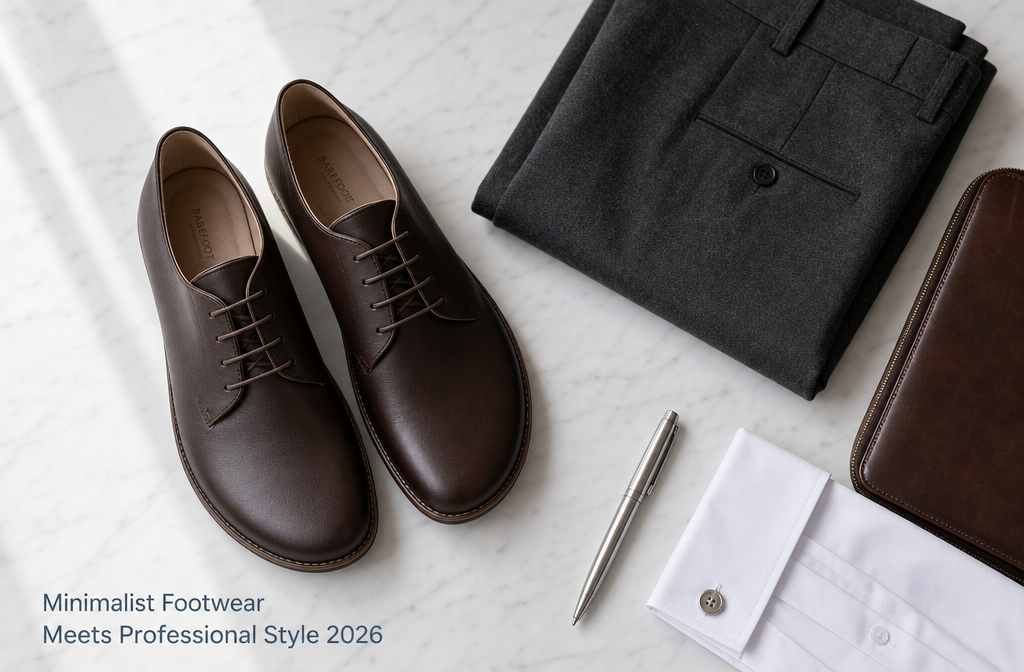
What Exactly Are Barefoot Shoes and How Do They Look Professional
Barefoot shoes are footwear designed to mimic the mechanics of walking without shoes. They share three defining features: a zero-drop sole (heel and toe at the same height), a wide toe box that lets toes spread naturally, and a thin, flexible sole that allows ground feel. In dress shoe form, these features are built into silhouettes that look like conventional oxfords, derbies, monk straps, or loafers.
From across a conference room, a well-made barefoot dress shoe is nearly indistinguishable from a standard leather shoe. The difference becomes apparent only when you pick one up and notice how light and flexible it is. Brands achieve this by using full-grain leather uppers, minimal stitching, and clean lines that align with classic office footwear aesthetics.
What makes a barefoot shoe look professional:
- Smooth, unbroken leather or high-quality vegan leather upper
- Cap toe or plain toe design (avoid chunky soles or visible foam midsoles)
- Neutral colors: black, dark brown, tan, or oxblood
- Lace-up or slip-on closure without athletic branding
- Slim profile that tapers naturally toward the toe without being pointed
Barefoot Shoes in the Office: Stylish Combinations for Professional Dress Codes by Dress Code Level
The right barefoot shoe depends heavily on your office’s dress code. Here is a direct breakdown by formality level.
Business Formal (suits, ties, structured blazers) This is the hardest environment for barefoot shoes, but it is not impossible. Choose a full-grain leather oxford or derby in black or dark brown. Vivobarefoot’s Ra III and Groundies’ Vienna are examples that hold up visually in formal settings. Pair with a single-break trouser and dark socks. Avoid square toes or overly wide silhouettes that read as casual.
Business Casual (chinos, blazers, dress trousers without a tie) This is the sweet spot for barefoot office footwear. Loafers, derbies, and monk straps all work well. You have more flexibility with color, including tan and oxblood. Pair slim-cut chinos or tailored trousers with a minimalist loafer for a clean, modern look.
Smart Casual (collared shirts, dark jeans, clean sneakers acceptable) Almost any dress-oriented barefoot shoe works here. You can even introduce a minimalist Chelsea boot or a leather sneaker-style barefoot shoe without breaking the dress code.
| Dress Code | Best Barefoot Style | Recommended Colors |
|---|---|---|
| Business Formal | Oxford, Derby | Black, Dark Brown |
| Business Casual | Loafer, Monk Strap | Brown, Tan, Oxblood |
| Smart Casual | Chelsea Boot, Derby | Any neutral |
Can I Wear Barefoot Shoes in a Business Formal Environment
Yes, but with conditions. Business formal dress codes demand that footwear look polished, structured, and traditional. Barefoot shoes meet this standard only when the upper is genuine leather, the sole is thin and dark, and the silhouette follows classic dress shoe lines. A barefoot oxford in black full-grain leather with a Goodyear-welted appearance (some brands simulate this with stitching detail) can pass muster in most formal offices.
The honest caveat: if your workplace requires patent leather or highly polished cap-toe shoes for daily wear, barefoot options may fall slightly short in sheen and structure. In that case, reserve barefoot shoes for less formal days and use them as your primary footwear as the dress code relaxes.
Common mistake: Wearing barefoot trail runners or wide-toe sneakers to a formal office and assuming the foot-health rationale excuses the visual mismatch. It does not. The shoe must look the part regardless of its construction philosophy.
How Much Do Good Quality Barefoot Dress Shoes Cost
Good quality barefoot dress shoes for office use typically cost between $150 and $350. This puts them in the same range as mid-tier traditional dress shoes from brands like Johnston & Murphy or Ecco.
Here is a rough breakdown by price tier:
- $100 to $175: Entry-level options, often with synthetic uppers. Suitable for smart casual environments. Brands: Softstar (some models), Be Lenka entry styles.
- $175 to $275: Mid-range with genuine leather uppers, better construction, and more formal silhouettes. Brands: Vivobarefoot, Ahinsa, Groundies.
- $275 to $400+: Premium options with full-grain leather, hand-stitching, and longer durability. Brands: Vivobarefoot Gobi III (premium), some custom or small-batch makers.
Durability note: barefoot dress shoes with leather uppers and well-stitched soles typically last three to five years with regular care, which is comparable to similarly priced conventional shoes.
Which Barefoot Shoe Brands Look Most Like Traditional Office Shoes
Several brands have built their reputation specifically on dress-ready barefoot footwear. The following are the most consistently recommended options in 2026 for professional environments:
- Vivobarefoot (UK-based): The Ra III Oxford and Gobi III are the most office-appropriate models. Clean lines, leather uppers, and a slim profile. Widely considered the benchmark for barefoot dress shoes.
- Groundies (Germany-based): Offers a wide range of dress styles including oxfords, loafers, and Chelsea boots. The Vienna and Berlin models are particularly popular for business casual settings.
- Ahinsa Shoes (Czech Republic): Known for vegan leather options that photograph and wear like genuine leather. Good for professionals who prefer animal-free materials.
- Be Lenka (Slovakia): The Elite and Imperio models are dress-focused with a slightly roomier toe box than Vivobarefoot, which suits wider feet.
- Zaqq (Germany): Minimalist dress shoes with a European aesthetic. Slim, clean, and well-suited to formal European-style office environments.
Choose Vivobarefoot if you want the widest distribution, easiest returns, and the most established reputation. Choose Groundies or Be Lenka if you need a wider toe box or prefer a slightly softer construction.
Are Barefoot Shoes Comfortable for People Who Stand All Day at Work
For most people, yes, but the comfort comes from adaptation rather than cushioning. Barefoot shoes do not provide the arch support or cushioned midsole that conventional shoes offer. Instead, they allow your foot’s natural musculature to engage and support itself. This is beneficial long-term but can cause significant fatigue and soreness during the first few weeks of transition.
People who stand all day, such as teachers, retail managers, or healthcare administrators, often report that barefoot shoes become more comfortable over time than cushioned alternatives because the foot strengthens and distributes weight more evenly across the entire sole.
Practical tips for all-day standing:
- Start by wearing barefoot shoes for two to three hours per day and gradually increase.
- Stand on anti-fatigue mats when possible during the transition period.
- Stretch your calves and plantar fascia daily (the Achilles and calf muscles shorten with conventional heel-raised shoes and need time to lengthen).
- Avoid switching back and forth between heavily cushioned shoes and barefoot shoes during the same day, as this confuses muscle adaptation.
Do Barefoot Shoes Work for People with Wide Feet or High Arches
Barefoot shoes are often better than conventional shoes for people with wide feet, because the wide toe box is a core design feature rather than an accommodation. Brands like Be Lenka, Groundies, and Vivobarefoot all offer toe boxes that allow the forefoot to spread naturally, which reduces pressure on bunions and Morton’s neuroma.
For high arches, the picture is more nuanced. People with high arches often rely on arch support insoles in conventional shoes. Barefoot shoes have flat insoles by design. Some people with high arches adapt well over time as foot strength increases. Others find the transition painful. If you have high arches, start with shorter wear periods and consider consulting a podiatrist before committing fully.
What foot conditions might prevent someone from wearing barefoot office shoes:
- Severe plantar fasciitis (especially in the acute phase): the lack of cushioning can aggravate inflammation.
- Achilles tendinopathy: the zero-drop sole places the Achilles under more load, which can worsen existing tendon issues.
- Post-surgical foot conditions: always follow your surgeon’s guidance before changing footwear.
- Severe flat feet with overpronation: some people need orthotic support that barefoot shoes cannot accommodate.
If you have any of these conditions, consult a podiatrist before transitioning to barefoot footwear.
What Dress Pants and Suits Pair Best with Minimalist Shoes
Slim or tapered trousers pair best with barefoot dress shoes. Because barefoot shoes have a wider toe box than conventional dress shoes, pairing them with wide-leg or pleated trousers can make the foot look disproportionately large.
Best trouser pairings:
- Slim-cut suit trousers in charcoal, navy, or mid-grey: pair with a black or dark brown barefoot oxford.
- Tapered chinos in olive, navy, or stone: pair with a tan or oxblood barefoot loafer or derby.
- Cropped trousers (ending just above the ankle): work particularly well because they show the shoe silhouette clearly and the wide toe box reads as a design choice rather than an oversight.
Avoid: wide-leg trousers that pool over the shoe, because the extra fabric hides the shoe’s clean lines and makes the overall look heavy.
Sock choice matters too. For business formal, wear dark socks that match the trouser. For business casual, a subtle pattern or contrasting color can work well, especially with cropped trousers.
Barefoot Shoes in the Office: Stylish Combinations for Professional Dress Codes – Common Mistakes to Avoid
The single biggest mistake professionals make when adopting barefoot shoes for office wear is choosing a style designed for outdoor or athletic use and assuming it will pass in a professional setting. Trail runners, huarache sandals, and minimalist sneakers are barefoot shoes, but they are not office shoes.
Other frequent mistakes:
- Transitioning too fast: Wearing barefoot shoes all day from day one after years in conventional footwear. This leads to foot pain, which causes people to abandon the shoes entirely before adaptation can occur.
- Ignoring trouser fit: Wearing wide or baggy trousers that visually clash with the wide toe box of barefoot shoes.
- Skipping shoe care: Barefoot leather dress shoes require the same conditioning and polishing as conventional leather shoes. Neglecting this makes them look worn quickly.
- Buying the wrong size: Many people size down in barefoot shoes because the toe box looks large. Size for length and let the toe box do its job. The shoe should not look sloppy, but the toes should have room to spread.
- Wearing barefoot shoes to an interview before you are confident in the look: If you are not yet sure how to style them, wear conventional shoes to high-stakes first impressions and introduce barefoot shoes once you are established.
Are Barefoot Shoes Appropriate for Client Meetings or Presentations
Yes, when styled correctly. A polished barefoot oxford or loafer in leather is appropriate for client meetings and presentations. The shoe’s construction philosophy is invisible to observers; what they see is the silhouette, material, and condition of the shoe.
The practical test: if you placed your barefoot dress shoe next to a conventional dress shoe of similar color and style, would a non-specialist notice a meaningful difference? For the best barefoot dress shoes, the answer is no. That is your benchmark for client-facing situations.
Edge case: Very conservative industries (law, finance, government) in certain regions may have unspoken expectations about footwear that lean toward traditional brands and construction. In these environments, use your judgment about whether the slightly wider toe box will draw comment, and when in doubt, start with business casual days before wearing barefoot shoes to a major client presentation.
How Do Barefoot Shoes Compare to Traditional Leather Dress Shoes in Durability
Quality barefoot dress shoes with leather uppers are broadly comparable in durability to similarly priced conventional leather shoes. The sole is the main difference: barefoot soles are thinner and may wear faster on rough surfaces. However, many brands now offer resoling services or replacement soles, which extends the shoe’s life significantly.
Vivobarefoot, for example, has offered a resoling program. Groundies uses replaceable outsoles on some models. If longevity is a priority, ask about resoling options before purchasing.
Durability factors to check before buying:
- Is the upper full-grain leather or corrected-grain? Full-grain lasts longer.
- Is the sole stitched or glued? Stitched soles can be resoled; glued soles generally cannot.
- Does the brand offer a repair or resoling service?
Tips for Breaking In Barefoot Shoes Without Foot Pain
Breaking in barefoot shoes takes two to six weeks for most people who have worn conventional shoes their entire adult lives. The process is about muscular adaptation, not just leather softening.
A practical transition plan:
- Week one: Wear barefoot shoes for two to three hours on days when you have less standing or walking. Wear conventional shoes for the rest of the day.
- Week two: Increase to four to five hours per day. Begin wearing them on moderate-activity days.
- Weeks three and four: Wear barefoot shoes as your primary office shoe, returning to conventional shoes only if you experience significant pain.
- Weeks five and six: Full transition for most people. Continue daily calf and foot stretches.
Signs you are transitioning too fast: Sharp heel pain, Achilles tightness that does not resolve overnight, or forefoot pain that worsens day over day. If these occur, slow down and spend more time at earlier stages.
Conclusion: Making Barefoot Shoes Work in Your Professional Wardrobe
Barefoot shoes in the office are a practical, health-conscious choice that does not require sacrificing style or professional credibility. The critical factors are choosing a dress-specific silhouette in quality leather, pairing it with well-fitted trousers, and giving your feet adequate time to adapt.
Actionable next steps:
- Identify your office’s dress code level and match it to the silhouette guide in this article.
- Start with one pair from a reputable brand (Vivobarefoot, Groundies, or Be Lenka are reliable starting points) in a neutral color that works with most of your existing wardrobe.
- Follow the six-week transition plan to avoid foot pain and abandonment.
- If you have an existing foot condition, book a podiatry appointment before purchasing.
- Treat your barefoot dress shoes with the same leather care routine you would apply to any quality dress shoe: condition every four to six weeks, polish as needed, and use shoe trees to maintain shape.
The investment in quality barefoot office footwear pays off in both foot health and professional appearance. Done right, most colleagues will never know the difference, and your feet will thank you by the end of a long workday.
Frequently Asked Questions
Can barefoot shoes pass a business formal dress code? Yes, if you choose a full-grain leather oxford or derby in black or dark brown with a slim, clean silhouette. The key is that the shoe must look like a conventional dress shoe from a normal viewing distance.
How long does it take to get used to barefoot shoes at work? Most people need two to six weeks to adapt comfortably. Start with two to three hours per day and increase gradually to avoid foot pain from muscles that are not yet conditioned.
Are barefoot dress shoes good for wide feet? Yes. The wide toe box is a core feature of barefoot shoe design, making them one of the best options available for people with wide feet, bunions, or forefoot crowding.
What is the best barefoot shoe brand for office use? Vivobarefoot and Groundies are the most consistently recommended for professional environments in 2026. Vivobarefoot offers the broadest range of dress styles; Groundies offers a slightly wider toe box and a strong European aesthetic.
Can I wear barefoot shoes if I have plantar fasciitis? Proceed with caution. During an acute flare-up, the thin sole may aggravate symptoms. Consult a podiatrist first, and if you do transition, do so very gradually over several months rather than weeks.
Do barefoot dress shoes require special care? No special care beyond standard leather maintenance: conditioning every four to six weeks, polishing as needed, using shoe trees, and keeping them dry. The thin sole means you should avoid rough surfaces that would abrade it quickly.
Are barefoot shoes more expensive than regular dress shoes? They are comparable in price to mid-range conventional dress shoes. Expect to pay $150 to $350 for a quality pair, which is similar to brands like Ecco or Johnston & Murphy.
What trouser style works best with barefoot dress shoes? Slim or tapered trousers work best. The wide toe box of barefoot shoes can look disproportionate under wide-leg or heavily pleated trousers. Cropped trousers that show the ankle are an especially good pairing.
Can I wear barefoot shoes to a job interview? It depends on the industry. For creative, tech, or startup environments, yes. For law, finance, or highly conservative sectors, wear conventional dress shoes to the interview and introduce barefoot shoes once you are established.
Do barefoot shoes last as long as traditional leather dress shoes? With proper care, yes. Full-grain leather uppers are equally durable. The sole may wear faster on rough surfaces, so check whether the brand offers a resoling service before purchasing.
Sources
- Vivobarefoot official product pages and resoling program information, vivobarefoot.com (2025)
- Groundies official product range, groundies.com (2025)
- Be Lenka official sizing and fit guides, belenka.com (2025)
- Ahinsa Shoes product descriptions and materials information, ahinsashoes.com (2025)
Read next: Slow Fashion for Men: Finding and Maintaining High-Quality Basics. A closer look at slow fashion for men.