
Key Takeaways
- Bearded dragons are generally considered “senior” at age five and older, though some show dietary needs shifting as early as age four.
- Soft, easily digestible foods such as pureed butternut squash, mashed blueberries, and finely chopped collard greens reduce digestive stress in older reptiles.
- Protein needs decrease slightly in seniors, but calcium and vitamin D3 supplementation remains critical to prevent metabolic bone disease.
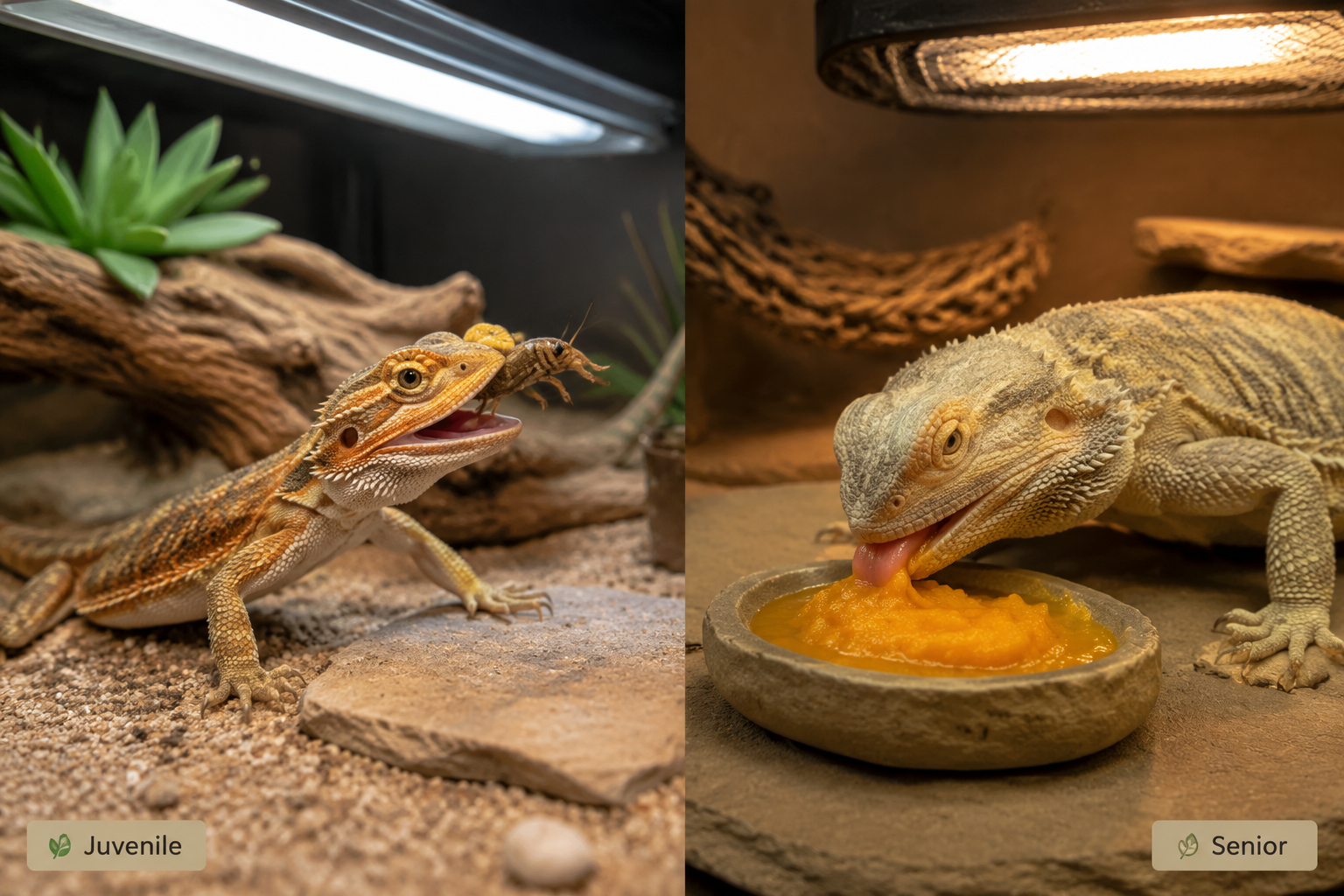
- Insects can still be offered to senior dragons, but smaller species like small crickets or waxworms work better than large, hard-bodied feeders.
- Watch for signs of eating difficulty: dropping food, slow chewing, weight loss, and swollen jaw areas all signal a need for dietary changes.
- Transitioning to a senior diet should be gradual, mixing new textures with familiar foods over two to four weeks.
- Avoid high-oxalate vegetables, citrus fruits, and excessively fatty insects regardless of age, but these risks increase for seniors.
- Regular veterinary checkups, ideally twice yearly for dragons over five, help catch metabolic or dental issues before they affect eating.
What Foods Are Easiest for Older Bearded Dragons to Digest
Older bearded dragons digest soft, high-moisture plant foods most efficiently. Foods with low fiber density and minimal hard cell walls place the least stress on a slowing gut.
The easiest foods for senior bearded dragons to digest include:
- Pureed or mashed butternut squash (steamed, no seasoning)
- Mashed ripe papaya (a natural digestive enzyme source)
- Soft-cooked sweet potato (cooled to room temperature)
- Finely chopped or blended collard greens and mustard greens
- Mashed blueberries or raspberries (offered in small amounts due to sugar content)
- Watermelon flesh (seedless, occasional treat for hydration)
Hard, fibrous vegetables like raw broccoli stems or whole kale leaves are harder for seniors to break down. Steaming or lightly pureeing these vegetables makes nutrients more accessible without stripping them entirely.
Decision rule: If your senior dragon is eating normally and showing no signs of jaw weakness, lightly chopped greens work fine. If you notice food dropping or slow chewing, move to pureed or mashed textures immediately.
How Do I Know If My Senior Beardie Needs Softer Food
A senior bearded dragon needs softer food when eating becomes visibly effortful or when weight loss appears without an obvious environmental cause. Most owners notice the shift between ages five and seven.
Watch for these specific signs:
- Dropping food repeatedly while attempting to chew
- Turning away from favorite foods that were previously eaten eagerly
- Visible jaw trembling or straining during meals
- Undigested food in droppings, particularly insect exoskeleton fragments
- Gradual weight loss over several weeks despite regular feeding
- Swelling or asymmetry around the jaw or mouth
- Lethargy immediately after meals, which can indicate digestive discomfort
I’ve spoken with reptile owners who noticed their seven-year-old dragon suddenly leaving crickets untouched after years of enthusiastic feeding. In most of those cases, switching to smaller, softer prey and blended greens brought appetite back within a week. The change in behavior was the key signal, not age alone.
Can Older Bearded Dragons Eat Pureed Vegetables
Yes, pureed vegetables are not only safe for senior bearded dragons but are often the best way to deliver nutrition when chewing becomes difficult. Pureeing does not significantly reduce the vitamin or mineral content of most vegetables.
Best vegetables to puree for senior dragons:
| Vegetable | Preparation | Key Benefit |
|---|---|---|
| Butternut squash | Steam, then blend | High in vitamin A precursors |
| Collard greens | Blanch, then blend | Excellent calcium-to-phosphorus ratio |
| Mustard greens | Raw or blanched, blended | High in vitamins C and K |
| Acorn squash | Steam, then mash | Soft texture, easy to accept |
| Sweet potato | Bake or steam, mash | Energy-dense, palatable |
Avoid pureeing spinach, beet greens, or rhubarb for seniors. These are high in oxalates, which bind calcium and can worsen the metabolic bone disease risk that already increases with age.
Serve purees at room temperature, never cold from the refrigerator. Cold food can slow digestion further in reptiles, whose gut motility depends on ambient warmth.
What Protein Sources Are Best for Aging Bearded Dragons
Dubia roaches, small crickets, and black soldier fly larvae are the best protein sources for aging bearded dragons because they offer a favorable protein-to-fat ratio and, when appropriately sized, are easier to manage than large hard-bodied insects.
Protein source comparison for senior dragons:
| Feeder | Protein | Fat | Notes for Seniors |
|---|---|---|---|
| Dubia roaches (small) | High | Low-moderate | Soft body, easy to digest |
| Black soldier fly larvae | Moderate | Moderate | Naturally high in calcium |
| Small crickets | Moderate | Low | Gut-load before feeding |
| Waxworms | Low | Very high | Treat only, limit strictly |
| Mealworms | Moderate | High | Hard exoskeleton, use sparingly |
| Superworms | High | High | Too large and hard for most seniors |
Waxworms are often irresistible to older dragons, but their high fat content can lead to obesity and fatty liver disease in less active seniors. Offer them no more than once or twice per week, and only two or three at a time.
Common mistake: Many owners increase waxworm frequency when a senior dragon seems to lose interest in other foods. The dragon’s preference for fatty insects is real, but indulging it too often creates a new health problem.
How Much Should I Feed a Senior Bearded Dragon Compared to Younger Ones
Senior bearded dragons need smaller, less frequent meals than juveniles or young adults because their metabolism slows and their activity decreases with age. Overfeeding is a genuine risk for seniors.
A general feeding framework for senior dragons (aged five and older):
- Vegetables and leafy greens: Offered daily, approximately the size of the dragon’s head or slightly larger
- Insects or protein: Offered two to three times per week rather than daily
- Fruits: Offered once or twice per week as a small supplement, not a main course
- Total meal size: Reduce by roughly 20 to 30 percent compared to what the dragon ate at peak adult size (ages two to four)
Juveniles eat insects at almost every meal to fuel rapid growth. Adults shift to a roughly 60 percent plant, 40 percent protein diet. For seniors, many reptile veterinarians suggest moving closer to a 70 to 80 percent plant-based diet, with protein as a supplement rather than a staple.
Monitor body weight monthly. A healthy senior dragon maintains a consistent weight. Steady loss over four to six weeks warrants a veterinary visit.
Are There Special Nutritional Supplements for Older Bearded Dragons
Yes, calcium and vitamin D3 supplementation remains essential for senior bearded dragons, and some aging reptiles benefit from additional vitamin A and probiotic support. The specific ratios matter more as dragons age.
Supplement guidelines for senior bearded dragons:
- Calcium without D3: Dust feeder insects and vegetables three to four times per week
- Calcium with D3: Use once or twice per week if UVB lighting is adequate; reduce if the dragon has strong UVB exposure
- Multivitamin: Once per week is generally sufficient; avoid over-supplementation of vitamin A, which can cause toxicity
- Probiotics: Useful after antibiotic treatment or during digestive slowdowns; available as reptile-specific powders
- Bee pollen: Some reptile keepers use this as a natural appetite stimulant and immune support, though clinical evidence in reptiles is limited
Do older bearded dragons need different calcium and vitamin ratios? The calcium-to-phosphorus ratio remains the same target (roughly 2:1 calcium to phosphorus), but seniors may need more consistent supplementation because they absorb nutrients less efficiently. A reptile veterinarian can run bloodwork to check calcium and phosphorus levels if you suspect a deficiency.
What Signs Mean My Bearded Dragon Is Having Trouble Eating
A bearded dragon is having trouble eating when it shows repeated food refusal, visible effort during chewing, drooling, or unexplained weight loss. These signs can appear gradually and are easy to miss if you’re not watching closely.
Specific red flags to act on quickly:
- Mouth gaping or pawing at the face after attempting to eat
- Mucus or discharge around the mouth, which may indicate stomatitis (mouth rot)
- Clicking or popping sounds when the jaw moves
- Food falling out of the mouth consistently
- Complete food refusal for more than five to seven days outside of normal brumation
- Visible swelling along the jaw line
These symptoms can reflect dental wear, metabolic bone disease affecting the jaw, mouth rot, or internal parasites. Any of these conditions requires veterinary diagnosis, not just a diet change. Softer food can help in the short term, but it does not treat the underlying cause.
Which Foods Should I Absolutely Avoid for Senior Bearded Dragons
Several foods are harmful to bearded dragons at any age, but the risks are higher for seniors because their kidneys, liver, and immune systems are less resilient. Avoid these regardless of how much your dragon seems to want them.
Foods to avoid entirely:
- Avocado: Toxic to reptiles; can cause respiratory distress and death
- Rhubarb: Extremely high in oxalic acid
- Fireflies or any glowing insects: Lethal even in tiny amounts
- Wild-caught insects: Risk of pesticide exposure and parasites
- Citrus fruits (oranges, lemons, limes): High acidity disrupts digestion
- Onions and garlic: Toxic compounds harmful to reptiles
- Iceberg lettuce: Almost no nutritional value; causes diarrhea
- Spinach and beet greens: High oxalate content; blocks calcium absorption
For seniors specifically, also limit high-phosphorus foods like corn and bananas, which throw off the calcium-to-phosphorus balance at a time when calcium absorption is already declining.
How Do I Transition My Adult Bearded Dragon to a Senior Diet
Transition gradually over two to four weeks, mixing new soft textures and reduced protein portions with familiar foods. Abrupt changes cause stress and food refusal in reptiles.
Step-by-step transition plan:
- Week one: Continue current diet but begin lightly chopping or steaming vegetables that were previously offered raw.
- Week two: Introduce one pureed vegetable per feeding alongside familiar whole foods. Reduce insect frequency from daily to four times per week.
- Week three: Increase pureed or soft foods to make up half the plant portion. Reduce insects to three times per week.
- Week four: Establish the new routine: daily soft vegetables, insects two to three times per week, fruit twice per week.
If your dragon refuses new textures, try mixing a small amount of a favorite food (like a drop of mashed blueberry) into the puree. Most dragons accept the new texture within a few sessions once they associate it with a preferred flavor.
What Are Common Dietary Mistakes Owners Make With Aging Reptiles
The most common mistake is continuing a juvenile or young adult feeding schedule into the senior years without adjusting for slower metabolism and reduced activity. This leads to obesity, fatty liver disease, and shortened lifespan.
Other frequent errors:
- Feeding insects that are too large or hard-bodied, causing impaction or jaw strain
- Skipping calcium supplementation because the dragon “seems fine”
- Relying on iceberg lettuce or romaine as the primary green, which provides almost no nutrition
- Offering fruit too frequently, leading to sugar-related digestive issues
- Ignoring gradual weight loss as “normal aging” rather than a sign of illness
- Not adjusting UVB bulb schedules, which affects vitamin D3 synthesis and calcium metabolism
A senior bearded dragon diet built on safe soft foods for aging reptiles requires active monitoring, not a set-and-forget approach. Weigh your dragon monthly, observe each meal, and schedule twice-yearly veterinary checkups.
Can Senior Bearded Dragons Still Eat Insects
Yes, senior bearded dragons can and should still eat insects, but the type, size, and frequency need adjustment. Insects remain an important protein source even for older reptiles.
Best insect choices for seniors:
- Small dubia roaches (no larger than the space between the dragon’s eyes)
- Black soldier fly larvae (BSFL/Phoenix worms): Soft-bodied, naturally calcium-rich
- Small crickets: Gut-loaded with nutritious greens before feeding
- Waxworms: Occasional treat, not a staple
Avoid large superworms, adult mealworms, and any insect with a noticeably hard exoskeleton. These can cause micro-tears in an aging digestive tract and are harder to chew for a dragon with worn teeth.
What medical conditions affect senior bearded dragon eating habits? Metabolic bone disease, mouth rot (infectious stomatitis), internal parasites, and kidney disease are the most common conditions that directly reduce a senior dragon’s ability or willingness to eat. Each requires veterinary diagnosis and specific treatment alongside any dietary adjustments.
FAQ
At what age is a bearded dragon considered a senior? Most reptile veterinarians consider bearded dragons senior at age five, though some individuals show age-related dietary changes as early as four years old. The average captive lifespan is ten to fifteen years with good care.
How do I know if my senior dragon is getting enough calcium? Signs of calcium deficiency include trembling limbs, soft or deformed jaw bones, and difficulty walking. A reptile vet can confirm deficiency with a blood panel. Consistent dusting of food with calcium powder three to four times per week is the standard preventive approach.
Can I feed my senior bearded dragon baby food? Plain, unseasoned vegetable baby food (such as pureed squash or sweet potato with no additives) is safe as an occasional soft food option. Always check the ingredient list and avoid any product containing onion, garlic, citrus, or added salt.
How often should a senior bearded dragon defecate? Senior dragons typically defecate less frequently than juveniles, often every two to seven days. Fewer than one bowel movement per week, combined with straining or bloating, may indicate constipation and warrants a vet visit.
Is brumation normal for senior bearded dragons? Yes, many senior dragons brumate (a reptile equivalent of hibernation) more deeply or for longer periods than when they were young. Reduce feeding during brumation but ensure access to fresh water and monitor weight.
Can dehydration cause eating problems in senior dragons? Yes. Dehydration slows gut motility and can cause constipation, making eating uncomfortable. Offer a lukewarm bath two to three times per week and include high-moisture foods like watermelon or cucumber occasionally.
Should I see a vet before changing my senior dragon’s diet? A vet visit is strongly recommended if the dietary change is prompted by symptoms like weight loss, food refusal, or jaw swelling. For routine age-related adjustments, a checkup is still advisable but not always urgent.
What temperature should I serve soft foods at? Always serve food at room temperature (approximately 70 to 75 degrees Fahrenheit). Cold food slows digestion in reptiles. Never microwave food directly in a dish without checking for hot spots; stir and test temperature before offering.
Conclusion
Managing a senior bearded dragon diet built around safe soft foods for aging reptiles is one of the most meaningful things you can do to extend your dragon’s quality of life. The core changes are straightforward: shift toward softer textures, reduce insect frequency and size, maintain consistent calcium supplementation, and watch closely for signs of eating difficulty.
Actionable next steps:
- Assess your dragon’s current age and note any recent changes in eating behavior or body weight.
- Begin steaming or lightly pureeing at least one vegetable per feeding this week.
- Replace any large or hard-bodied insects with small dubia roaches or black soldier fly larvae.
- Set a monthly weigh-in reminder using a simple kitchen scale.
- Schedule a veterinary checkup if your dragon is five or older and has not had one in the past six months.
Aging reptiles are not fragile, but they do need owners who pay attention. A dragon that receives the right dietary adjustments in its senior years can remain active, alert, and engaged for many years to come.
References
- Mader, D. R. (2006). Reptile Medicine and Surgery (2nd ed.). Saunders Elsevier. https://www.elsevier.com/books/reptile-medicine-and-surgery/mader/978-0-7216-9327-9
- Stahl, S. J., & Donoghue, S. (2010). Feeding reptiles. In D. Hand, A. Thatcher, & R. Remillard (Eds.), Small Animal Clinical Nutrition (5th ed.). Mark Morris Institute. https://www.markmorrisinstitute.org
- Donoghue, S. (1998). Nutrition of captive reptiles. Veterinary Clinics of North America: Exotic Animal Practice, 1(1), 69–91. https://doi.org/10.1016/S1094-9194(17)30157-0
- Repashy, A. (2012). Bearded dragon nutrition overview. Repashy Superfoods technical notes. https://www.repashy.com
- Association of Reptilian and Amphibian Veterinarians (ARAV). (2020). Bearded dragon care guidelines. https://www.arav.org
Tags: senior bearded dragon diet, soft foods for bearded dragons, aging reptile nutrition, bearded dragon care, reptile diet guide, calcium supplementation reptiles, bearded dragon feeding schedule, senior reptile health, safe foods bearded dragon, bearded dragon supplements, older bearded dragon care, reptile digestive health
Read next: Preventing Boredom in Pet Rats: DIY Foraging Toys Made from Cardboard. A closer look at pet rat enrichment.