
Key Takeaways
- Oral allergy syndrome is caused by cross-reactivity between pollen proteins and proteins in certain raw foods, not a true food allergy.
- Symptoms are almost always limited to the mouth and throat and typically resolve within minutes without treatment.
- Cooking, peeling, canning, or microwaving trigger foods usually destroys the proteins that cause reactions, making those foods safe to eat.
- The most common triggers are raw apples, peaches, cherries, celery, carrots, and hazelnuts, depending on which pollen you are allergic to.
- Mild OAS does not require an elimination diet; targeted swaps and preparation changes are usually enough.
- Antihistamines can reduce symptoms before eating trigger foods, but this is a short-term strategy, not a cure.
- Severe or worsening symptoms (throat tightening, hives, difficulty breathing) require immediate medical attention and are not typical of mild OAS.
- Allergen immunotherapy for pollen allergies can reduce OAS severity over time.
- Keeping a simple food and symptom diary is the cheapest and most reliable way to identify your personal triggers.
What Exactly Is Oral Allergy Syndrome
Oral allergy syndrome is a localized allergic reaction that occurs when proteins in certain raw plant foods mimic the structure of airborne pollen proteins. Your immune system, already sensitized to pollen, mistakes the food protein for pollen and triggers a mild reaction confined mostly to the lips, mouth, and throat.
OAS is also called pollen-food allergy syndrome (PFAS). It affects an estimated 2 percent of the general population, though rates are higher among people with seasonal pollen allergies, where some studies suggest up to 50 to 70 percent of birch pollen allergy sufferers experience some degree of food cross-reactivity (Werfel et al., Allergy, 2015).
Key features that distinguish OAS from a true food allergy:
- Symptoms appear within seconds to a few minutes of eating.
- Reactions stay local (mouth, lips, tongue, throat) and rarely spread.
- Symptoms resolve on their own, usually within 15 to 30 minutes.
- The same food cooked rarely causes a reaction.
- It is driven by pollen sensitization, not the food itself.
Which Foods Trigger Oral Allergy Symptoms
The foods that trigger OAS depend on which pollen you are allergic to. Different pollens cross-react with different plant foods, so your personal trigger list will vary.
Common pollen-food cross-reactivity groups:
| Pollen Type | Common Food Triggers |
|---|---|
| Birch (spring) | Apple, pear, peach, cherry, plum, apricot, almond, hazelnut, carrot, celery, parsley, kiwi |
| Grass (summer) | Peach, celery, tomato, melon, orange, kiwi |
| Ragweed (fall) | Banana, melon (cantaloupe, watermelon, honeydew), cucumber, zucchini |
| Mugwort (fall) | Celery, carrot, parsley, coriander, fennel, pepper, mango |
The Birch-Fruit-Vegetable syndrome is the most studied and most common in Northern Europe and North America. The culprit protein in birch pollen is called Bet v 1, and structurally similar proteins appear in many stone fruits and root vegetables.
Common mistake: Many people assume any food reaction is a dangerous allergy and cut out entire food groups. In mild OAS, the reaction is usually limited to one or two foods per pollen group, and cooking almost always eliminates the risk.
How Do Seasonal Allergies Connect to Food Reactions
The connection between seasonal allergies and OAS is direct: your immune system builds antibodies (IgE) against pollen proteins. When you eat a raw food containing a similar protein, those same antibodies react, triggering a localized histamine release in the mouth and throat.
This is why OAS symptoms often get worse during pollen season. In spring, when birch pollen counts are high, someone with birch allergy may find that eating a raw apple causes more intense tingling than it does in winter. The immune system is already in a heightened state of alert.
Practical implication: if you notice your food reactions flaring up in April or September, pollen season is likely the reason. Reducing raw trigger foods during peak pollen months is one of the simplest dietary tweaks to manage mild oral allergy syndrome.
Can I Still Eat Fruits If I Have Oral Allergy Syndrome
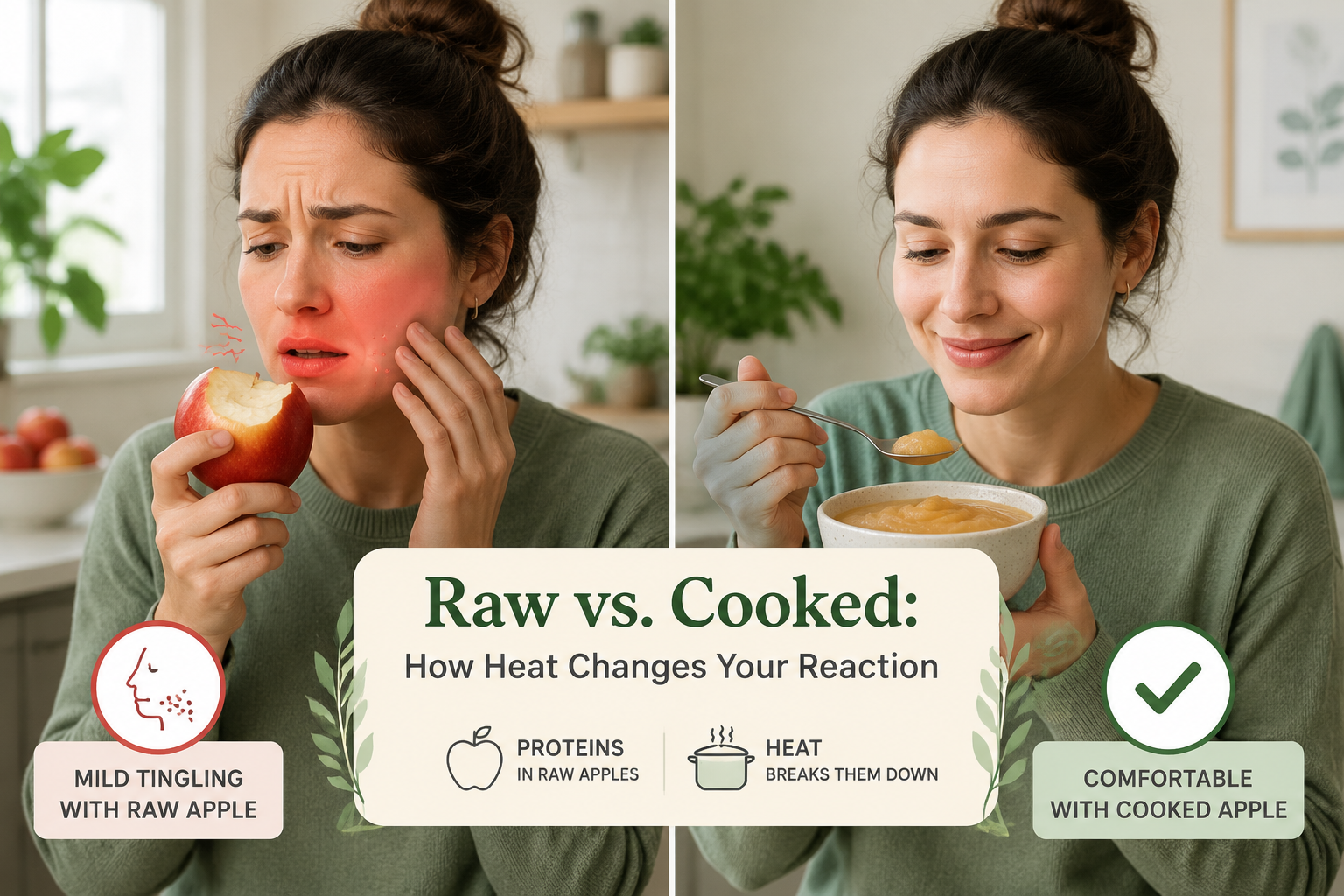
Yes, most people with OAS can continue eating fruits with simple modifications. The proteins responsible for OAS reactions are heat-sensitive and unstable, meaning they break down easily with cooking, canning, or even thorough peeling.
Strategies that typically make trigger fruits safe:
- Cook them. Baked apples, stewed pears, and cooked peaches almost never trigger OAS reactions.
- Buy canned or jarred versions. Canned peaches and applesauce are processed with heat, which denatures the trigger proteins.
- Peel the fruit. Proteins are often more concentrated in the skin, so peeling apples or peaches can reduce or eliminate symptoms for some people.
- Try microwaving. Even 30 to 60 seconds in a microwave can reduce protein reactivity enough to prevent a reaction.
- Eat smaller portions. Some people tolerate a few bites of a raw trigger fruit without symptoms; a full serving causes a reaction.
Choose cooked or canned fruit if you want to enjoy stone fruits or apples without symptoms. Choose raw fruit only during low-pollen months if you want to test your tolerance.
How Do I Know If My Symptoms Are Mild or Serious
Mild OAS symptoms are confined to the mouth and throat and resolve quickly without treatment. Serious symptoms involve other body systems and require emergency care.
Mild OAS symptoms (self-resolving):
- Tingling or itching of the lips, tongue, or palate
- Mild swelling of the lips or tongue
- Scratchy feeling at the back of the throat
- Symptoms disappear within 15 to 30 minutes
Warning signs that this is NOT mild OAS:
- Throat tightening or difficulty swallowing
- Hives, rash, or skin flushing beyond the mouth
- Nausea, vomiting, or stomach cramping
- Dizziness or lightheadedness
- Difficulty breathing or wheezing
If you experience any symptoms beyond the mouth and throat, stop eating, use an epinephrine auto-injector if prescribed, and seek emergency medical care immediately. These symptoms suggest anaphylaxis, not OAS.
A food and symptom diary kept for two to four weeks is the most practical way to confirm your symptoms are consistently mild and food-specific. Log what you ate, how much, how it was prepared, and what symptoms appeared and when.
What Are the Cheapest Ways to Modify My Diet for OAS
Managing mild OAS does not require expensive specialty foods or supplements. The most cost-effective approach centers on changing how you prepare foods you already buy.
Low-cost dietary tweaks to manage mild oral allergy syndrome:
- Cook before eating. Roasting, steaming, or microwaving trigger vegetables and fruits costs nothing extra.
- Buy canned or frozen versions. Canned peaches, frozen mango, and jarred applesauce are usually cheaper than fresh and are already heat-processed.
- Keep a food diary. A notebook or free phone app costs nothing and helps you pinpoint exactly which raw foods cause problems, so you do not over-restrict.
- Peel fruits at home. Peeling an apple takes 30 seconds and may eliminate your reaction entirely.
- Swap raw snacks for cooked ones. Replace raw carrot sticks with roasted carrots or carrot soup. Replace fresh apple slices with baked apple chips.
Antihistamines (over-the-counter cetirizine or loratadine) can reduce symptoms if taken before eating a trigger food, but this is not a long-term solution and adds ongoing cost. Reserve it for situations where you have limited food choices, such as travel or social events.
Are There Specific Diets That Help Reduce Oral Allergy Reactions
No single named diet eliminates OAS, but certain eating patterns naturally reduce exposure to trigger proteins. The goal is not to eliminate entire food groups but to favor preparation methods and food forms that are low in reactive proteins.
Dietary patterns that support OAS management:
- Mediterranean-style eating: Heavy use of cooked vegetables, olive oil, legumes, and fish means fewer raw plant foods that trigger reactions. Cooked tomatoes, roasted peppers, and braised celery are all typically well-tolerated.
- Asian cooking traditions: Stir-frying, steaming, and simmering vegetables is standard practice, which incidentally denatures OAS-triggering proteins. Cooked bok choy, steamed broccoli, and sauteed mushrooms are rarely problematic.
- Avoiding raw food trends during pollen season: Raw food diets and smoothie-heavy eating patterns increase exposure to unprocessed plant proteins. During peak pollen months, reducing raw fruit and vegetable intake is a practical seasonal tweak.
Regarding ethnic or regional diets: No specific cuisine is universally “better” for OAS, but cooking-heavy food cultures naturally reduce raw plant protein exposure. The key variable is preparation method, not cuisine origin.
Which Fruits and Vegetables Are Safest for People With Pollen Allergies
Several fruits and vegetables are consistently low-risk for people with common pollen allergies. These are foods whose proteins do not closely resemble major pollen allergens.

Generally safe raw options for birch pollen allergy sufferers:
- Blueberries and grapes (low cross-reactivity with birch Bet v 1)
- Cooked or canned versions of most stone fruits
- Citrus fruits (oranges, lemons, grapefruit) are rarely cross-reactive with birch
- Cooked leafy greens (spinach, kale, Swiss chard)
- Avocado (occasionally triggers reactions in latex-allergic individuals, but not typically OAS)
Generally safe for ragweed allergy sufferers:
- Cooked squash and zucchini
- Apples (low cross-reactivity with ragweed)
- Most berries
- Cooked carrots and sweet potatoes
The safest approach is to eat trigger foods cooked and non-trigger foods raw. This keeps your diet varied and nutritionally complete without constant restriction.
Can Cooking or Processing Foods Change My Allergic Response
Yes, and this is the most important practical fact about managing OAS through diet. The proteins responsible for OAS (called PR-10 proteins and profilins) are thermolabile, meaning they break down when exposed to heat, acid, or enzymatic processing.
How different preparation methods affect OAS trigger proteins:
| Method | Effect on Trigger Proteins | Typical Outcome |
|---|---|---|
| Raw | Proteins intact | Reaction likely |
| Peeling | Reduces surface proteins | Partial reduction |
| Microwaving (30-60 sec) | Partial denaturation | Often tolerated |
| Boiling or steaming | Strong denaturation | Usually safe |
| Baking or roasting | Strong denaturation | Usually safe |
| Canning (commercial) | Full heat processing | Almost always safe |
| Freezing | Minimal effect | May still trigger |
| Juicing (cold-pressed) | Proteins remain active | May still trigger |
Note that freezing does not reliably denature OAS proteins. Frozen raw fruit smoothies can still cause reactions, which surprises many people. Commercial juices that are pasteurized are generally safer than cold-pressed juices.
What Common Mistakes Do People Make Managing Oral Allergy Syndrome
The most common mistake is misdiagnosis, either dismissing OAS as nothing or over-treating it as a dangerous food allergy. Both errors lead to poor outcomes.
Mistakes to avoid:
- Eliminating entire food groups. OAS rarely requires avoiding a whole category of food. Cooking usually solves the problem.
- Ignoring escalating symptoms. Some people assume any mouth reaction is “just OAS” and miss warning signs of a true allergic reaction or anaphylaxis. If symptoms spread beyond the mouth, treat it as an emergency.
- Eating trigger foods during peak pollen season without adjustment. Reactions are more intense when pollen counts are high. Seasonal awareness matters.
- Relying on antihistamines as a daily fix. Daily antihistamine use to eat trigger foods masks the problem and does not address the underlying pollen sensitization.
- Assuming raw organic produce is safer. The organic label has no effect on OAS-triggering proteins. Protein structure is the same regardless of farming method.
- Not consulting an allergist. A skin prick test or specific IgE blood test can confirm exactly which pollens and foods are involved, making your dietary adjustments far more targeted.
What Should I Do Immediately If I Have an Oral Allergy Reaction
For mild OAS, the immediate response is simple: stop eating the trigger food and wait. Most symptoms resolve within 15 to 30 minutes without any intervention.
Step-by-step for a mild reaction:
- Stop eating the food immediately.
- Rinse your mouth with water to remove residual food proteins.
- Drink a glass of water.
- Wait 15 to 30 minutes. Symptoms should fade on their own.
- Take an over-the-counter antihistamine if symptoms are uncomfortable but not severe.
- Note the food, preparation method, and symptom details in your food diary.
If symptoms progress beyond the mouth (throat tightening, hives, difficulty breathing): Use an epinephrine auto-injector if you have one, call emergency services, and do not wait to see if symptoms improve on their own.
How Do I Explain Oral Allergy Syndrome to Restaurants
Explaining OAS to restaurant staff requires clarity and simplicity, because the nuance of “I can eat it cooked but not raw” is easy to misunderstand.
What to say: “I have a pollen-related food sensitivity. I can eat [food] if it’s fully cooked or canned, but raw versions cause an allergic reaction in my mouth. Please make sure my [dish] doesn’t include any raw [trigger food].”
Practical tips:
- Be specific about which foods are triggers, not vague about “fruit” or “vegetables.”
- Ask how a dish is prepared before ordering, especially salads, garnishes, and raw vegetable sides.
- At buffets or self-serve situations, choose cooked dishes and avoid raw fruit platters.
- For international travel, carry a translated card that explains your condition and lists your specific trigger foods.
OAS is not a life-threatening allergy for most people, so you do not need to treat every restaurant visit as a high-stakes negotiation. But clear, specific communication prevents unnecessary reactions.
FAQ
Is oral allergy syndrome the same as a food allergy? No. OAS is a cross-reactive response driven by pollen sensitization, not a primary food allergy. The immune mechanism overlaps, but OAS is generally milder, localized to the mouth, and resolved by cooking the food.
Can oral allergy syndrome get worse over time? For most people, OAS remains mild and stable. In rare cases, sensitivity can increase, particularly if pollen allergy worsens. Annual review with an allergist is a good practice if you notice your reactions becoming more frequent or intense.
Does peeling fruit always prevent an OAS reaction? Peeling reduces exposure to surface proteins and helps many people, but it does not always eliminate reactions entirely. Cooking is more reliable than peeling alone.
Can children have oral allergy syndrome? Yes, though OAS is more common in adults with established pollen allergies. Children who develop seasonal allergic rhinitis can develop OAS as their pollen sensitization matures.
Will allergy shots (immunotherapy) help with OAS? Allergen immunotherapy targeting the underlying pollen allergy (birch, grass, ragweed) often reduces OAS severity over time, because it reduces overall pollen IgE levels. It is not a quick fix but can be a long-term solution.
Is OAS related to latex allergy? There is a separate condition called latex-fruit syndrome, where latex allergy cross-reacts with foods like banana, avocado, and kiwi. This is distinct from pollen-driven OAS, though the mechanism of cross-reactivity is similar.
Can I eat dried fruit if fresh fruit triggers OAS? Often yes. Drying fruit involves heat and moisture loss that can denature trigger proteins. However, some commercially dried fruits are not heated enough to fully break down proteins. Test small amounts and monitor your response.
Does alcohol affect OAS reactions? Alcohol can increase intestinal permeability and histamine levels, potentially worsening allergic responses. Some people with OAS report that drinking wine or beer while eating trigger foods intensifies symptoms.
Is there a blood test for oral allergy syndrome? A specific IgE blood test (component testing for individual allergen proteins like Bet v 1) can confirm OAS and identify which pollen proteins are driving your reactions. This is more precise than a standard skin prick test for this purpose.
Do probiotics help with OAS? There is emerging research on gut microbiome and allergic sensitization, but as of 2026, there is no strong clinical evidence that probiotics specifically reduce OAS symptoms. A balanced diet supports overall immune health but is not a targeted OAS treatment.
Conclusion
Managing mild oral allergy syndrome does not mean giving up the foods you enjoy. The most effective dietary tweaks to manage mild oral allergy syndrome are practical, low-cost, and easy to build into daily habits: cook your trigger foods, buy canned or frozen versions during pollen season, peel fruits before eating them raw, and keep a simple diary to track your personal patterns.
Your action steps starting today:
- Identify your pollen type (birch, grass, ragweed, or mugwort) by reviewing your seasonal allergy history or consulting an allergist.
- Cross-reference your pollen type with the trigger food table in this guide and note which foods you eat regularly in raw form.
- Swap one raw trigger food per week for a cooked or canned version and observe whether symptoms disappear.
- During peak pollen season, default to cooked plant foods and reserve raw fruits and vegetables for low-pollen months.
- Book a consultation with an allergist if your symptoms are frequent, worsening, or if you are unsure whether your reactions are truly mild OAS.
OAS is one of the more manageable allergy-related conditions precisely because heat solves most of the problem. A few thoughtful adjustments in how you shop and cook can make a significant difference in your daily comfort without restricting your nutrition.
References
- Werfel, T., Ballmer-Weber, B., Eigenmann, P. A., et al. “Eczematous reactions to food in atopic eczema: position paper of the EAACI and GA2LEN.” Allergy, 2007. https://pubmed.ncbi.nlm.nih.gov/17573723/
- Webber, C. M., & England, R. W. “Oral allergy syndrome: a clinical, diagnostic, and therapeutic challenge.” Annals of Allergy, Asthma & Immunology, 2010. https://pubmed.ncbi.nlm.nih.gov/20486330/
- Skypala, I. J., Bull, S., Deegan, K., et al. “The prevalence of PFS and prevalence and characteristics of reported food allergy.” Clinical & Experimental Allergy, 2013. https://pubmed.ncbi.nlm.nih.gov/23692381/
- American Academy of Allergy, Asthma & Immunology (AAAAI). “Oral Allergy Syndrome (Pollen-Food Allergy Syndrome).” https://www.aaaai.org/tools-for-the-public/conditions-library/allergies/oral-allergy-syndrome
- Asero, R., Antonicelli, L., Arena, A., et al. “Causes of food-induced anaphylaxis in Italian adults: a multi-centre study.” International Archives of Allergy and Immunology, 2009. https://pubmed.ncbi.nlm.nih.gov/19494526/
Read next: Tailbone Pain Relief Strategies for Long-Distance Truck Drivers. A closer look at tailbone pain for truck drivers.