
Key Takeaways
- Without a gallbladder, bile drips continuously into the small intestine instead of releasing in concentrated doses, reducing the body’s ability to digest large amounts of fat at once.
- Eating smaller, more frequent meals with moderate fat content is the single most effective dietary adjustment for most post-cholecystectomy patients.
- Fat-soluble vitamins (A, D, E, and K) are the nutrients most at risk of deficiency after gallbladder removal.
- Digestive enzyme supplements containing lipase, and in some cases ox bile extract, can meaningfully improve fat digestion and nutrient absorption.
- Most people adapt reasonably well within three to six months, but some experience long-term digestive symptoms that require ongoing management.
- Foods highest in fat, especially fried foods, full-fat dairy, and fatty meats, are the most common triggers for post-surgical digestive distress.
- A daily fat intake of roughly 30 to 40 grams, spread across meals, is a commonly recommended starting point, though individual tolerance varies.
- Signs of poor nutrient absorption include pale or greasy stools, fatigue, unexplained weight loss, and recurring bloating after meals.
- Bile salt supplements are not always necessary permanently, but some people benefit from them long-term, particularly those with ongoing fat malabsorption.
- Working with a registered dietitian familiar with post-cholecystectomy nutrition is the most reliable way to personalize your recovery plan.
Why Gallbladder Removal Changes How You Absorb Nutrients
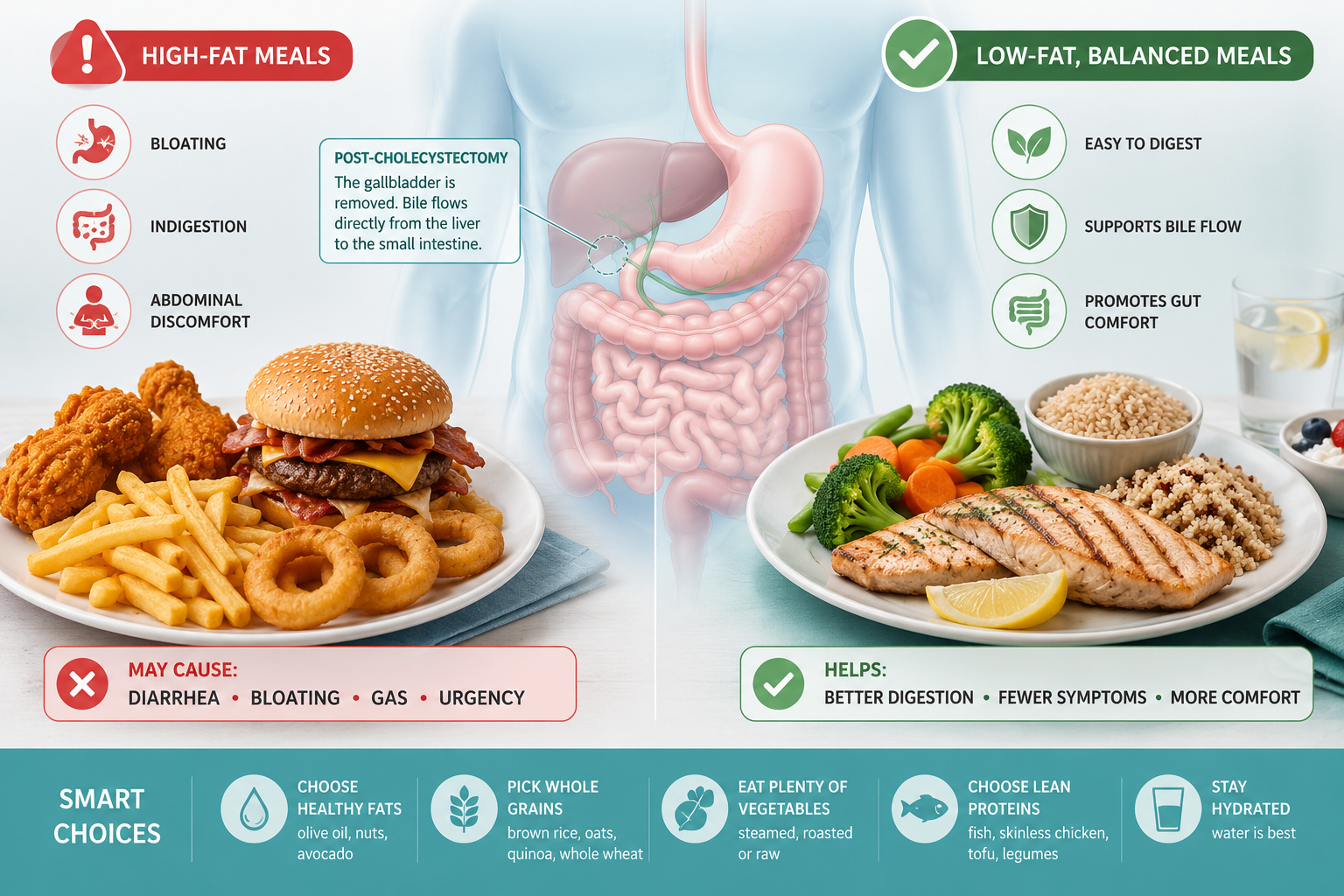
Gallbladder removal disrupts the bile delivery system that the body relies on to break down dietary fats. The gallbladder normally stores bile produced by the liver and releases a concentrated burst when fatty food enters the small intestine. Without it, bile trickles in at a slow, steady rate regardless of what you eat, which means large or high-fat meals can overwhelm the digestive system’s capacity to emulsify fat.
This matters for nutrient absorption because fat is the carrier vehicle for vitamins A, D, E, and K, as well as essential fatty acids. When fat digestion is incomplete, these nutrients pass through the gut without being absorbed properly. Over time, this can lead to measurable deficiencies, particularly in vitamin D and vitamin K, both of which have downstream effects on bone health, immune function, and blood clotting.
The good news is that the liver continues producing bile after surgery. The challenge is not a total absence of bile but a mismatch between bile availability and meal timing. Structured nutrient absorption strategies for people post-cholecystectomy are designed specifically to work around this mismatch.
What Foods Are Hardest to Digest After Gallbladder Removal
The hardest foods to digest after gallbladder removal are those with high fat content, particularly when consumed in large amounts in a single sitting. Fried foods, full-fat dairy products, fatty cuts of red meat, and rich sauces or gravies are the most common culprits.
Here is a practical breakdown:
High-risk foods (most likely to cause symptoms):
- Fried chicken, french fries, and deep-fried snacks
- Whole milk, cream, butter, and full-fat cheese
- Fatty cuts of beef, pork belly, and processed meats like sausage or bacon
- Creamy soups, Alfredo sauce, and heavy gravies
- Coconut oil and palm oil in large quantities
- Pastries, croissants, and high-fat baked goods
Moderate-risk foods (tolerate in small portions):
- Avocado and nut butters (healthy fats but still high in total fat)
- Eggs (particularly the yolk)
- Salmon and other fatty fish
- Olive oil used in cooking
Common mistake: Many people assume that “healthy” fats like avocado or olive oil are automatically safe in any quantity. They are nutritionally valuable, but the digestive system post-cholecystectomy responds to total fat load, not fat quality. Even good fats can trigger cramping and diarrhea if eaten in excess at one sitting.
How to Prevent Fat Malabsorption Without a Gallbladder
Preventing fat malabsorption after cholecystectomy requires spreading fat intake evenly across the day and keeping individual meal portions modest. The goal is to match the steady trickle of bile with a steady, manageable supply of dietary fat.
Practical steps to reduce fat malabsorption:
- Eat four to six small meals per day rather than two or three large ones. Smaller meals require less bile per sitting, which reduces the risk of fat passing through undigested.
- Cap fat per meal at roughly 10 grams in the early recovery phase (first four to six weeks), then gradually increase based on tolerance.
- Choose low-fat cooking methods such as baking, steaming, grilling, or poaching instead of frying or sautéing in large amounts of oil.
- Read nutrition labels and pay attention to total fat per serving, not just saturated fat.
- Introduce new foods one at a time so you can identify specific triggers without confusion.
- Stay hydrated, as adequate fluid intake supports overall digestive function and helps move bile through the intestinal tract.
A note on fiber: soluble fiber from oats, legumes, and fruit can slow digestion slightly and help the body manage bile more effectively. However, dramatically increasing fiber too quickly can worsen bloating in the early post-surgical period. Increase gradually.
How Much Fat Should I Eat Daily Without a Gallbladder
Most post-cholecystectomy patients do well starting with 30 to 40 grams of total fat per day, spread across multiple meals. This is a general clinical guideline, not a universal rule, and individual tolerance varies considerably.
For context, a standard Western diet typically contains 65 to 100 grams of fat per day. The reduction is significant, especially in the first few months after surgery.
| Recovery Phase | Suggested Daily Fat Range | Meal Frequency |
|---|---|---|
| Weeks 1 to 4 | 20 to 30 grams | 5 to 6 small meals |
| Months 1 to 3 | 30 to 45 grams | 4 to 5 meals |
| Months 3 to 6 | 45 to 60 grams (if tolerated) | 4 meals |
| After 6 months | Adjust based on symptoms | 3 to 4 meals |
These ranges are estimates based on commonly used clinical dietary guidance for post-cholecystectomy patients. A registered dietitian can calculate a more precise target based on your weight, activity level, and symptom history.
Edge case: People who had their gallbladder removed due to bile duct complications or who have co-existing conditions like irritable bowel syndrome or pancreatic insufficiency may need stricter fat limits for a longer period.
Are There Specific Diets Recommended for Post-Cholecystectomy Patients
No single named diet is universally prescribed after cholecystectomy, but a low-fat, high-fiber approach with an emphasis on lean proteins and complex carbohydrates is the most widely supported framework. Some clinicians refer to this informally as a “gallbladder diet” even after the organ is removed.
Foods that tend to work well:
- Lean proteins: skinless chicken breast, turkey, white fish, tofu, legumes
- Complex carbohydrates: brown rice, oats, sweet potato, whole grain bread
- Cooked or steamed vegetables (easier to digest than raw in early recovery)
- Low-fat dairy or dairy alternatives
- Soft fruits like bananas, applesauce, and melon
Foods to reintroduce cautiously:
- Raw vegetables and high-fiber foods like brassicas (broccoli, cabbage, Brussels sprouts) can cause gas and bloating in some people
- Spicy foods may irritate the digestive tract in the early recovery phase
- Caffeine and alcohol can stimulate bile flow and worsen diarrhea in some patients
The Mediterranean diet pattern, which is moderate in healthy fats and rich in vegetables, legumes, and whole grains, is often a reasonable long-term template once initial recovery is complete and fat tolerance has improved.
Best Supplements for Nutrient Absorption After Cholecystectomy
The most important supplements for post-cholecystectomy patients are digestive enzymes (particularly lipase), fat-soluble vitamins, and in some cases bile salt supplements. These directly address the two main nutritional risks: impaired fat digestion and reduced absorption of fat-soluble nutrients.
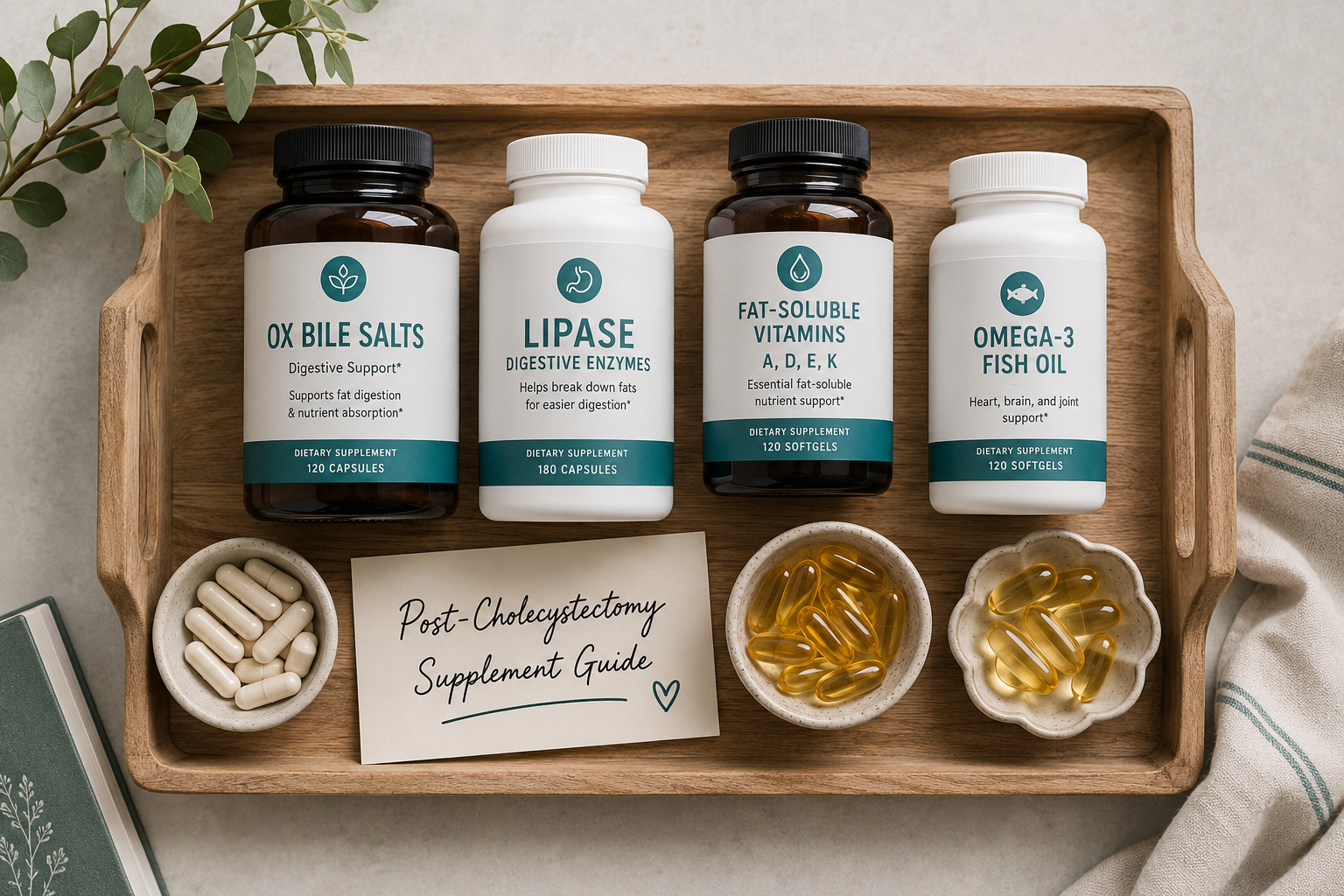
Core supplements to discuss with your doctor:
- Lipase-containing digestive enzymes: Lipase is the enzyme that breaks down fat. Taking a broad-spectrum digestive enzyme with meals can compensate for reduced bile concentration. Look for products that list lipase activity in FIP or LU units.
- Ox bile extract (bile salts): Derived from bovine bile, these supplements can replace some of the concentrated bile that the gallbladder would have provided. They are particularly useful for people with ongoing fat malabsorption symptoms.
- Vitamin D3: Deficiency is common after cholecystectomy due to impaired fat-soluble vitamin absorption. Most adults benefit from 1,000 to 2,000 IU daily, though blood testing should guide the dose.
- Vitamin K2: Supports bone health and cardiovascular function. Often overlooked but important given reduced fat-soluble vitamin absorption.
- Vitamin A: Supports immune function and vision. Can be taken as part of a multivitamin or as a standalone supplement.
- Omega-3 fatty acids: If fatty fish intake is limited due to fat restrictions, a low-dose fish oil or algae-based omega-3 supplement can help maintain essential fatty acid levels.
Important: Do not start high-dose fat-soluble vitamin supplements without blood testing first. Fat-soluble vitamins accumulate in body tissue, and excessive intake of vitamins A and D in particular can be harmful.
What Digestive Enzymes Work Best for People Without a Gallbladder
For people without a gallbladder, digestive enzyme supplements that contain high lipase activity are the most relevant. Lipase is specifically responsible for fat digestion, and it is the enzyme most affected by reduced bile concentration.
When choosing a digestive enzyme product:
- Prioritize lipase content. A product with at least 5,000 to 10,000 FIP units of lipase per capsule is a reasonable starting point for most adults.
- Look for broad-spectrum formulas that also include amylase (for carbohydrates) and protease (for proteins) to support overall digestion.
- Consider pancreatin or pancrelipase formulas, which are derived from porcine pancreatic tissue and contain a full range of digestive enzymes including lipase, amylase, and protease.
- Ox bile combined with lipase products are specifically marketed for post-cholecystectomy use and can be more effective than lipase alone for fat emulsification.
Take enzyme supplements at the start of each meal, not after, so they are present in the digestive tract when food arrives.
Common Nutritional Deficiencies After Gallbladder Removal
The most common nutritional deficiencies after cholecystectomy involve fat-soluble vitamins, particularly vitamins D and K, as well as essential fatty acids. Iron deficiency is also reported in some patients, possibly related to broader digestive disruption.
Deficiencies to monitor:
| Nutrient | Why It’s at Risk | Key Symptoms of Deficiency |
|---|---|---|
| Vitamin D | Fat-soluble, requires bile for absorption | Fatigue, bone pain, low mood |
| Vitamin K | Fat-soluble, absorbed with dietary fat | Easy bruising, poor wound healing |
| Vitamin A | Fat-soluble, absorbed with dietary fat | Night vision problems, dry skin |
| Vitamin E | Fat-soluble antioxidant | Nerve damage (long-term deficiency) |
| Essential fatty acids | Absorbed with fat | Dry skin, poor concentration |
| Iron | May be disrupted by digestive changes | Fatigue, pale skin, shortness of breath |
Annual blood panels that include 25-hydroxyvitamin D, vitamin K status (via prothrombin time), and a complete blood count are a reasonable monitoring approach for anyone more than six months post-surgery.
Signs That You Are Not Absorbing Nutrients Properly After Surgery
The clearest sign of fat malabsorption after cholecystectomy is steatorrhea, which means pale, greasy, or foul-smelling stools that float. This indicates undigested fat passing through the intestine.
Other warning signs to watch for:
- Persistent diarrhea, especially after fatty meals
- Unexplained weight loss despite adequate calorie intake
- Chronic fatigue or weakness not explained by sleep or activity level
- Frequent bloating, cramping, or gas after meals
- Dry skin, brittle nails, or hair thinning (possible fat-soluble vitamin deficiency)
- Muscle cramps or bone pain (possible vitamin D or calcium deficiency)
- Easy bruising (possible vitamin K deficiency)
If you notice two or more of these signs consistently, it is worth requesting a nutrient panel from your doctor. Catching deficiencies early prevents longer-term complications.
Do I Need to Take Bile Salt Supplements Permanently
Not everyone needs bile salt supplements permanently after cholecystectomy, but some people benefit from long-term use, particularly those with persistent fat malabsorption or chronic diarrhea. The decision depends on how well your digestive system adapts over time.
In the first three to six months after surgery, the body often adjusts to continuous bile flow, and many people find they can gradually tolerate more fat without symptoms. For these individuals, bile salt supplements may only be needed short-term.
However, a subset of patients, particularly those with pre-existing digestive conditions, older adults, or those who had complications during surgery, may experience ongoing bile acid malabsorption. For this group, long-term supplementation with ox bile extract or bile acid sequestrants (under medical supervision) can be genuinely helpful.
Decision rule: If your symptoms have not improved meaningfully after four to six months of dietary adjustment and enzyme use, discuss bile acid testing and long-term supplementation options with a gastroenterologist.
How Quickly Can the Body Adapt to Digesting Without a Gallbladder
Most people experience meaningful adaptation within three to six months of cholecystectomy. The liver can increase bile production over time, and the bile ducts may gradually dilate slightly to act as a partial reservoir, improving the body’s ability to respond to larger fat loads.
That said, adaptation is not complete for everyone. Research published in clinical gastroenterology literature consistently shows that a portion of patients, estimated at roughly 10 to 15 percent in some studies, continue to experience significant digestive symptoms beyond one year post-surgery (Ros et al., 2000; Vander Velpen et al., 1993).
Factors that slow adaptation include:
- High-fat diet during the recovery period
- Pre-existing irritable bowel syndrome or inflammatory bowel conditions
- Older age at time of surgery
- Complications during or after the procedure
Sticking to the dietary and supplement strategies outlined here during the first six months gives the body the best chance to adapt effectively.
Which Foods Help Heal the Digestive System After Gallbladder Removal
Foods that support digestive healing after cholecystectomy are those that are easy to process, anti-inflammatory, and rich in soluble fiber. These foods reduce the workload on the digestive tract while providing the nutrients needed for tissue repair and gut health.
Best foods for digestive recovery:
- Oatmeal and oat bran: Rich in soluble fiber (beta-glucan), which helps regulate bile acid movement through the intestine.
- Bananas and cooked apples: Gentle on the gut, provide soluble fiber and potassium.
- Steamed or roasted sweet potato: Easy to digest, high in beta-carotene (a precursor to vitamin A).
- White fish and skinless poultry: Low-fat protein sources that are easy to digest.
- Cooked lentils and split peas: Provide plant protein and soluble fiber without excessive fat.
- Ginger tea: Has a long history of use for nausea and digestive discomfort, and some evidence supports its anti-inflammatory effects on the gut.
- Probiotic-rich foods: Plain low-fat yogurt or kefir may support gut microbiome balance, which can be disrupted after surgery.
Avoid raw cruciferous vegetables, carbonated drinks, and spicy foods in the first four to six weeks. Reintroduce them gradually once your baseline digestion has stabilized.
Long-Term Nutrition Challenges After Gallbladder Surgery
The long-term nutrition challenges after gallbladder surgery go beyond the immediate post-operative period. For some people, the most significant nutrient absorption strategies for people post-cholecystectomy involve managing chronic issues rather than just acute recovery.
Common long-term challenges include:
- Bile acid diarrhea: Excess bile acids reaching the colon can cause chronic loose stools. This affects an estimated 10 to 15 percent of patients long-term and may require dietary management or medication.
- Cumulative fat-soluble vitamin depletion: If fat absorption remains suboptimal for months or years, vitamin D and K stores can decline gradually, increasing fracture risk and cardiovascular risk.
- Weight management difficulties: Some patients overcorrect by eating very low-fat diets indefinitely, which can lead to essential fatty acid deficiency and inadequate calorie intake.
- Social and psychological impact: Ongoing dietary restrictions can affect quality of life, social eating, and relationship with food. This is underreported but real.
The most effective long-term approach combines annual blood monitoring, a sustainable moderate-fat diet, and periodic reassessment with a healthcare provider. Nutrient absorption strategies for people post-cholecystectomy are not a one-time adjustment but an evolving practice that responds to how your body changes over time.
FAQ
Q: Can I eat fatty foods at all if I don’t have a gallbladder? Yes, but in smaller amounts and spread across the day. Most people can tolerate moderate fat intake after recovery. The key is avoiding large amounts of fat in a single meal, which overwhelms the continuous bile drip that replaces stored bile.
Q: How long should I follow a low-fat diet after gallbladder removal? A strict low-fat diet is typically recommended for the first four to six weeks post-surgery. After that, most people can gradually increase fat intake based on tolerance, aiming for a moderate-fat diet rather than a very low-fat one long-term.
Q: Will I lose weight after gallbladder removal? Some people lose weight initially due to dietary restrictions and reduced appetite. This is not universal. Without careful attention to nutrition, some patients also gain weight over time if they compensate for fat restriction by increasing refined carbohydrate intake.
Q: Are plant-based fats safer than animal fats after cholecystectomy? The digestive system responds to total fat quantity more than fat source. Plant-based fats like olive oil and avocado are nutritionally preferable, but they can still cause symptoms if eaten in large amounts at one sitting.
Q: Can probiotics help after gallbladder removal? Possibly. Bile has antimicrobial properties, and its altered flow after cholecystectomy can affect the gut microbiome. Probiotic-rich foods or supplements may support gut balance, though evidence specific to post-cholecystectomy patients is limited.
Q: Is it normal to still have diarrhea six months after surgery? Persistent diarrhea beyond three to six months warrants evaluation. It may indicate bile acid malabsorption, which is treatable. Speak with a gastroenterologist if dietary adjustments have not resolved the issue.
Q: Do I need to avoid coffee after gallbladder removal? Coffee stimulates bile flow and can worsen diarrhea in some post-cholecystectomy patients. If you notice that coffee triggers symptoms, reduce intake or switch to decaffeinated. Not everyone is affected.
Q: What is the best protein source after gallbladder removal? Lean proteins are best, particularly in early recovery. Skinless chicken, turkey, white fish, egg whites, tofu, and legumes are all well-tolerated options that provide protein without significant fat load.
Q: Should I take a multivitamin after gallbladder removal? A broad-spectrum multivitamin that includes fat-soluble vitamins A, D, E, and K is a reasonable precaution, especially in the first year. Take it with a small amount of food that contains some fat to support absorption.
Q: Can children who have had cholecystectomy follow the same strategies? The general principles apply, but calorie and fat targets differ significantly for children. Pediatric dietary guidance should always come from a registered dietitian or pediatric gastroenterologist.
Conclusion
Gallbladder removal is one of the most common surgical procedures performed worldwide, yet many patients receive limited nutritional guidance after leaving the hospital. The core nutrient absorption strategies for people post-cholecystectomy come down to a few consistent principles: eat smaller, more frequent meals; keep fat intake moderate and spread throughout the day; supplement strategically with digestive enzymes and fat-soluble vitamins; and monitor your body’s response over time.
Actionable next steps:
- In the first two weeks post-surgery, stick to very low-fat, easily digestible foods and eat five to six small meals per day.
- Start a food and symptom diary to identify personal trigger foods before they become a recurring problem.
- Ask your doctor to order a baseline nutrient panel (vitamin D, vitamin K, vitamin A, and iron) at your six-week follow-up.
- Introduce a lipase-containing digestive enzyme supplement at meals and assess whether symptoms improve over four to six weeks.
- If symptoms persist beyond three months despite dietary changes, request a referral to a gastroenterologist or registered dietitian with experience in post-surgical nutrition.
- Revisit your diet plan at six months and twelve months, adjusting fat tolerance upward as your body adapts.
Recovery from cholecystectomy is a process, not an event. With the right approach, most people can eat a varied, satisfying diet and maintain excellent nutritional status for the long term.
References
- Ros, E., Zambon, D. (2000). Postcholecystectomy symptoms: a prospective study of gallstone patients before and two years after surgery. Gut, 29(1), 114-119.
- Vander Velpen, G. C., Shimi, S. M., Cuschieri, A. (1993). Outcome after cholecystectomy for symptomatic gallstone disease and effect of surgical access: laparoscopic versus open approach. Gut, 34(10), 1448-1451.
- Shaffer, E. A. (2006). Gallbladder disease. Clinical Evidence, BMJ Publishing Group.
- Stokes, C. S., Gluud, L. L., Casper, M., Lammert, F. (2014). Ursodeoxycholic acid and diets higher in fat prevent gallbladder stones during weight loss: a meta-analysis of randomized controlled trials. Clinical Gastroenterology and Hepatology, 12(7), 1090-1100.
Read next: Dietary Tweaks to Manage Mild Oral Allergy Syndrome. A closer look at oral allergy syndrome diet.