
Key Takeaways
- Dust mites feed on organic debris including paper fibers, skin cells, and mold spores, making historic document collections ideal habitats.
- The optimal range for dust mite survival is 70-80% relative humidity and temperatures above 20°C (68°F); keeping archives below 50% RH significantly suppresses populations.
- N95 or P100 respirators, nitrile gloves, and eye protection are the minimum recommended PPE for handling heavily contaminated collections.
- HEPA-filtered vacuum systems and microfiber tools are preferred over dry dusting, which disperses allergens into breathing zones.
- Professional mitigation for a mid-sized archive collection can range from a few hundred to several thousand dollars depending on collection size, treatment method, and contractor.
- Staff with diagnosed dust mite allergies should consult an allergist before beginning regular archival work and may benefit from immunotherapy.
- Common mistakes include using standard vacuum cleaners without HEPA filters, skipping acclimatization periods for new staff, and ignoring humidity monitoring.
- Acid-free, sealed archival boxes are one of the most effective passive defenses against dust mite colonization.
What Exactly Are Dust Mites and Why Do They Love Old Books
Dust mites are microscopic arachnids, typically 0.2 to 0.3 millimeters in length, that feed on shed organic material including human skin cells, fungal spores, and degraded cellulose fibers. Old books and paper documents are particularly attractive because aged paper breaks down into fine organic particles that serve as a food source, while the dense, undisturbed stacking of materials creates sheltered microhabitats with stable temperatures.
The species most commonly found in libraries are Dermatophagoides pteronyssinus and Dermatophagoides farinae. These species do not bite or burrow into skin, but their fecal pellets and shed body parts contain proteins (primarily Der p 1 and Der f 1) that trigger immune responses in sensitized individuals.
Historic collections present a compounded risk:
- Age and degradation: Older paper, especially wood-pulp paper from the late 19th and early 20th centuries, breaks down faster and produces more particulate organic matter.
- Infrequent disturbance: Rarely accessed collections accumulate mite populations undisturbed for years or decades.
- Binding materials: Leather, cloth, and animal-glue bindings provide additional protein-rich food sources.
- Porous storage: Open shelving or non-archival cardboard boxes allow mites to move freely between items.
A common mistake is assuming that a “dusty” collection is simply a cleaning problem. In reality, that dust is often a mixture of paper particles, mite allergens, mold spores, and shed mite bodies, all of which require specific handling strategies rather than a quick wipe-down.
How Dangerous Are Dust Mites for Archivists and Researchers
For most healthy adults, occasional exposure to dust mite allergens causes mild or no symptoms. However, for the estimated 10-20% of the global population with dust mite sensitization (according to the World Allergy Organization), repeated occupational exposure in archives can escalate from mild rhinitis to persistent asthma.
Archivists face a higher cumulative exposure than the general public because their work involves close, prolonged contact with disturbed materials. Researchers who visit archives occasionally face lower risk, but those conducting intensive multi-week projects in poorly ventilated reading rooms are also at meaningful risk.
Symptoms of dust mite allergic reactions for library staff include:
- Sneezing, runny nose, and nasal congestion during or after handling old materials
- Itchy, red, or watering eyes
- Skin redness or hives after contact with dusty documents
- Persistent cough or wheezing, particularly in enclosed storage areas
- Worsening asthma symptoms that correlate with work schedules
If symptoms consistently improve on weekends or during leave and worsen on return to work, occupational dust mite allergy should be suspected and evaluated by an allergist. This pattern, sometimes called the “Monday effect,” is a well-recognized indicator of occupational allergen exposure.
How Temperature and Humidity Affect Dust Mite Populations in Archives
Humidity is the single most important environmental factor controlling dust mite populations in archives. Dust mites cannot drink water; they absorb moisture directly from the air. When relative humidity drops below 50%, mites dehydrate and die within days to weeks. Above 70% RH, populations can double rapidly.
Temperature matters too, but it’s secondary. Mites thrive between 20°C and 30°C (68-86°F). Cooler storage temperatures (below 16°C / 60°F) slow reproduction significantly, and freezing at -20°C for 72 hours is used as a treatment method for infested items.
Practical implications for archive managers:
| Environmental Factor | Mite-Favorable Range | Target for Suppression |
|---|---|---|
| Relative Humidity | Above 70% RH | Below 50% RH |
| Temperature | 20-30°C (68-86°F) | Below 18°C (64°F) for storage |
| Air Circulation | Stagnant, enclosed | Active HEPA-filtered ventilation |
The challenge in historic buildings is that many older archive facilities were not designed for precise climate control. Seasonal humidity spikes, basement storage with poor vapor barriers, and fluctuating HVAC systems all create windows of opportunity for mite population growth. Installing calibrated dataloggers to track temperature and humidity continuously, rather than spot-checking, is a cost-effective first step that many smaller institutions overlook.

Best Ways to Reduce Dust Mite Populations in Library Storage Areas
Reducing dust mite populations in library storage requires a layered approach: environmental control, physical barriers, and periodic treatment. No single method eliminates the problem entirely, but combining them consistently keeps populations at manageable levels.
Environmental controls (highest priority):
- Maintain storage area relative humidity at or below 50% using dehumidifiers and HVAC systems with humidity management.
- Keep storage temperatures between 15-18°C (59-64°F) where collection materials permit.
- Use HEPA-filtered air handling units to reduce airborne allergen loads.
Physical barriers:
- House all loose documents and bound volumes in acid-free, sealed archival boxes. This is one of the most cost-effective interventions available.
- Use polyethylene or polypropylene enclosures for highly valuable or fragile items.
- Replace open wooden shelving with powder-coated metal shelving, which is easier to clean and less hospitable to mites.
Periodic treatment options:
- Freezing: Placing infested items at -20°C for a minimum of 72 hours kills mites without chemical residue. This is widely used in conservation practice (Pinniger, 2015).
- Anoxic treatment: Sealing items in oxygen-depleted environments (using nitrogen or argon) kills mites and many insects without heat or chemicals. This is more expensive but safe for fragile materials.
- HEPA vacuuming: Regular vacuuming of shelves, floors, and the exteriors of boxes removes mite bodies and fecal matter that accumulate as surface allergens.
Avoid using pesticide sprays or fumigants on or near historic materials. Many chemical treatments cause irreversible damage to paper, leather, and adhesives, and the allergen proteins remain even after mites are killed.
Recommended Cleaning Protocols for Historic Documents to Reduce Dust Mites
Cleaning historic documents to reduce dust mite allergens requires balancing thoroughness with the fragility of the materials. The goal is allergen removal, not sterilization, and aggressive methods can cause irreversible damage.
Step-by-step cleaning protocol for archival staff:
- Put on PPE first. Nitrile gloves, N95 or P100 respirator, and eye protection before touching any dusty collection.
- Work in a ventilated area. If possible, use a fume hood or work near an open window with a HEPA air purifier running nearby.
- HEPA vacuum the exterior of boxes and folders before opening them. Use a soft brush attachment at low suction.
- Gently brush document surfaces with a soft, clean conservation-grade brush to loosen surface debris. Work from the center outward, and collect debris with the HEPA vacuum nozzle held close.
- Do not use wet cleaning on paper documents unless you are a trained conservator. Moisture activates mold and can cause tide lines, cockling, and adhesive failure.
- Re-house cleaned materials in fresh acid-free folders and boxes immediately after cleaning.
- Dispose of debris in sealed bags directly into an outdoor waste bin to prevent re-contamination.
- Clean your tools after each session. Brushes should be washed and dried completely before reuse.
For large-scale cleaning projects, consider hiring a conservator or pest management specialist with specific experience in archival collections. General cleaning contractors are rarely familiar with the fragility of historic materials.
Protective Gear for Handling Old Documents with Potential Dust Mite Issues
The right protective gear for handling dusty archival materials depends on the level of contamination and the individual’s allergy status. At minimum, all staff handling visibly dusty or long-undisturbed collections should wear an N95 respirator, nitrile gloves, and safety glasses or goggles.
PPE recommendations by exposure level:
- Routine handling of boxed, maintained collections: Cotton or nitrile gloves, surgical mask as a baseline.
- Handling unboxed or visibly dusty materials: N95 respirator (NIOSH-approved), nitrile gloves, close-fitting safety glasses.
- Large-scale cleaning or processing of heavily contaminated collections: P100 half-face respirator, nitrile or neoprene gloves, goggles, disposable coveralls or a dedicated work coat washed after each session.
Staff with diagnosed dust mite allergies should always use at least N95 protection, regardless of apparent dust levels, because allergen particles are invisible to the naked eye.
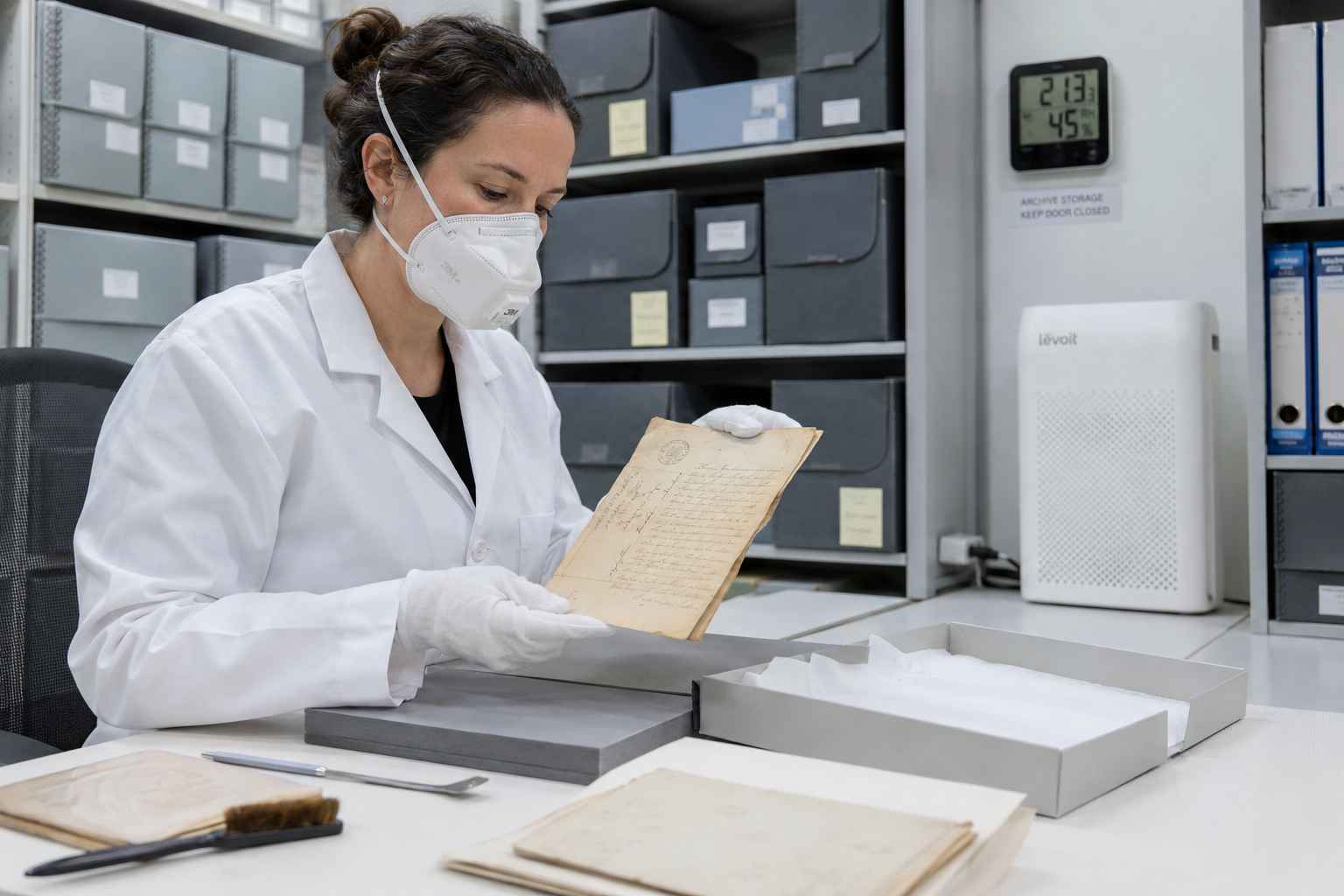
A practical note: cotton conservation gloves, while standard for protecting documents from skin oils, offer no protection against allergen absorption through the skin. If skin contact allergy is a concern, wear nitrile gloves underneath cotton gloves, or use nitrile alone for less fragile materials.
Can People with Severe Dust Mite Allergies Work in Archives Safely
Yes, with appropriate management, many people with dust mite allergies can work in archives safely. The key variables are the severity of the allergy, the quality of environmental controls in the facility, and the consistency of protective measures.
People with mild to moderate allergies who use proper PPE, work in climate-controlled spaces, and take prescribed antihistamines or nasal corticosteroids as directed by their physician can generally manage well. Those with severe allergic asthma face a higher risk and need individualized guidance from both an allergist and an occupational health physician.
Practical steps for allergic staff:
- Get a formal allergy assessment before starting regular archival work, including skin prick testing or specific IgE blood tests for dust mite allergens.
- Discuss allergen immunotherapy (allergy shots or sublingual drops) with an allergist. Immunotherapy can reduce sensitivity over time and is particularly useful for people in ongoing occupational exposure.
- Request task rotation so that heavily contaminated processing work is shared among staff rather than concentrated on one person.
- Keep a symptom diary to track whether specific tasks, rooms, or collections correlate with flare-ups.
- Know the location of emergency medication (antihistamines, bronchodilators) and inform supervisors of your allergy status.
The one scenario where continued archival work may not be safe is uncontrolled, severe asthma that is consistently triggered by workplace exposure despite all reasonable accommodations. In that case, reassignment to non-collection-handling roles or remote work options should be explored.
Cost of Professional Dust Mite Mitigation for Historical Collections
The cost of professional dust mite mitigation for historic collections varies widely based on collection size, treatment method, and the specialist involved. As a general estimate for planning purposes:
- HEPA vacuuming and basic environmental assessment by a pest management specialist: $300-$800 for a small reading room or storage area.
- Freezing treatment for individual boxes or small collections: $50-$200 per cubic foot at specialist conservation facilities, depending on volume and turnaround time.
- Anoxic treatment for larger or highly valuable collections: $500-$3,000+ per treatment cycle, depending on scale and equipment.
- Full climate control upgrade (dehumidification, HEPA HVAC filtration): $5,000-$50,000+ depending on building size and existing infrastructure.
These figures are estimates based on typical contractor pricing in North America and Europe as of 2026 and will vary by region and project scope. Always obtain multiple quotes and verify that contractors have specific experience with archival or museum collections, not just residential or commercial pest control.
The most cost-effective long-term investment is almost always preventive: sealed archival housing, stable humidity control, and regular staff training cost far less than reactive treatment of a heavily infested collection.
Difference Between Dust Mite Control in Modern vs Historic Document Preservation
Modern document preservation and historic archive management face the same biological enemy but have different constraints. Modern records facilities can use aggressive environmental standards, synthetic housing materials, and digital surrogates to reduce physical handling. Historic archives must balance mite control against the fragility of irreplaceable materials.
Key differences:
- Treatment options: Modern paper can tolerate a wider range of cleaning methods. Historic paper, vellum, and early photographic materials may be damaged by humidity fluctuations, temperature extremes, or certain enclosure materials.
- Housing materials: Modern facilities can use sealed polyethylene enclosures freely. Historic collections require acid-free, pH-neutral materials that may be less airtight but are chemically stable over centuries.
- Digitization as mitigation: Digitizing high-use historic items reduces physical handling frequency, which directly reduces allergen disturbance for staff. This is not a mite control strategy per se, but it is a meaningful exposure reduction tool.
- Building constraints: Many historic archives operate in listed or heritage buildings where HVAC modifications face planning restrictions. This limits the environmental controls available compared to purpose-built modern facilities.
The core principles of mite control (low humidity, low temperature, sealed housing, HEPA filtration) apply equally to both contexts. The difference is in how strictly and easily those principles can be implemented.
Alternative Storage Methods That Minimize Dust Mite Risk
Sealed, climate-controlled storage is the gold standard for minimizing dust mite risk in archival collections. Several alternative or supplementary approaches are also worth considering, particularly for institutions with limited budgets or building constraints.
- Clamshell archival boxes with tight closures: Significantly reduce mite movement between items and limit allergen dispersal when boxes are opened.
- Polyester film enclosures (Melinex/Mylar): Used for individual documents, these create a physical barrier against mites while allowing visual inspection without handling.
- Compact mobile shelving: Reduces the total surface area exposed to ambient air and makes HEPA vacuuming of shelves more efficient.
- Off-site cold storage: Some institutions store rarely accessed collections in purpose-built cold storage facilities at 10-13°C and 35-45% RH. These conditions are hostile to dust mites and also slow paper degradation.
- Silica gel buffering: Used in sealed enclosures to maintain low relative humidity without active mechanical systems. Requires regular monitoring and regeneration but is cost-effective for smaller collections.
No storage method eliminates mites entirely if collections are regularly handled in uncontrolled environments. The handling moment, when boxes are opened and materials are disturbed, is when allergen exposure peaks. Storage methods that minimize disturbance frequency and contain allergens within enclosures are therefore the most practical protective strategy.
Common Mistakes Archivists Make When Dealing with Dust Mite Contamination
Several recurring errors undermine dust mite management efforts in archives. Knowing them in advance saves time, money, and health consequences.
- Using standard vacuum cleaners: Non-HEPA vacuums exhaust fine allergen particles back into the air, making exposure worse rather than better. Always use HEPA-filtered equipment.
- Dry dusting with feather dusters or dry cloths: This disperses allergens into the breathing zone without removing them. Use damp microfiber cloths on hard surfaces (not on documents) or HEPA vacuuming.
- Ignoring humidity data: Many facilities check humidity only when problems are visible. Continuous datalogger monitoring is essential because mite population spikes happen silently over weeks.
- Treating mite control as a one-time project: Mite populations recover quickly if environmental conditions remain favorable. Mitigation must be an ongoing program, not a single intervention.
- Skipping PPE for “quick” tasks: Allergen exposure is cumulative. Brief unprotected handling of contaminated materials multiple times per day adds up to significant exposure over a working year.
- Failing to inform new staff: Newly hired archivists often have no prior exposure to dust mite allergens and may not yet be sensitized. Early protective habits prevent sensitization from developing in the first place.
- Conflating mite control with pest control: General pest management contractors typically focus on insects. Dust mite management requires different expertise, different tools, and different environmental standards.
FAQ
Q: Can dust mites permanently damage historic documents? A: Dust mites do not directly eat paper, but their fecal matter and the mold they are often associated with can cause surface staining and contribute to paper degradation over time. The greater risk is to human health rather than to the documents themselves.
Q: How quickly can humidity reduction kill dust mites in a storage room? A: At sustained relative humidity below 50%, dust mite populations typically decline significantly within two to four weeks. Complete suppression may take longer in heavily infested collections with dense, undisturbed materials.
Q: Are antihistamines enough to manage dust mite allergy symptoms for archivists? A: For mild symptoms, non-sedating antihistamines combined with nasal corticosteroids can be effective. For moderate to severe symptoms, or for anyone with asthma, an allergist evaluation and possibly immunotherapy are more appropriate than relying on antihistamines alone.
Q: Is freezing safe for all types of historic documents? A: Freezing is generally safe for paper, parchment, and most bound materials when done correctly (slow freezing, sealed packaging to prevent condensation on thawing). It is not recommended for daguerreotypes, some photographic materials, or items with fragile water-soluble media without specialist assessment.
Q: Do air purifiers help reduce dust mite allergens in reading rooms? A: Yes, HEPA air purifiers reduce airborne allergen particles in reading rooms and processing areas. They are most effective when placed near the work area and sized appropriately for the room volume. They do not eliminate mites from collection materials but reduce the airborne load during handling.
Q: How often should archive storage areas be HEPA vacuumed? A: For active storage areas, quarterly HEPA vacuuming of shelves and floors is a reasonable minimum. High-use areas or facilities with known humidity problems benefit from monthly vacuuming. Newly processed or donated collections should be vacuumed before being integrated into the main collection.
Q: Can mold and dust mite problems be treated at the same time? A: Yes, and they often should be. Mold provides an additional food source for dust mites, so mold remediation (with appropriate conservation methods) reduces the food supply for mites and improves overall collection health. Address humidity control first, as it tackles both problems simultaneously.
Q: What qualifications should I look for in a dust mite mitigation contractor for archives? A: Look for contractors with experience in museum, library, or archival pest management, ideally with credentials from organizations such as the American Institute for Conservation (AIC) or the Integrated Pest Management Working Group. General residential or commercial pest control contractors typically lack the specialized knowledge needed for historic collections.
Conclusion
Managing dust mite allergies in historic archives and libraries is not a single-fix problem. It requires sustained attention to environmental conditions, consistent use of protective equipment, thoughtful storage choices, and genuine investment in staff health.
The most actionable steps you can take right now:
- Install continuous humidity dataloggers in all storage areas and set an alert threshold at 55% RH so you catch spikes before mite populations recover.
- Audit your storage housing. Any collection still in non-archival cardboard boxes or on open shelving is a priority for re-housing in sealed, acid-free enclosures.
- Train all staff on PPE use before they handle dusty or unprocessed collections, not after symptoms appear.
- Establish a HEPA vacuuming schedule for shelves, floors, and box exteriors and assign clear responsibility for it.
- Encourage staff with allergy symptoms to seek medical evaluation early. Occupational sensitization is easier to manage when caught before it progresses.
Historic collections are irreplaceable, and the people who care for them deserve working conditions that protect their long-term health. The good news is that the most effective interventions, humidity control, sealed housing, and proper PPE, are also among the most affordable. Start with the environment, protect the people, and the collections will benefit too.
References
- Pinniger, D. (2015). Pest Management in Museums, Archives and Historic Houses. Archetype Publications.
- World Allergy Organization. (2022). Dust Mite Allergy: Global Prevalence and Management. worldallergy.org
- American Institute for Conservation. (2021). Integrated Pest Management for Collections. culturalheritage.org
- Platts-Mills, T. A. E., & Chapman, M. D. (1987). Dust mites: immunology, allergic disease, and environmental control. Journal of Allergy and Clinical Immunology, 80(6), 755-775.
- National Archives (UK). (2019). Environmental Monitoring for Collections. nationalarchives.gov.uk
- Northeast Document Conservation Center (NEDCC). (2020). Preservation Leaflets: Storage and Handling. nedcc.org
Read next: Safe Heavy Lifting Techniques for Urban Community Gardeners. A closer look at safe lifting for gardeners.