
Key Takeaways
- A functional travel matcha kit requires only four to five items and costs between $25 and $80 depending on quality
- A portable electric frother is the most practical whisk alternative for travelers and backpackers
- Water temperature between 160°F and 175°F (70°C to 80°C) produces the best flavor without bitterness, and you can estimate this without a thermometer
- Store matcha powder in a small airtight tin or resealable bag inside a hard-shell case to prevent spills and moisture damage
- Instant matcha blends are convenient but sacrifice flavor complexity; ceremonial-grade loose powder is worth the small extra effort
- Hotel rooms, hostel kitchens, and campsite stoves all work as prep environments with the right kit
- Cleaning travel matcha tools takes under two minutes with just water and a quick rinse routine
- The biggest mistake most travelers make is packing too much gear, not too little
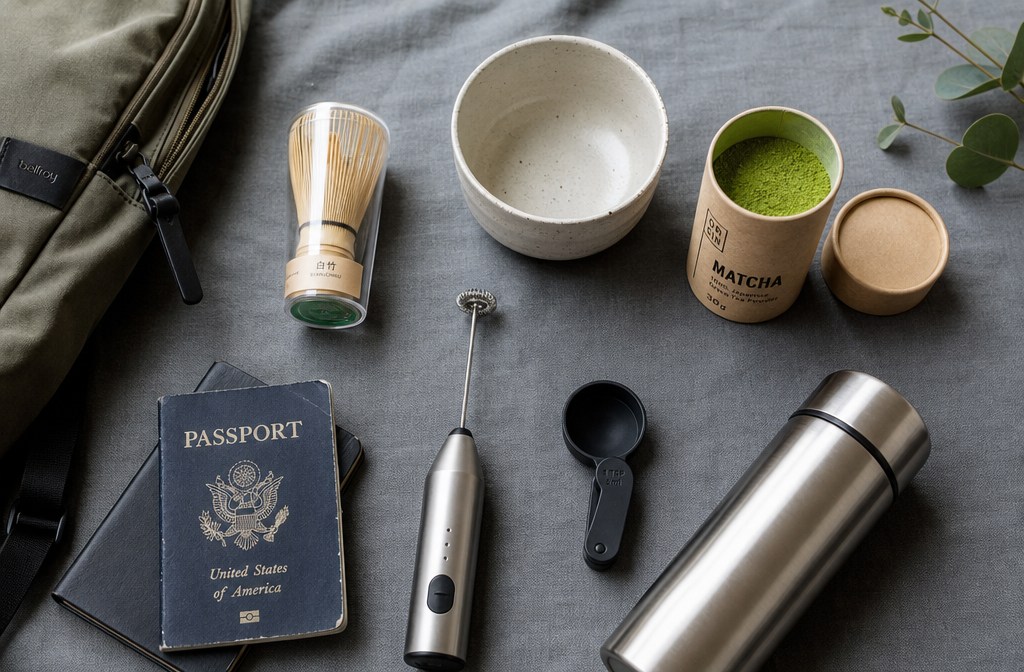
What Equipment Do You Really Need to Make Matcha While Traveling
The honest answer: four items cover 95% of travel scenarios. You need matcha powder, something to whisk or froth it, a vessel to drink from, and hot water. Everything else is optional.
Here is the core kit broken down:
| Item | What to Look For | Weight |
|---|---|---|
| Matcha powder | Ceremonial or premium grade, airtight tin | 30-60g |
| Frother or travel whisk | Battery-powered or collapsible bamboo | 50-80g |
| Vessel | Wide ceramic cup or collapsible silicone bowl | 80-150g |
| Thermos or travel kettle | Insulated, holds temp 30+ minutes | 200-350g |
Choose a frother over a full chasen (bamboo whisk) if you are backpacking. A chasen is fragile, bulky, and needs a whisk holder to keep its shape. A battery-powered frother fits in a shirt pocket and survives checked luggage.
Common mistake: Packing a full chawan (ceremonial bowl) made of thick ceramic. It adds weight and breaks easily. A wide-mouth enamel mug or a silicone travel bowl does the same job at a fraction of the weight.
How Much Does a Basic Travel Matcha Kit Cost
A functional travel matcha kit costs between $25 and $80. Budget kits work fine; premium kits last longer and produce better foam.
Budget tier ($25-$40):
- Generic electric frother from Amazon or a kitchen store: $8-$12
- 30g tin of mid-grade ceremonial matcha: $10-$18
- Collapsible silicone cup: $5-$8
Mid-range tier ($40-$65):
- A dedicated travel matcha set (whisk, scoop, and tin bundled): $25-$35
- 40g ceremonial-grade matcha from a reputable Japanese brand: $18-$25
Premium tier ($65-$120+):
- Stainless steel electric frother with USB charging: $30-$45
- Uji or Nishio origin ceremonial matcha, 40g: $28-$40
- Compact ceramic travel bowl with lid: $20-$30
The biggest cost variable is the matcha powder itself, not the tools. A $10 frother and a $25 bag of quality powder will outperform a $50 tool set paired with cheap powder every time.
Can You Make Matcha Without a Traditional Whisk
Yes, and for most travelers, skipping the traditional chasen entirely is the smarter choice. A battery-powered milk frother produces comparable foam in 20 to 30 seconds and costs less than $15.
Alternatives to a traditional bamboo whisk:
- Electric milk frother: Best all-around option. Fits in a jacket pocket, runs on AA batteries or USB charging, and creates dense, even foam.
- Handheld manual whisk: Smaller than a chasen, but requires more wrist effort and produces lighter foam.
- Shaker bottle method: Add matcha and a small amount of warm water to a leak-proof shaker, seal it, and shake for 30 seconds. Works well for iced matcha on the go.
- French press: If you already carry one for coffee, add matcha and water, press gently, and pour. Not traditional, but functional.
The shaker bottle method is especially useful for hikers and campers who want to minimize gear. A standard 16oz protein shaker weighs almost nothing and doubles as a drinking vessel.
What Is the Difference Between Cheap and Good Travel Matcha Gear
The gap between cheap and quality gear shows up in three areas: durability, foam quality, and powder protection.
Durability: Cheap frothers use thin plastic housings that crack in a bag. Better models use stainless steel or reinforced ABS plastic and last two to three years of daily travel use.
Foam quality: Inexpensive frothers spin at lower RPM and produce larger, less stable bubbles. A good frother creates microfoam that holds for several minutes. For matcha, this matters because fine foam distributes the powder evenly and softens the flavor.
Powder protection: A cheap zip-lock bag will eventually fail. A quality matcha tin uses a double-lid or vacuum seal that keeps powder dry and fresh for three to four weeks in a bag, even in humid climates.
Choose cheap gear if you are testing whether you will actually maintain a matcha habit on the road. Upgrade once you know you want it as a permanent part of your travel routine.
How Travelers Pack Matcha Powder Without Spilling
Spills happen when powder is stored in flimsy packaging or overfilled containers. The fix is simple: use a hard-sided airtight tin, fill it no more than 80% full, and wrap it in a small zip-lock bag as a secondary barrier.
Packing checklist for matcha powder:
- Transfer powder from original packaging into a small stainless steel or aluminum tin with a tight-fitting lid
- Leave at least 20% air space at the top to prevent pressure buildup
- Place the tin inside a zip-lock bag and press out excess air before sealing
- Store the zip-lock bag inside a hard-shell toiletry case or a rigid packing cube
- Keep the kit upright in your bag when possible, especially during flights
For checked luggage specifically: Wrap the tin in a soft cloth or a small sock. Pressure changes in cargo holds can loosen lids on cheaper tins. A rubber band around the lid adds a cheap extra layer of security.
Humidity is the other enemy. If you are traveling in Southeast Asia or other tropical regions, add a small silica gel packet inside the tin. These weigh almost nothing and keep powder clump-free for weeks.
Best Portable Electric Frother for Matcha Travel
The best portable electric frother for travel matcha in 2026 is one that is compact, USB-rechargeable or battery-powered, and spins fast enough to create true microfoam. Based on widely reviewed options, the Zulay Kitchen Milk Boss and the Bonsenkitchen frother consistently appear at the top of traveler-focused comparisons for their combination of size, battery life, and foam quality.
What to look for in a travel frother:
- Power source: USB-C rechargeable models are more convenient than AA battery versions for international travel
- Length: Under 6 inches fits in most toiletry bags without awkward packing
- Speed: Look for models rated at 12,000 to 19,000 RPM for proper matcha microfoam
- Whisk head: A fine coil whisk head (not a flat disc) works better for matcha than for milk
Avoid: Frothers designed primarily for cold foam or cappuccino milk. These often use a flat paddle that does not incorporate matcha powder as evenly as a coil whisk.
A good travel frother costs between $12 and $30. Spending more than $35 on a frother for travel is generally not necessary unless you are also using it as your primary home frother.
Is Instant Matcha Powder Worth It for Travel
Instant matcha blends (pre-sweetened or pre-mixed with creamer) are convenient but not worth it if flavor matters to you. They dissolve faster, but most contain added sugar, milk powder, or fillers that mask the natural grassy, umami character of real matcha.
When instant matcha makes sense:
- You are on a very long trip and cannot guarantee access to hot water at the right temperature
- You want a quick energy boost without any prep ritual
- You are sharing with people who are new to matcha and prefer a sweeter, milder flavor
When to stick with ceremonial-grade loose powder:
- You drink matcha daily and care about flavor quality
- You are managing caffeine intake and want a pure, unsweetened product
- You are trying to get the full L-theanine and antioxidant content without additives
A 30g tin of ceremonial-grade matcha makes roughly 15 to 20 cups. For a one-week trip, that is more than enough. The tin takes up less space than a box of instant packets and produces a noticeably better cup.
How to Keep Matcha Tools Clean When Backpacking
Cleaning travel matcha tools takes about two minutes and requires only water. Matcha powder is water-soluble, so there is no need for soap on the whisk or frother head after every use.
Quick clean routine:
- Rinse the frother head or whisk under warm running water immediately after use
- Spin the frother briefly in a cup of clean water to flush powder from the coil
- Shake off excess water and air-dry upright or on a small cloth
- Wipe the bowl or cup with a damp cloth or rinse it out
- Once every two to three days, use a drop of unscented dish soap on the vessel and rinse thoroughly
For bamboo whisks specifically: Never leave a chasen submerged in water. Bamboo absorbs moisture and splits over time. A quick rinse and air dry is all it needs.
On multi-day hikes with no running water: Carry a small 250ml bottle of clean water just for rinsing gear. This adds minimal weight and keeps tools hygienic for the duration of the trip.
What Water Temperature Works If You Don’t Have a Thermometer
The target range for matcha is 160°F to 175°F (70°C to 80°C). Without a thermometer, you can estimate this reliably using a simple visual cue and a timing method.
The no-thermometer method:
- Bring water to a full boil (212°F / 100°C)
- Remove from heat and wait 3 to 4 minutes for it to cool to roughly 175°F
- Wait 5 to 6 minutes for roughly 165°F
- Alternatively, mix one part room-temperature water with three parts boiling water to reach approximately 170°F
Why temperature matters: Water that is too hot (above 185°F) denatures the amino acids in matcha, producing a bitter, astringent cup. Water that is too cool (below 150°F) will not dissolve the powder fully, leaving a gritty texture.
The 4-minute wait after boiling is the easiest method for hotel rooms and hostel kitchens where you have a kettle but no thermometer.
Matcha Kit Recommendations for Minimalist Backpackers
For minimalist backpackers, the goal is under 300 grams total kit weight and under four items. Here is a practical setup that works across hotel rooms, hostels, campsites, and airport lounges.
The 3-item minimalist kit:
- 30g ceremonial matcha in a stainless steel travel tin (sealed with rubber band)
- USB-rechargeable electric frother (doubles as a coffee frother if needed)
- Wide-mouth insulated travel mug (serves as both the brewing vessel and drinking cup)
This setup requires no separate bowl, no bamboo whisk, and no extra cleaning tools. The total weight is roughly 250 to 280 grams. The mug’s insulation also keeps water at the right temperature longer, giving you a wider prep window.
For hikers and campers: Swap the insulated mug for a titanium camp cup, which is lighter and handles direct heat if you need to warm water on a stove. Add a small shaker bottle for cold matcha options on hot days.
Common Mistakes Travelers Make Brewing Matcha
Most travel matcha mistakes fall into two categories: gear problems and technique problems. Knowing both saves you from a bitter, clumpy, or flavorless cup.
Gear mistakes:
- Packing a fragile chasen without a holder (it arrives bent and useless)
- Using a narrow-mouthed cup that makes whisking or frothing impossible
- Bringing more powder than you will use (matcha oxidizes quickly once opened)
Technique mistakes:
- Using boiling water directly on the powder (causes bitterness)
- Not sifting the powder before adding water (causes clumps that don’t dissolve)
- Adding too much water at once before whisking (harder to form foam)
The fix for clumping: Use a small fine-mesh tea strainer or the back of a spoon to press the powder through before adding water. A single-serve tea infuser with fine mesh works well and weighs almost nothing.
Can You Make Matcha in a Hotel Room With Limited Tools
Yes, making matcha in a hotel room is one of the easiest travel scenarios. Almost every hotel room has an electric kettle, a mug, and access to water. That covers three of your four needs.
Hotel room matcha setup:
- Boil water with the in-room kettle, then wait 4 minutes
- Add 1 to 1.5 grams of matcha (roughly half a teaspoon) to your travel mug
- Add 2 to 3 tablespoons of the cooled water first and froth or whisk to form a paste
- Add remaining water (about 100ml) and froth again for 20 to 30 seconds
- Drink immediately
The paste step (called “koicha” preparation in traditional practice) is the single most important technique for avoiding clumps. It takes 10 extra seconds and makes a significant difference in texture and flavor.
FAQ
How long does matcha powder stay fresh in a travel tin? Opened matcha powder stays fresh for three to four weeks if stored in an airtight tin away from heat and light. In humid climates, add a silica gel packet to extend freshness.
Can I bring matcha powder through airport security? Yes. Matcha powder is permitted in both carry-on and checked luggage in most countries. It may be swabbed for testing at security, which is routine for any fine powder. Keep it in a clearly labeled tin to avoid delays.
How much matcha should I pack for a one-week trip? A 30g tin provides roughly 15 to 20 servings. For one cup per day, 30g is more than enough for a week. Pack 40g if you want flexibility or plan to share.
Is a bamboo whisk better than an electric frother for travel matcha? For travel specifically, an electric frother is more practical. It is lighter, more durable in a bag, and requires no holder to maintain its shape. A chasen produces a slightly more traditional texture but is fragile and harder to clean on the road.
What is the lightest possible travel matcha setup? The lightest setup is a small zip-lock bag of matcha powder, a battery-powered frother, and a wide-mouth water bottle. Total weight can be under 150 grams.
Can I make iced matcha while traveling? Yes. Use the shaker bottle method: add matcha and a small amount of warm water, shake to dissolve, then add cold water or ice. This works well in hotel rooms, at convenience stores with ice, or on hiking trails.
Do I need a bamboo scoop (chashaku) for measuring? No. A standard half-teaspoon measuring spoon works perfectly and takes up less space. A folding silicone measuring spoon is a good lightweight option.
What if I can’t find hot water while camping? Cold-brew matcha works. Add 1 gram of powder to 200ml of cold water in a sealed bottle and shake well. Let it sit for 2 to 4 hours in a cool place. The flavor is milder and less bitter than hot-brew matcha.
Is ceremonial-grade matcha always better than culinary grade for drinking? For drinking straight (not in lattes or baked goods), ceremonial grade produces a noticeably smoother, less bitter flavor. Culinary grade is better suited for cooking or blending with milk and sweetener.
How do I prevent my frother from getting matcha-stained? Rinse the frother head immediately after each use. If staining builds up, soak the head in warm water with a small drop of white vinegar for five minutes, then rinse clean.
Conclusion
Making matcha on the road is genuinely simple once you strip the kit down to its essentials. The core insight behind making matcha on the road: the minimalist travel kit is not about cutting corners but about choosing the right four items and learning two or three basic techniques that work in any environment.
Actionable next steps:
- Start with the 3-item minimalist kit: a 30g tin of ceremonial matcha, a USB-rechargeable frother, and a wide-mouth insulated mug
- Practice the paste method at home before your first trip so it becomes automatic
- Learn the 4-minute wait rule for temperature without a thermometer
- Pack a small silica gel packet in your tin if you are traveling to humid regions
- If you are a hiker or camper, add a shaker bottle for cold-brew days
The ritual of making matcha on the road: the minimalist travel kit approach, whether in a Tokyo hostel or a trailhead in the Rockies, is one of the more grounding habits you can carry with you. It takes less than five minutes, requires almost no space, and produces something genuinely good. That is a fair trade for any traveler.
References
- Kochman, J., Jakubczyk, K., Antoniewicz, J., Mruk, H., & Janda, K. (2021). Health benefits and chemical composition of matcha green tea: A review. Molecules, 26(1), 85. https://doi.org/10.3390/molecules26010085
- Unno, K., Furushima, D., Hamamoto, S., Iguchi, K., Yamada, H., Morita, A., & Nakamura, Y. (2018). Stress-reducing function of matcha green tea in animal experiments and clinical trials. Nutrients, 10(10), 1468. https://doi.org/10.3390/nu10101468
- Transportation Security Administration. (2024). What can I bring? Powder rule. https://www.tsa.gov/travel/security-screening/whatcanibring/all
Read next: An Analog Evening Routine for People Who Stare at Screens All Day. A closer look at analog evening routine.