
Key Takeaways
- The vagus nerve is the longest cranial nerve in the body and acts as the main highway of the parasympathetic nervous system
- Cold water immersion activates the vagus nerve by triggering the dive reflex, which slows heart rate and promotes calm
- Water temperatures between 50 and 59 degrees Fahrenheit (10 to 15 degrees Celsius) are most commonly used in research protocols
- Starting with 30-second cold showers and building to 2 to 3 minutes is a practical, low-risk approach for beginners
- Cold water therapy is not safe for everyone; people with heart conditions, Raynaud’s disease, or cold urticaria should consult a doctor first
- Benefits for anxiety and depression are supported by early clinical evidence, though large-scale trials are still limited as of 2026
- Alternatives such as deep breathing, humming, and gargling also stimulate the vagus nerve without cold exposure
- Common mistakes include jumping straight into ice baths, holding the breath, and skipping gradual adaptation
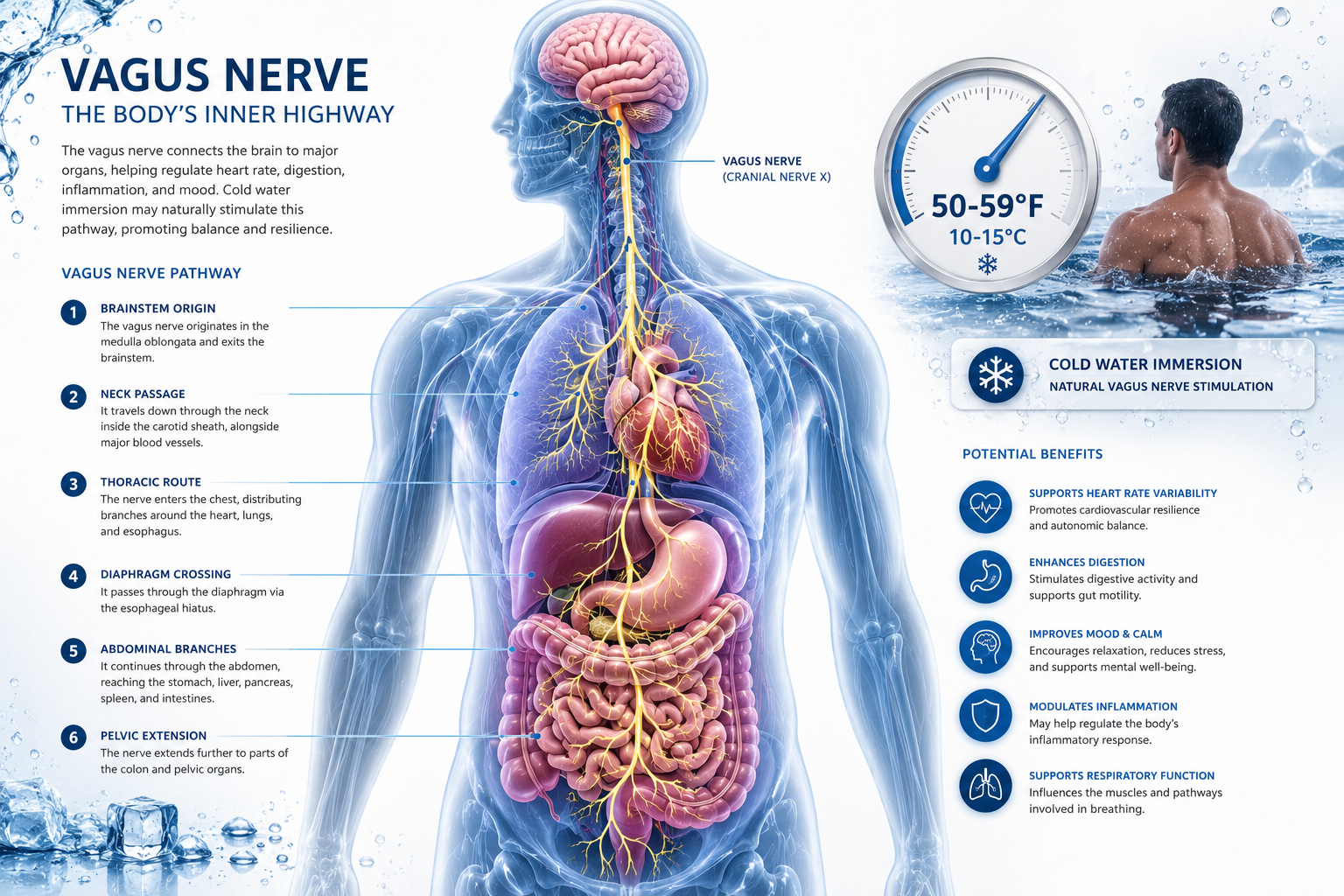
What Exactly Is Vagus Nerve Stimulation and How Does Cold Water Help
The vagus nerve is the tenth cranial nerve, running from the brainstem through the neck, chest, and abdomen. It regulates heart rate, digestion, inflammation, and the stress response. Stimulating it shifts the body from a “fight or flight” state into a “rest and digest” state.
Cold water triggers vagus nerve stimulation through two main mechanisms:
The mammalian dive reflex: When cold water contacts the face or the body, receptors in the skin send an immediate signal to the brainstem. The heart rate drops, blood is redirected to vital organs, and the vagus nerve increases its activity. This reflex is present in all mammals and is one of the fastest ways to activate parasympathetic tone.
Thermal shock and norepinephrine release: Cold immersion causes a brief spike in norepinephrine, a neurotransmitter linked to alertness and mood. A 2008 study by Shevchuk published in Medical Hypotheses proposed that repeated cold showers could produce antidepressant effects partly through this mechanism.
The result is a measurable shift in heart rate variability (HRV), which is widely used as a proxy for vagal tone. Higher HRV generally indicates a more flexible, resilient nervous system.
What Temperature of Water Works Best for Vagus Nerve Stimulation
Water between 50 and 59 degrees Fahrenheit (10 to 15 degrees Celsius) is the range most commonly used in research on cold water immersion and autonomic nervous system effects. This range is cold enough to trigger the dive reflex and norepinephrine response without posing extreme cardiovascular risk to healthy adults.
A few practical benchmarks:
| Water Temperature | Effect | Suitable For |
|---|---|---|
| 68°F / 20°C | Mild cooling, minimal reflex | Beginners, sensitive individuals |
| 59°F / 15°C | Moderate dive reflex activation | General use, most healthy adults |
| 50°F / 10°C | Strong vagal activation, research range | Experienced practitioners |
| Below 50°F / 10°C | High cardiovascular stress, risk increases | Cold therapy athletes only, with supervision |
For face immersion specifically, even water at 60 to 68 degrees Fahrenheit can produce a meaningful heart rate drop. If you’re new to this practice, starting with cold tap water (typically 55 to 65°F depending on your region and season) is a reasonable entry point.
How Long Should You Stay in Cold Water to Activate Your Vagus Nerve
For vagus nerve activation, even brief exposure works. Research protocols typically use 2 to 3 minutes of full-body cold water immersion, but face immersion studies have shown measurable heart rate reductions in under 30 seconds.
Practical time guidelines by method:
- Face immersion in cold water: 15 to 30 seconds per dip, repeated 2 to 3 times
- Cold shower (finishing cold): Start with 30 seconds at the end of a warm shower; build to 2 to 3 minutes over several weeks
- Full-body cold bath or tub: 2 to 5 minutes for healthy adults; research protocols rarely exceed 10 minutes for therapeutic purposes
- Cold plunge pools or open water: 2 to 5 minutes; exit before shivering becomes uncontrollable
The key variable is not just duration but consistency. Doing 2 minutes daily for 30 days will likely produce more lasting changes in vagal tone than a single 10-minute plunge.
“The dose makes the medicine. With cold water therapy, more is not always better — regularity matters far more than duration.”
Can Cold Water Immersion Help With Anxiety and Depression
Early evidence suggests yes, though the research base is still growing. Cold water immersion appears to reduce cortisol, increase HRV, and trigger endorphin and norepinephrine release, all of which are relevant to anxiety and mood disorders.
A widely cited case report published in BMJ Case Reports in 2018 by van Tulleken and colleagues described a 24-year-old woman with major depressive disorder who reduced and eventually stopped antidepressant medication after adopting weekly open-water cold swimming. Her symptoms improved significantly, and the authors proposed vagal activation and cold shock protein responses as possible mechanisms.
A 2020 systematic review in PLOS ONE by Esperland et al. found that cold water swimming was associated with self-reported improvements in mood and well-being, though the authors noted the need for randomized controlled trials.
What the evidence supports:
- Short-term mood improvement after cold exposure is well-documented anecdotally and in small studies
- Vagal tone improvements (measured by HRV) from regular cold exposure may reduce physiological anxiety responses
- Cold water therapy is best viewed as a complementary tool, not a replacement for clinical treatment of anxiety or depression
If you are currently managing a mental health condition, discuss cold water therapy with your doctor before starting.
How Does Vagus Nerve Stimulation Compare to Meditation for Stress Relief
Both cold water immersion and meditation stimulate the vagus nerve and increase parasympathetic activity, but they work through different pathways and suit different people.
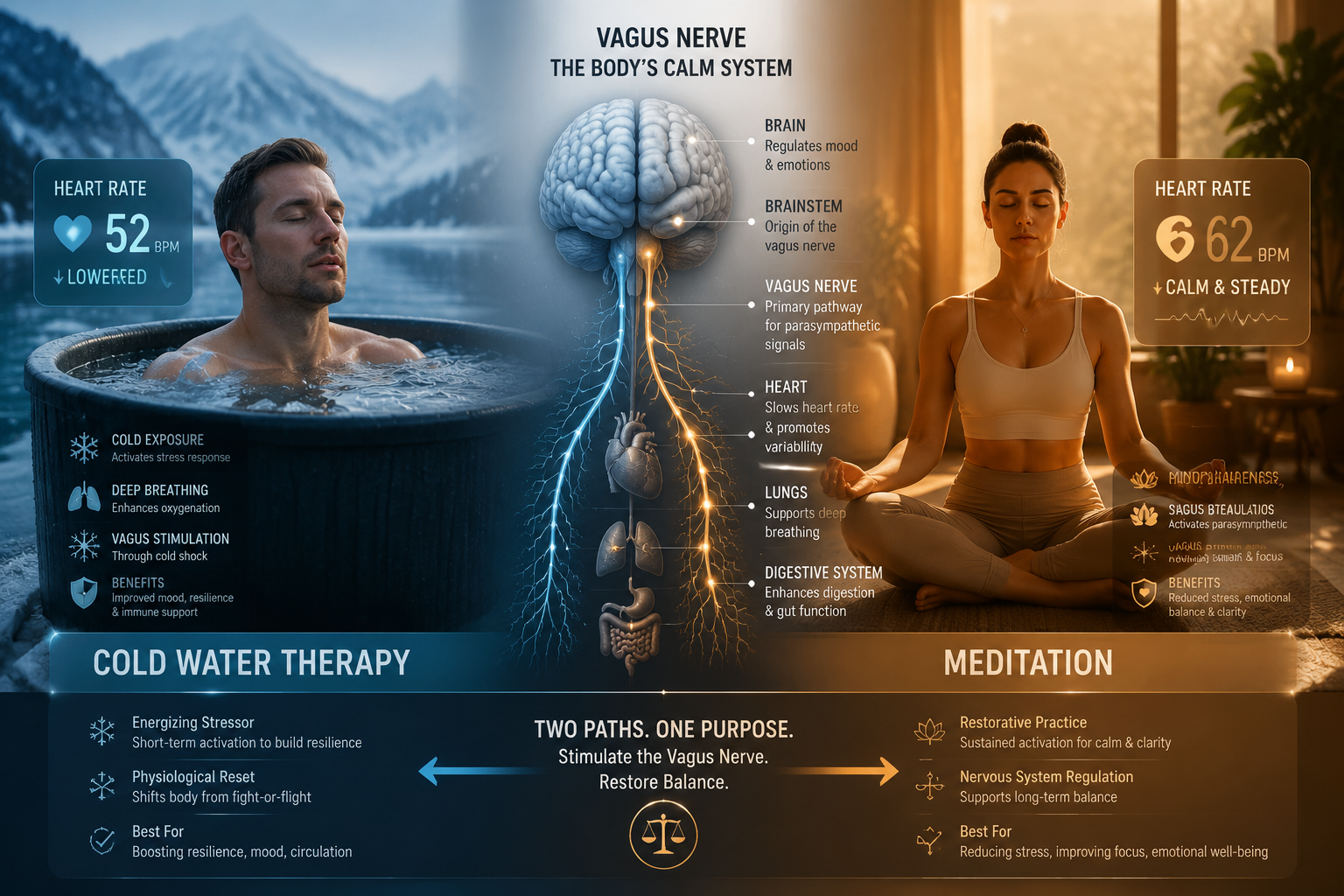
Cold water immersion:
- Fast-acting: heart rate drop occurs within seconds
- Requires physical tolerance and gradual adaptation
- Produces a norepinephrine spike that can feel energizing
- Easier to measure objectively via HRV monitors
Meditation and deep breathing:
- Slower onset but highly accessible
- No physical risk for most people
- Produces sustained parasympathetic activation with consistent practice
- Diaphragmatic breathing directly stimulates the vagus nerve through the thoracic cavity
Choose cold water if you want a fast, measurable physiological shift and you tolerate physical discomfort well.
Choose meditation if you have cardiovascular concerns, prefer a gentler approach, or want a practice that’s easier to sustain long-term.
Many practitioners combine both. A 2-minute cold shower followed by 10 minutes of slow breathing is a practical morning protocol that addresses both the acute and sustained aspects of vagal stimulation.
What’s the Cheapest Way to Do Cold Water Therapy at Home
You don’t need an expensive cold plunge tub to practice vagus nerve stimulation techniques using cold water immersion. The cheapest effective methods cost nothing beyond your existing water bill.
Free or near-free options:
- Cold shower finish: Turn your shower to cold for the last 30 to 90 seconds. This is the most accessible starting point.
- Face immersion: Fill a bowl or sink with cold tap water and submerge your face for 15 to 30 seconds. This directly triggers the dive reflex.
- Cold tap bath: Fill a bathtub with cold tap water (no ice needed). In most climates, tap water runs at 55 to 65°F, which is sufficient.
Low-cost upgrades:
- A bag of ice from a grocery store (roughly $2 to $4) can lower a bathtub to 50 to 55°F
- A chest freezer converted to a cold plunge costs $150 to $400 upfront and is a popular DIY solution among regular practitioners
- Dedicated cold plunge tubs range from $300 to $5,000+, but they’re not necessary for therapeutic benefits
For most people starting out, cold tap water is entirely sufficient. The dive reflex activates at temperatures well above ice-cold, so spending money on expensive equipment before establishing a consistent habit rarely makes sense.
Is Cold Water Therapy Safe for Everyone, and Who Should Avoid It
Cold water immersion is not safe for everyone. For healthy adults without underlying conditions, the risks are low when approached gradually. For certain groups, the risks are significant.
Who should avoid cold water immersion or consult a doctor first:
- Heart disease or arrhythmia: Cold water causes an immediate cardiovascular stress response, including a sharp rise in blood pressure and heart rate before the vagal slowdown. This can trigger cardiac events in vulnerable individuals.
- Raynaud’s disease: Cold exposure causes severe vasospasm in the fingers and toes, which can be painful and damaging.
- Cold urticaria: A condition where cold triggers an allergic skin reaction, including hives and in severe cases, anaphylaxis.
- Uncontrolled hypertension: The initial blood pressure spike from cold immersion is a real concern.
- Pregnancy: Cold shock responses and circulatory changes make full immersion risky without medical guidance.
- Open wounds or skin infections: Cold water immersion increases infection risk and can impair healing.
- Children and elderly individuals: Both groups are more vulnerable to hypothermia and cardiovascular stress.
Common safety rules for healthy adults:
- Never practice cold immersion alone, especially in open water
- Exit the water if you feel chest pain, dizziness, or numbness beyond the expected cold sensation
- Warm up gradually after immersion; avoid hot showers immediately after, as the rapid temperature change can cause fainting
Common Mistakes People Make When Trying Vagus Nerve Stimulation With Cold Water
The most common mistake is starting too aggressively. Jumping into an ice bath on day one without any cold adaptation is both uncomfortable and potentially dangerous. Gradual exposure over one to two weeks is safer and more sustainable.
Other frequent errors:
- Holding the breath: Many people instinctively hold their breath when hitting cold water. This counteracts vagal activation. Slow, controlled exhales are what drive the parasympathetic response. Breathe out slowly and steadily.
- Expecting instant long-term results: Cold water produces an immediate mood shift for many people, but lasting changes in vagal tone and HRV typically take four to eight weeks of consistent practice.
- Ignoring the warm-up afterward: Shivering is the body’s way of rewarming. Allow natural rewarming (movement, dry clothes, warm room) rather than immediately jumping into a hot shower, which can cause blood pressure instability.
- Using it as a substitute for medical care: Cold water therapy is a wellness tool, not a treatment. Using it to avoid addressing clinical depression, anxiety disorders, or heart conditions is a mistake.
- Inconsistency: Doing cold immersion once a week produces far less measurable benefit than daily or near-daily shorter sessions.
How Quickly Can You Expect to Feel Benefits From Cold Water Immersion
Immediate effects happen within seconds to minutes. Most people report a sense of calm, mental clarity, or mild euphoria within 5 to 10 minutes of ending a cold session. This is largely due to the norepinephrine spike and the shift in autonomic balance.
Timeline of expected benefits:
- Within minutes: Heart rate slows, stress response decreases, mood often lifts
- After 1 to 2 weeks of daily practice: Sleep quality and morning energy levels often improve
- After 4 to 8 weeks: Measurable improvements in HRV are possible; some people report reduced baseline anxiety
- After 3 months or more: Potential adaptations in cold tolerance, inflammation markers, and sustained mood regulation
Individual variation is significant. Factors like baseline vagal tone, fitness level, water temperature, and consistency all affect how quickly benefits appear.
What Medical Conditions Might Improve With Vagus Nerve Stimulation
Vagus nerve stimulation techniques using cold water immersion are one of several non-invasive approaches to improving vagal tone. The conditions with the most evidence for benefit from vagal stimulation (through various methods, including cold exposure) include:
- Anxiety disorders: Increased vagal tone is associated with reduced physiological anxiety responses
- Depression: Both cold water and implanted vagus nerve stimulators have shown antidepressant effects in research settings
- Inflammatory conditions: The vagus nerve regulates the inflammatory reflex; higher vagal tone is associated with lower systemic inflammation, which is relevant to conditions like rheumatoid arthritis and inflammatory bowel disease
- Post-traumatic stress disorder (PTSD): Vagal stimulation is being studied as a way to improve emotional regulation in PTSD
- Migraines: Non-invasive vagus nerve stimulation devices have received regulatory clearance in some countries for migraine prevention
- Epilepsy: Implanted vagus nerve stimulators are an established treatment for drug-resistant epilepsy
It’s worth noting that most of the strongest evidence for vagus nerve stimulation in these conditions comes from implanted or transcutaneous electrical devices, not cold water alone. Cold water immersion is a low-cost, accessible complement to these approaches, not a medical treatment in its own right.
Are There Alternatives to Cold Water for Stimulating the Vagus Nerve
Yes. Cold water is one of the most direct and fast-acting methods, but several other techniques activate the vagus nerve without cold exposure.
Effective alternatives:
- Slow diaphragmatic breathing: Breathing at 5 to 6 breaths per minute with extended exhales (longer out than in) directly stimulates the vagus nerve. This is one of the most evidence-backed methods.
- Humming, singing, or chanting: The vagus nerve innervates the larynx. Vibrating the vocal cords through humming or singing activates vagal afferent fibers.
- Gargling with water: Vigorous gargling for 30 to 60 seconds activates the same vagal branches as humming.
- Yoga and tai chi: Both practices combine slow breathing, movement, and relaxation in ways that consistently improve HRV in research studies.
- Transcutaneous auricular vagus nerve stimulation (taVNS): Small electrical devices that stimulate the auricular branch of the vagus nerve through the ear are increasingly available and have a growing evidence base.
- Probiotics and gut health: The gut-brain axis communicates heavily through the vagus nerve; a healthy gut microbiome supports vagal signaling.
For people who cannot tolerate cold water, deep breathing combined with humming is a practical, zero-cost alternative that can be done anywhere.
Frequently Asked Questions
Does cold water on the face work as well as full-body immersion for vagus nerve stimulation? Face immersion directly triggers the mammalian dive reflex through trigeminal nerve receptors connected to the vagus nerve. For heart rate reduction and acute stress relief, face immersion is highly effective and may be preferable for people who cannot tolerate full-body cold.
Can I use a cold shower instead of a cold bath? Yes. Cold showers are a practical and effective starting point. The key is keeping the water cold enough (ideally below 60°F / 15°C) and staying in for at least 30 to 90 seconds while breathing slowly.
How often should I do cold water immersion for vagus nerve benefits? Daily practice produces better results than occasional sessions. Most protocols in research studies use daily or near-daily exposure of 2 to 5 minutes.
Will cold water immersion raise or lower my blood pressure? Both. There is an initial spike in blood pressure and heart rate within the first 30 to 60 seconds (the cold shock response), followed by a drop in heart rate driven by vagal activation. People with hypertension should consult a doctor before starting.
Is there a best time of day to do cold water immersion? Morning cold exposure is popular because the norepinephrine spike can improve alertness and energy. Evening cold immersion can also promote sleep by lowering core body temperature, which is a natural sleep trigger.
Can children do cold water therapy for vagus nerve stimulation? Children are more vulnerable to hypothermia and cardiovascular stress from cold shock. Cold water therapy for children should only be done under medical guidance and with very brief, mild exposures.
Does the Wim Hof Method count as vagus nerve stimulation? The Wim Hof Method combines cold exposure with specific breathing techniques. The cold immersion component does stimulate the vagus nerve. However, the hyperventilation breathing phase actually reduces vagal tone temporarily; the slow recovery breathing afterward restores it.
How do I measure whether my vagus nerve stimulation is working? Heart rate variability (HRV) is the most accessible objective measure. Many consumer wearables (Garmin, Polar, Oura Ring) track HRV. An upward trend in resting HRV over four to eight weeks of consistent practice suggests improving vagal tone.
Is cold water immersion the same as cryotherapy? No. Whole-body cryotherapy uses extremely cold air (around -200°F / -130°C) in a chamber for 2 to 4 minutes. Cold water immersion uses water, which conducts heat 25 times faster than air, making it more effective for vagal stimulation at much less extreme temperatures.
Can I combine cold water immersion with medication for anxiety or depression? Cold water therapy can be used alongside medication as a complementary practice, but always discuss this with your prescribing doctor. Never reduce or stop psychiatric medication without medical supervision.
Conclusion
Vagus nerve stimulation techniques using cold water immersion are among the most accessible, low-cost tools available for improving stress resilience, mood, and autonomic nervous system balance. The science is still developing, but the mechanisms are well understood: cold water activates the dive reflex, shifts the body toward parasympathetic dominance, and triggers neurochemical changes that support mental and physical well-being.
Actionable next steps:
- Start with a 30-second cold finish to your daily shower this week. Keep your exhales slow and steady.
- If that feels manageable after five days, extend to 60 to 90 seconds and track your mood and sleep quality.
- Consider tracking your HRV with a wearable device to get objective feedback on your progress.
- If you have any of the contraindicated conditions listed above, speak with your doctor before starting.
- Combine cold water practice with slow breathing or humming for a more complete vagal stimulation routine.
The goal is not to endure discomfort for its own sake. It’s to use a well-understood physiological mechanism to build a calmer, more adaptable nervous system over time. Start small, stay consistent, and let the results guide your practice.
References
- Shevchuk, N. A. (2008). Adapted cold shower as a potential treatment for depression. Medical Hypotheses, 70(5), 995-1001.
- van Tulleken, C., Harper, M., & Tipton, M. (2018). Open water swimming as a treatment for major depressive disorder. BMJ Case Reports. https://casereports.bmj.com/content/2018/bcr-2018-225007
- Esperland, D., de Weerd, L., & Mercer, J. B. (2020). Health effects of voluntary exposure to cold water: a continuing subject of debate. International Journal of Circumpolar Health, 81(1). https://doi.org/10.1080/22423982.2022.2111789
- Tipton, M. J., Collier, N., Massey, H., Corbett, J., & Harper, M. (2017). Cold water immersion: kill or cure? Experimental Physiology, 102(11), 1335-1355.
- Porges, S. W. (2011). The Polyvagal Theory: Neurophysiological Foundations of Emotions, Attachment, Communication, and Self-Regulation. W. W. Norton & Company.
- Breit, S., Kupferberg, A., Rogler, G., & Hasler, G. (2018). Vagus nerve as modulator of the brain-gut axis in psychiatric and inflammatory disorders. Frontiers in Psychiatry, 9, 44.
Read next: Breathwork for High-Altitude Hikers Adjusting to Low Oxygen. A closer look at breathwork for high altitude.