
Key Takeaways 🐾
- The “3-3-3 Rule” (3 days, 3 weeks, 3 months) is the most reliable framework for understanding a rescue dog’s adjustment timeline.
- Match the dog’s energy level and size to your living space and daily routine before you commit.
- Budget for more than the adoption fee: first-year costs for a dog typically range from $1,000 to $3,000 (ASPCA estimate), covering vet care, food, supplies, and training.
- Crate training is not cruel — it gives rescue dogs a safe, predictable space during a stressful transition.
- Avoid overwhelming the dog in the first week: no big gatherings, no off-leash parks, no overnight guests.
- Positive reinforcement training is the most effective method for rescue dogs with unknown histories.
- Many rescue dogs arrive with some behavioral baggage. This is normal and usually manageable with patience and consistency.
- A veterinary checkup within the first week is non-negotiable, even if the shelter provided vaccination records.
Why Adopt a Rescue Dog in the First Place?
Rescue adoption is one of the most practical choices a first-time dog owner can make. Shelters and rescue organizations often provide dogs that are already spayed or neutered, vaccinated, microchipped, and temperament-tested — services that would cost hundreds of dollars if arranged privately.
According to the ASPCA, approximately 3.1 million dogs enter U.S. shelters every year (ASPCA, 2023). Choosing adoption directly reduces that number and gives a dog a second chance at a stable life.
Beyond the ethical argument, rescue dogs are often more resilient and adaptable than people expect. Adult rescue dogs, in particular, tend to be calmer and easier to read than puppies, which makes them a strong fit for first-time owners who want a manageable learning curve.
What Does “A First-Time Owner’s Guide to Adopting a Rescue Dog” Actually Cover?
This guide covers everything a new owner needs from the moment they decide to adopt through the first three months at home. That includes:
- Choosing the right dog for your lifestyle
- Preparing your home before adoption day
- Understanding the 3-3-3 adjustment rule
- Setting up a training and routine plan
- Recognizing stress signals and behavioral red flags
- Managing costs and vet care in the first year
If you’re still deciding whether to adopt at all, the section on matching dog to lifestyle (below) will help you make that call with confidence.
How Do You Choose the Right Rescue Dog for Your Lifestyle?
The right rescue dog is one whose energy level, size, and temperament match your daily reality — not your ideal version of it. A high-energy border collie mix is a poor fit for someone who works 10-hour days in a small apartment, regardless of how much that person loves dogs.
Use this decision table before you visit a shelter:
| Your Situation | Better Match | Avoid |
|---|---|---|
| Small apartment, low activity | Low-energy adult dog, small/medium breed | High-drive working breeds, large active breeds |
| House with yard, active lifestyle | Medium/large active breed, young adult | Elderly or mobility-limited dogs |
| Young children at home | Temperament-tested family dog, adult | Fearful dogs, resource-guarders |
| First-time owner, limited experience | Easygoing adult, shelter-assessed | Reactive dogs, severe trauma history |
| Long work hours (8+ hrs/day) | Independent breeds, older dogs | Separation-anxiety-prone breeds |
| Allergy concerns | Low-shedding breeds (poodle mixes, etc.) | Heavy shedders |
Common mistake: Many first-time owners choose a dog based on appearance alone. Spend at least 20–30 minutes interacting with the dog in a quiet room before deciding. Ask shelter staff about the dog’s behavior around food, other animals, and strangers.
How Should You Prepare Your Home Before the Dog Arrives?
Home preparation should happen before adoption day, not after. A rescue dog arriving to an unprepared home is more likely to bolt, chew destructively, or hide for days.
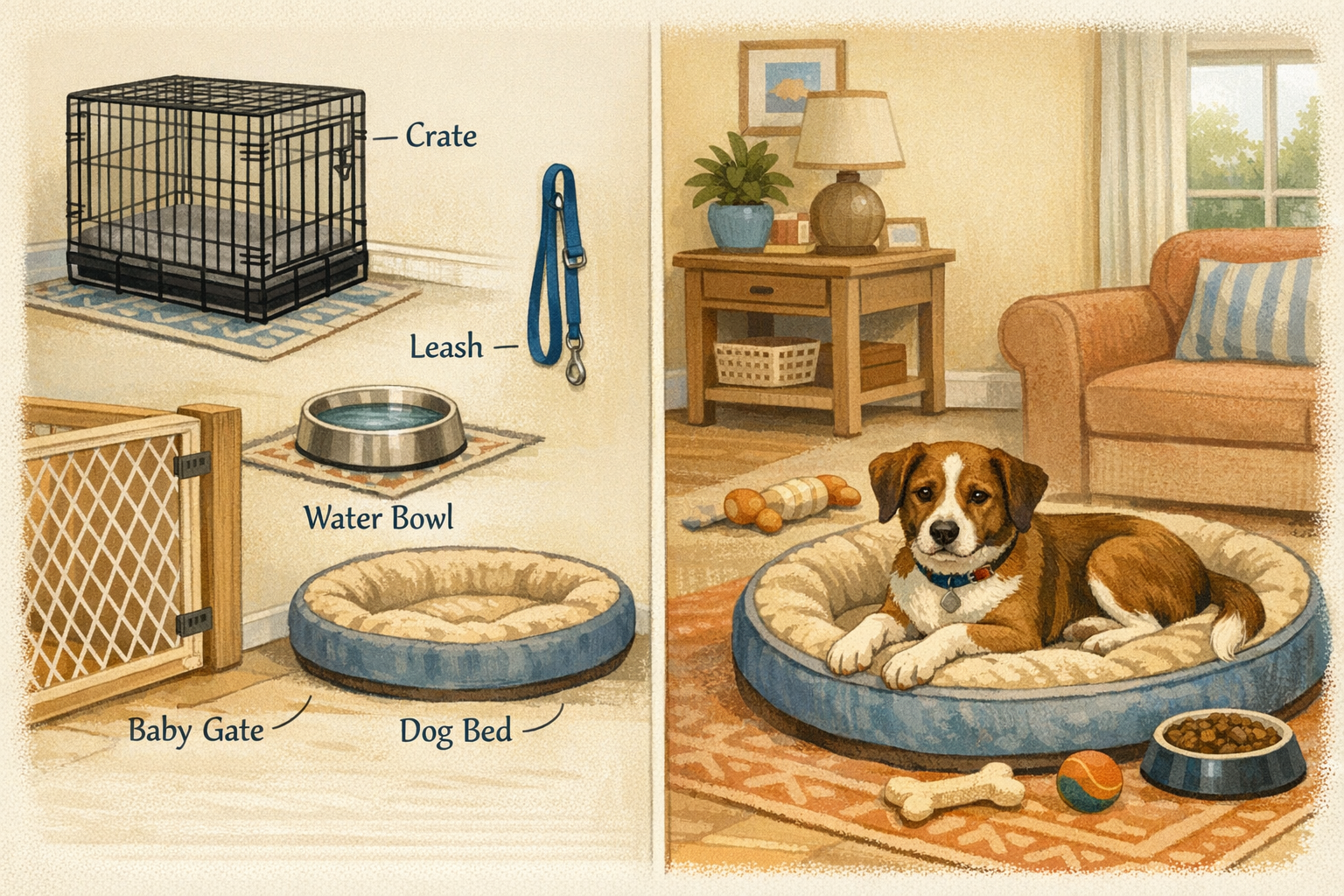
Essential supplies checklist
- Crate (sized so the dog can stand, turn, and lie down comfortably)
- Dog bed or blanket placed inside the crate
- Food and water bowls (stainless steel is easiest to clean)
- Collar, ID tag, and 6-foot leash (have this ready before the car ride home)
- Dog food matching what the shelter was feeding (switch gradually to avoid stomach upset)
- Baby gates to limit access to certain rooms initially
- Enzymatic cleaner for accidents
- Chew toys and a few enrichment items
Dog-proofing steps
- Secure loose electrical cords and cables.
- Move toxic houseplants out of reach (lilies, pothos, and sago palms are dangerous to dogs).
- Lock away cleaning products and medications.
- Check fencing for gaps if you have a yard.
- Remove small objects from floors that could be swallowed.
💡 Pro tip: Set up the crate in a quiet corner of a room where the family spends time. This lets the dog feel included without being overwhelmed.
What Is the 3-3-3 Rule and Why Does It Matter?
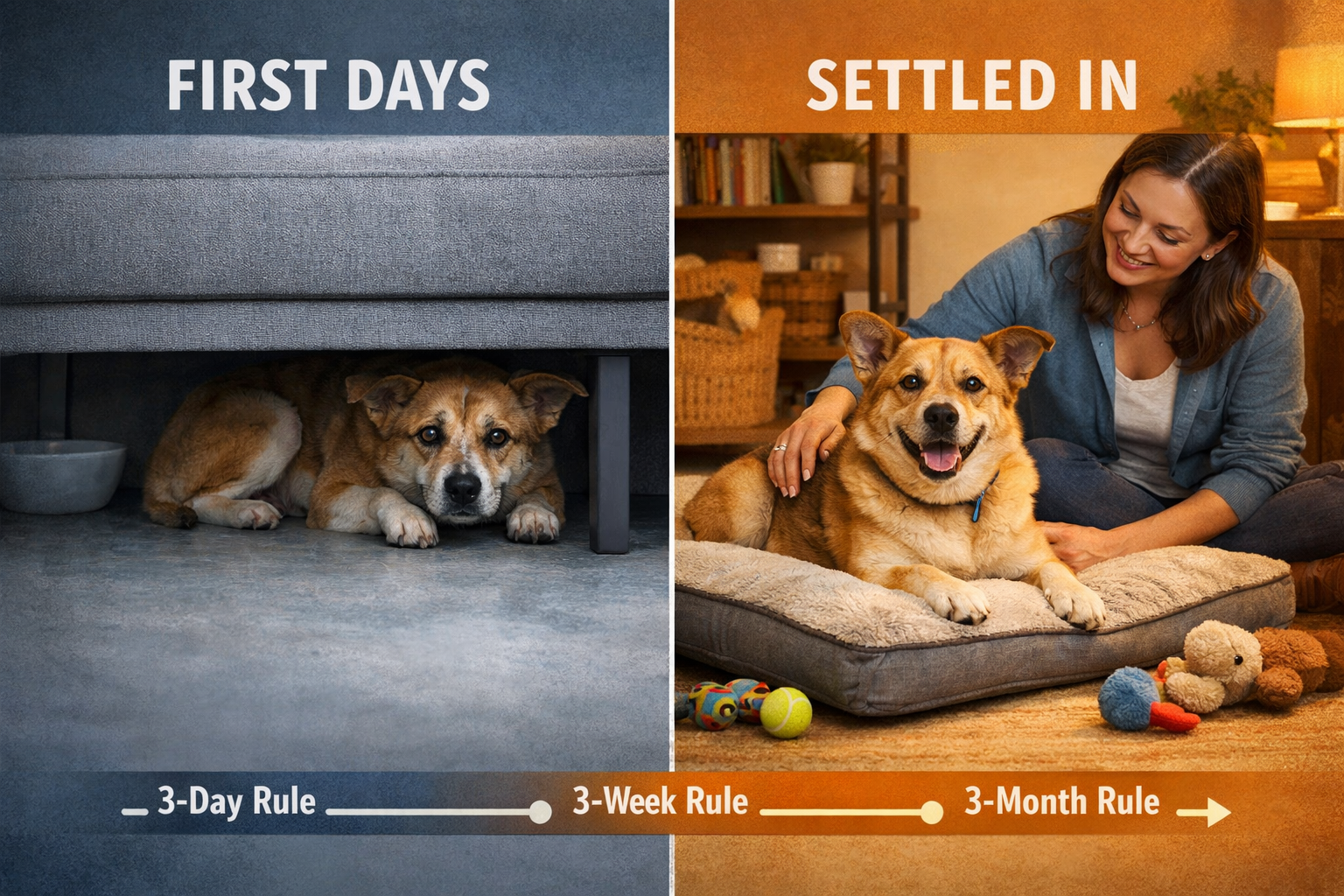
The 3-3-3 rule is a widely used framework in the rescue community that describes the three adjustment phases most rescue dogs go through after adoption. It helps first-time owners set realistic expectations and avoid misreading normal decompression behavior as a permanent personality trait.
Here’s how it breaks down:
| Phase | Timeframe | What the Dog Is Doing | What You Should Do |
|---|---|---|---|
| Overwhelmed | First 3 days | Shut down, hiding, not eating, or testing limits | Keep things calm and quiet. No visitors. Minimal handling. |
| Learning the routine | First 3 weeks | Starting to relax, showing real personality, testing boundaries | Establish consistent feeding, walk, and sleep schedules. Begin basic training. |
| Feeling at home | First 3 months | Bonded, comfortable, showing full personality | Continue training, introduce new experiences gradually. |
“Give a rescue dog the gift of time. What looks like a personality problem in week one is often just fear.” — Common guidance from certified animal behaviorists and rescue organizations.
Edge case: Some dogs — especially those with severe trauma histories or those who spent years in a shelter — may take longer than 3 months to fully settle. This doesn’t mean the adoption failed. It means the dog needs more structured support, possibly including a certified trainer.
What Training Approach Works Best for Rescue Dogs?
Positive reinforcement is the most effective and humane training method for rescue dogs, particularly those with unknown or difficult histories. This means rewarding the behavior you want (with treats, praise, or play) rather than punishing the behavior you don’t.
🎥 Recommended Video Resource
For a practical, visual introduction to positive reinforcement training with rescue dogs, this YouTube video is one of the most straightforward guides available for new owners:
How To Train A Rescue Dog — Zak George’s Dog Training Revolution
Zak George’s channel has over 3 million subscribers and covers everything from basic commands to leash reactivity using science-backed, force-free methods. This specific video walks through the first training sessions with a newly adopted dog and is an excellent companion to this written guide.
Basic commands to start with (in order)
- Name recognition — Say the dog’s name, reward when they look at you.
- Sit — The foundation for almost every other command.
- Stay — Builds impulse control.
- Come (recall) — Critical for safety.
- Leave it — Prevents dangerous scavenging.
Common mistake: Starting training too early. In the first 3 days, focus on decompression, not commands. A dog that’s still in survival mode can’t learn effectively.
How Do You Recognize Stress and Behavioral Red Flags in a Rescue Dog?
Stress signals in rescue dogs are often subtle and easy to misread as stubbornness or bad behavior. Knowing the difference between normal adjustment stress and a genuine behavioral concern helps first-time owners respond appropriately.
Normal stress signals (usually resolve within 3 weeks)
- Yawning frequently when not tired
- Lip licking without food present
- Tucked tail, low posture
- Refusing food for the first 1–3 days
- Hiding or avoiding eye contact
- Excessive panting indoors
Behavioral concerns that warrant professional help
- Growling or snapping when approached near food, toys, or sleeping areas (resource guarding)
- Lunging or intense reactivity toward other dogs or people on leash
- Separation anxiety severe enough to cause self-injury or destruction within minutes of being left alone
- Unpredictable aggression with no clear trigger
Decision rule: If a behavior is consistent, escalating, and involves growling or snapping at family members, consult a certified professional dog trainer (CPDT-KA) or a veterinary behaviorist before the behavior becomes entrenched. Don’t wait.
What Are the Real Costs of Adopting a Rescue Dog?
The adoption fee is rarely the biggest expense. First-time owners frequently underestimate the total cost of dog ownership, especially in year one.
The ASPCA estimates that first-year costs for a medium-sized dog range from approximately $1,000 to $3,000, depending on location, health status, and training needs (ASPCA, 2023).
| Expense Category | Estimated Annual Cost (USD) |
|---|---|
| Food (medium dog, quality kibble) | $400–$700 |
| Routine vet care (exams, vaccines, flea/tick) | $300–$600 |
| Spay/neuter (if not done by shelter) | $200–$500 |
| Supplies (crate, leash, toys, bed) | $150–$400 |
| Training classes (group sessions) | $100–$300 |
| Pet insurance (optional but recommended) | $300–$600/year |
| Grooming (breed-dependent) | $0–$600 |
| Emergency vet fund (recommended reserve) | $500–$1,000 |
Choose pet insurance if: your dog is young, you adopt a breed prone to health issues, or you don’t have $1,000–$2,000 in savings available for unexpected vet bills.
What Happens at the First Vet Visit and When Should It Be?
Schedule a veterinary checkup within the first 5–7 days of adoption, even if the shelter provided a clean bill of health. A new vet establishes a baseline for your dog’s health, catches anything the shelter may have missed, and starts the relationship you’ll rely on for years.
What to bring to the first vet visit
- All health records from the shelter (vaccination history, spay/neuter certificate, microchip number)
- A stool sample if possible (checked for parasites)
- A list of any behaviors or symptoms you’ve noticed
What the vet will typically assess
- Weight and body condition
- Heart and lung sounds
- Skin, coat, and ear health
- Dental condition
- Confirmation of microchip registration
Common mistake: Skipping the vet visit because “the shelter said everything was fine.” Shelters do excellent work, but they manage large numbers of animals and can’t catch everything. A fresh set of eyes matters.
A First-Time Owner’s Guide to Adopting a Rescue Dog: Common Mistakes to Avoid
Even well-intentioned new owners make predictable errors in the first weeks. Here’s a quick reference:
| Mistake | Why It Happens | What to Do Instead |
|---|---|---|
| Overwhelming the dog with guests | Excitement to show off the new dog | Keep the first 2 weeks low-key and quiet |
| Off-leash too soon | Assuming the dog is bonded and won’t run | Wait at least 4–6 weeks; use a long-line first |
| Inconsistent rules | Multiple family members with different standards | Agree on rules before the dog comes home |
| Punishing accidents | Frustration with housetraining | Clean with enzymatic cleaner; increase supervision |
| Skipping crate training | Feeling it’s unkind | Introduce the crate positively; it reduces anxiety |
| Changing food immediately | Wanting to feed “better” food right away | Transition over 7–10 days to avoid GI upset |
FAQ: A First-Time Owner’s Guide to Adopting a Rescue Dog
Q: How long does it take for a rescue dog to trust you?
Most rescue dogs begin showing trust within 3–6 weeks, though full bonding often takes 3–6 months. Consistency, calm energy, and predictable routines build trust faster than affection alone.
Q: Should I adopt a puppy or an adult rescue dog as a first-time owner?
Adult dogs are generally easier for first-time owners. They have established personalities, are often already house-trained, and require less constant supervision than puppies.
Q: Is it normal for a rescue dog to not eat for the first few days?
Yes. Stress suppresses appetite. As long as the dog is drinking water and shows no signs of illness, a 1–3 day food refusal is normal. If it extends beyond 3 days, contact your vet.
Q: Can rescue dogs be left alone during the workday?
Most adult dogs can handle 4–6 hours alone once settled. More than 8 hours regularly is hard on any dog. Consider a dog walker, doggy daycare, or a neighbor check-in if your schedule is demanding.
Q: What if my rescue dog is aggressive toward my other pets?
Introduce pets on neutral ground, on leash, before bringing the new dog home. If aggression persists beyond the first week, consult a certified trainer before it escalates.
Q: Do I need to rename my rescue dog?
Not necessarily. If the dog responds to their shelter name, keeping it avoids confusion. If you want to change it, choose a name with a similar sound (e.g., “Buddy” to “Benny”) to ease the transition.
Q: How do I stop my rescue dog from jumping on guests?
Ignore the jumping completely (no eye contact, no pushing away) and reward all four paws on the floor. Consistency across everyone in the household is essential.
Q: What’s the best way to handle housetraining a rescue dog?
Take the dog outside every 2 hours initially, always after meals and naps. Reward outdoor elimination immediately. Supervise closely indoors and use a crate when you can’t watch. Most rescue dogs are house-trained within 2–4 weeks.
Q: Should I use a crate even if my rescue dog seems anxious about it?
Yes, but introduce it gradually. Feed meals near the crate, then inside it, before closing the door. A properly introduced crate becomes a safe retreat, not a stressor.
Q: How much exercise does a rescue dog need?
It depends on breed and age, but most medium-sized adult dogs do well with 45–60 minutes of activity per day split across two walks. Start with shorter, calm walks and build up as the dog settles.
Conclusion: Your Action Plan for the First 30 Days
A First-Time Owner’s Guide to Adopting a Rescue Dog comes down to one core principle: structure and patience beat enthusiasm every time. The dogs that thrive in new homes aren’t the ones who got the most toys or the most cuddles in week one — they’re the ones whose owners gave them predictability, calm leadership, and time.
Here’s your 30-day action plan:
- Before adoption day: Dog-proof your home, buy supplies, agree on house rules with your household, and schedule a vet appointment.
- Days 1–3: Quiet introduction, crate setup, no visitors, minimal handling. Let the dog decompress.
- Days 4–21: Establish feeding, walking, and sleep routines. Begin name recognition and basic commands. Watch for stress signals.
- Weeks 3–4: Enroll in a group training class or start working with a trainer if needed. Introduce the dog to new environments gradually.
- Day 30 check-in: Assess how the dog is eating, sleeping, and responding to you. Note any concerns for your next vet visit.
Adopting a rescue dog is one of the most rewarding things a first-time owner can do. The learning curve is real, but it’s shorter than most people expect — especially with a clear plan in hand.
References
- ASPCA. (2023). Pet statistics. American Society for the Prevention of Cruelty to Animals. https://www.aspca.org/helping-people-pets/shelter-intake-and-surrender/pet-statistics
- ASPCA. (2023). Annual cost of owning a pet. https://www.aspca.org/pet-care/general-pet-care/cost-owning-pet
- Zak George’s Dog Training Revolution. (2021). How to train a rescue dog [YouTube video]. https://www.youtube.com/watch?v=kfHoABBHoZc
Read next: A Parent’s Guide to Managing Kids’ Screen Time. A closer look at managing kids screen time.