
Starting running when you’re out of shape means beginning with walk-run intervals, not continuous jogging. Most beginners should start with 1 minute of jogging followed by 2 minutes of walking, repeated for 20–30 minutes, three times per week. Progress slowly, prioritize consistency over speed, and expect to feel comfortable running continuously within 8–12 weeks.
Key Takeaways 🏃
- Don’t start by running. Begin with structured walk-run intervals to protect joints and build aerobic capacity safely.
- The most common beginner mistake is going too fast, too soon — your first runs should feel almost embarrassingly easy.
- Proper footwear matters more than any other gear investment for injury prevention.
- A simple 8-week run-walk plan is enough to take most sedentary adults to a continuous 30-minute run.
- Rest days are not optional — muscles and tendons adapt slower than cardiovascular fitness.
- Soreness in the first two weeks is normal; sharp joint pain is not. Know the difference.
- Tracking progress, even loosely, significantly improves consistency and motivation.
- Running with a goal (a 5K, a charity event) dramatically increases follow-through rates.
Why Most Beginners Quit in Week Two (And How to Avoid It)
The single biggest reason new runners quit is starting too hard. They head out the door running at a pace that leaves them gasping after four minutes, feel terrible the next day, and conclude that “running just isn’t for them.” It isn’t a fitness problem — it’s a pacing problem.
Learning how to start running when you’re completely out of shape is really about learning to slow down first. The goal in week one isn’t to run. It’s to teach your body that movement is safe, sustainable, and repeatable.
The core principle: Aerobic fitness builds in weeks. Tendons, ligaments, and connective tissue take months. If you push your cardiovascular system hard before your joints are ready, injury follows.
“The biggest training mistake beginners make is running too fast on easy days. If you can’t hold a conversation while running, you’re going too hard.” — common coaching principle cited across RRCA (Road Runners Club of America) beginner resources
What Does “Out of Shape” Actually Mean for Running?
For running purposes, being out of shape means your aerobic base is low — your heart and lungs aren’t yet efficient at delivering oxygen to working muscles. This is not a permanent condition, and it’s not a character flaw.
Practically, it means:
- You get winded climbing stairs or walking briskly for more than a few minutes.
- Your resting heart rate may be elevated (above 80 bpm is a common marker).
- You haven’t done sustained cardio exercise in 3+ months.
Who this guide is for: Adults who are sedentary or lightly active and want to begin running from scratch. If you have a cardiovascular condition, joint injury, or BMI over 35, consult a doctor before starting any running program — not because running is dangerous, but because a modified approach (like pool running or extended walking phases) may serve you better initially.
How to Start Running When You’re Completely Out of Shape: The Walk-Run Method
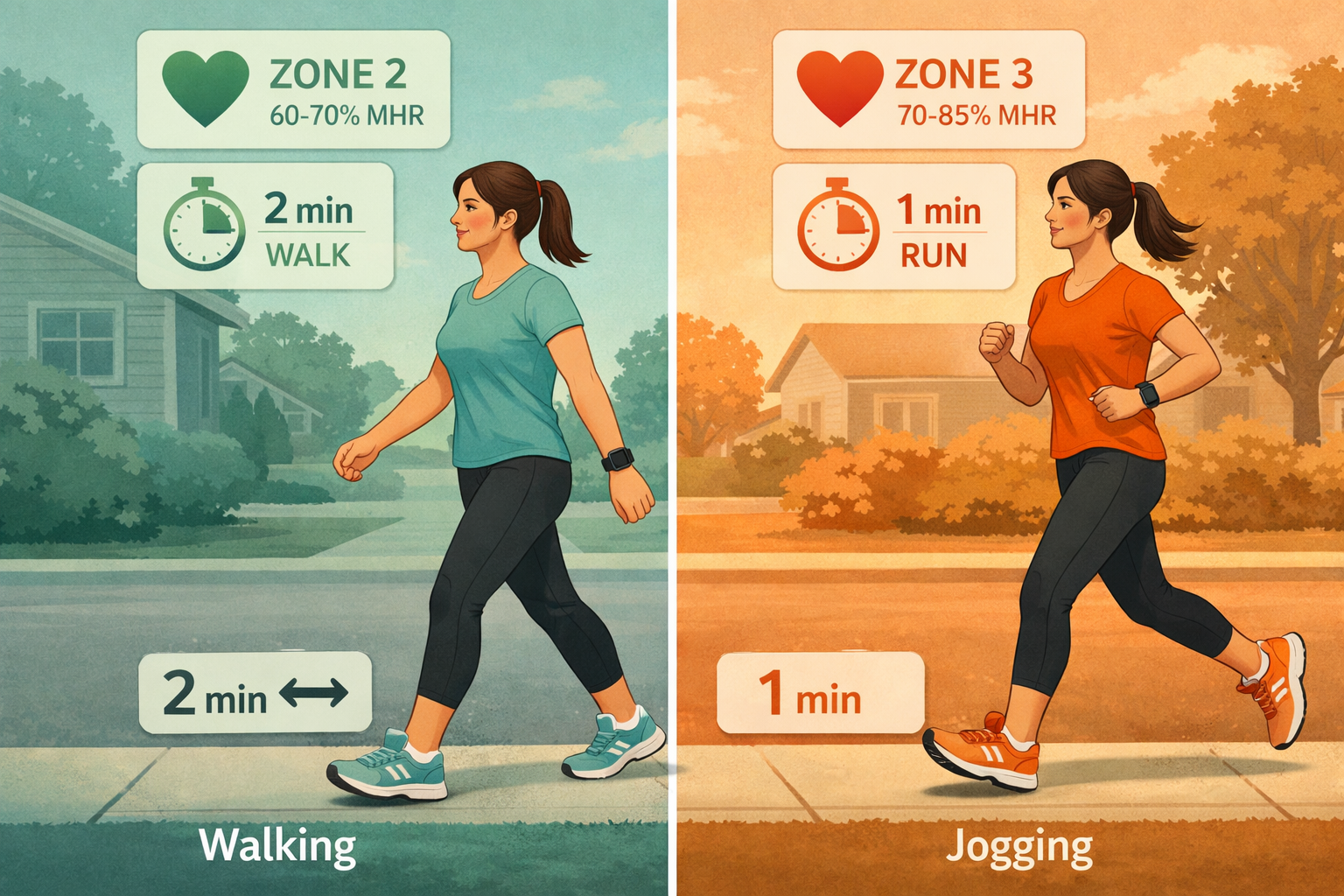
The walk-run method is the most evidence-supported approach for beginners. It alternates short running intervals with walking recovery periods, allowing your cardiovascular system to adapt without overwhelming your joints.
The 8-Week Beginner Run-Walk Plan
| Week | Run Interval | Walk Interval | Repetitions | Total Time |
|---|---|---|---|---|
| 1 | 1 min | 2 min | 6–7x | ~21 min |
| 2 | 2 min | 2 min | 5–6x | ~20–24 min |
| 3 | 3 min | 2 min | 4–5x | ~20–25 min |
| 4 | 5 min | 2 min | 3–4x | ~21–28 min |
| 5 | 8 min | 2 min | 3x | ~30 min |
| 6 | 10 min | 1 min | 2–3x | ~22–33 min |
| 7 | 15 min | 1 min | 2x | ~32 min |
| 8 | 20–30 min continuous | — | 1x | ~20–30 min |
How to use this table: Run three days per week with at least one rest day between sessions. If a week feels too hard, repeat it before moving on. There’s no shame in spending two weeks at the same level — that’s smart training, not failure.
What Pace Should You Run?
Use the “talk test”: you should be able to speak in full sentences while running. If you’re gasping, slow down. Many beginners find that their “running pace” is barely faster than a brisk walk at first. That’s completely normal and exactly right.
Common mistake: Treating the walk intervals as failure. They’re not. They’re part of the workout. Elite marathoners use walk breaks in training. The walk interval is what makes the run interval possible.
What Gear Do You Actually Need to Start Running?
You don’t need much. But one item matters a great deal: your shoes.
Running shoes designed for your foot type and gait can meaningfully reduce injury risk. A specialty running store can do a free gait analysis and recommend options. Budget around $80–$130 for a quality pair. Avoid fashion sneakers or cross-trainers — they’re not built for the repetitive forward motion of running.
Everything else is optional but useful:
- Moisture-wicking clothing — reduces chafing on longer runs
- A running app — free options like Nike Run Club or Couch to 5K track your intervals automatically
- A fitness tracker or GPS watch — helpful but not required in week one
Decision rule: If you’re on a tight budget, spend money on shoes first and skip everything else until you’ve completed four weeks consistently.
How to Build a Weekly Running Routine That Actually Sticks
Consistency beats intensity for beginner runners. Three runs per week is the sweet spot — enough to build fitness, not so much that recovery becomes an issue.
Sample Weekly Schedule
- Monday: Run-walk session (20–25 min)
- Tuesday: Rest or light walking
- Wednesday: Run-walk session (20–25 min)
- Thursday: Rest or gentle stretching
- Friday: Run-walk session (20–25 min)
- Saturday/Sunday: Active rest (walk, swim, yoga)
Anchor your runs to existing habits. Running right after your morning coffee or immediately after work reduces the mental friction of deciding whether to go. Decision fatigue is a real barrier — remove it by making the run automatic.
💡 Pro tip: Lay out your running clothes the night before. It sounds trivial, but reducing the friction of starting is one of the most effective behavioral strategies for building new exercise habits.
How to Start Running When You’re Completely Out of Shape Without Getting Injured
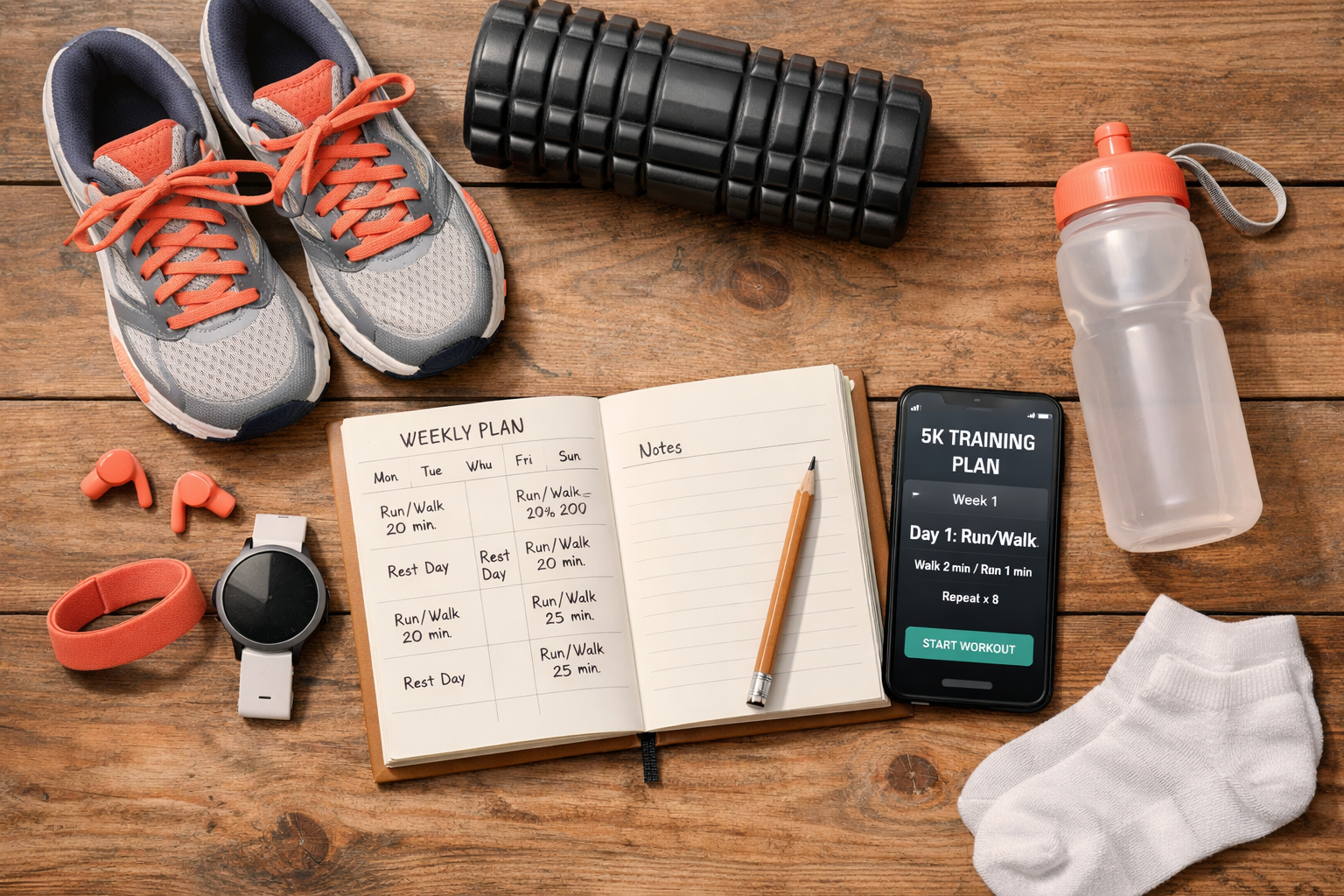
Injury is the most common reason people abandon a new running routine. The good news is that most beginner running injuries are preventable.
The Most Common Beginner Running Injuries
| Injury | Cause | Prevention |
|---|---|---|
| Shin splints | Too much too soon, hard surfaces | Increase mileage slowly, run on softer surfaces |
| Runner’s knee | Weak glutes, overstriding | Strength exercises, shorter stride |
| IT band syndrome | Sudden mileage increase | Gradual progression, hip strengthening |
| Plantar fasciitis | Poor footwear, tight calves | Proper shoes, calf stretching |
The 10% rule is a widely used guideline in running coaching: don’t increase your total weekly running time by more than 10% from one week to the next. It’s a rough estimate, not a hard scientific law, but it’s a useful guardrail for beginners.
Warm-Up and Cool-Down
- Before running: 5 minutes of brisk walking, leg swings, hip circles. Do not static stretch cold muscles.
- After running: 5 minutes of walking, then gentle static stretches for calves, hamstrings, and hip flexors. Hold each stretch 20–30 seconds.
Know the difference between normal and dangerous discomfort:
- Normal: Muscle fatigue, mild soreness 24–48 hours after a run, slight breathlessness
- See a doctor: Sharp or stabbing joint pain, pain that worsens during a run, swelling, or pain that persists more than 3–4 days
How to Stay Motivated When Running Feels Hard
Motivation is unreliable. What works long-term is building a system that doesn’t depend on feeling motivated.
Strategies that work for beginners:
- Sign up for a 5K — having a specific date and event creates accountability. Most 5Ks are beginner-friendly, and many have walkers.
- Run with someone — a partner or running group dramatically improves consistency. Local running clubs often have beginner groups.
- Track your progress — even a simple notebook entry (“Week 3, Day 2 — ran 5 minutes straight for the first time”) creates a visible record of improvement.
- Celebrate small wins — completing your first 10-minute continuous run is worth acknowledging. Progress compounds.
Watch: Beginner Running Tips for Getting Started
For a visual walkthrough of proper form, breathing techniques, and pacing for new runners, this YouTube video from running coach Jeff Gaudette is a practical starting point:
▶️ How to Start Running for Beginners — Jeff Gaudette / RunnersConnect on YouTube
(Search: “How to Start Running for Beginners RunnersConnect” if the link has changed)
Nutrition and Hydration Basics for New Runners
You don’t need a special diet to start running. But a few basics make a real difference in how you feel.
- Hydration: Drink water consistently throughout the day. For runs under 30 minutes, you don’t need to carry water — just hydrate beforehand.
- Pre-run fuel: A light snack 30–60 minutes before running (banana, toast with peanut butter) prevents low energy without causing stomach issues.
- Post-run recovery: Eat a meal with both protein and carbohydrates within 60–90 minutes of finishing. This supports muscle repair.
- Avoid: Running on a full stomach. Give yourself at least 90 minutes after a large meal.
FAQ: How to Start Running When You’re Completely Out of Shape
Q: How long before I can run without stopping?
Most beginners who follow a walk-run plan consistently can run 20–30 minutes without stopping within 8–10 weeks. Individual results vary based on starting fitness level and consistency.
Q: Is it okay to walk during a run?
Yes — walking during a run is a training strategy, not a failure. Walk-run intervals are how most running coaches recommend beginners build their base.
Q: How often should a complete beginner run?
Three times per week is ideal. It’s enough to build fitness while allowing adequate recovery time between sessions.
Q: What if I’m overweight — is running safe?
Running is generally safe for most people who are overweight, but starting with more walking and less running reduces joint stress. A doctor’s clearance is advisable if you have knee or hip issues. Many people find that alternating running days with low-impact exercise (cycling, swimming) works well.
Q: Should I stretch before running?
Don’t static stretch before running — it can reduce performance and increase injury risk on cold muscles. Instead, do 5 minutes of brisk walking and dynamic movements (leg swings, hip circles). Save static stretching for after the run.
Q: What’s the best time of day to run?
The best time is whenever you’ll actually do it consistently. Morning runs tend to have fewer scheduling conflicts. Evening runs can be harder to start but often feel physically easier once your body is warmed up from the day.
Q: How do I breathe while running?
Breathe naturally — don’t try to control it rigidly. Many runners find a rhythmic pattern (inhale for 3 steps, exhale for 2) helpful. If you’re gasping, slow down.
Q: Do I need to run every day to see results?
No. Three days per week with rest days in between is more effective for beginners than running daily, because recovery is when your body actually adapts and gets stronger.
Conclusion: Your First Step Is the Most Important One
Learning how to start running when you’re completely out of shape isn’t about willpower or talent — it’s about strategy. Start with walk-run intervals, progress gradually, wear proper shoes, and give your body time to adapt. The runners you see gliding effortlessly through the park all started exactly where you are.
Your actionable next steps:
- This week: Do one 20-minute walk-run session using the Week 1 schedule above (1 min run, 2 min walk, repeat).
- This month: Complete three sessions per week for four weeks without skipping.
- By week 8: Sign up for a local 5K — even if you plan to walk part of it.
- Ongoing: Track your sessions in a simple notebook or app. Review your progress every two weeks.
The hardest run you’ll ever do is the first one. After that, it gets easier — not because running changes, but because you do.
References
- Road Runners Club of America (RRCA). Beginner Running Resources and Coaching Guidelines. https://www.rrca.org
- Higdon, Hal. Marathon: The Ultimate Training Guide. Rodale Books, 2011.
- RunnersConnect. How to Start Running for Beginners [YouTube Video]. Published 2019. https://www.youtube.com/watch?v=_kGESn8ArrU
- American College of Sports Medicine (ACSM). ACSM’s Guidelines for Exercise Testing and Prescription, 11th ed. Wolters Kluwer, 2021.
- Galloway, Jeff. Galloway’s Book on Running, 2nd ed. Shelter Publications, 2002.
Read next: Natural Ways to Improve Your Sleep Quality Tonight. A closer look at improve sleep quality.