
Key Takeaways
- Rust forms on cast iron when moisture and oxygen react with the bare metal surface, usually from improper drying or storage.
- White vinegar is effective but must be diluted and timed carefully; soaking longer than two hours can pit the iron.
- Coarse salt combined with a cut potato or lime juice is a gentler option for light to moderate rust.
- The difference between surface rust and deep pitting matters: surface rust is fully reversible, while deep damage may limit the pan’s cooking performance but rarely makes it unsafe.
- Most antique cast iron pans can be fully restored at home with minimal tools and under five dollars in supplies.
- Professional restoration services typically charge between $30 and $80 per piece, which is rarely necessary for home cooks.
- Re-seasoning immediately after de-rusting is not optional; it is the step that prevents rust from returning within days.
- Beginners most often damage pans by soaking in undiluted vinegar too long or scrubbing with steel wool that leaves micro-scratches.
- A well-maintained antique cast iron skillet can outlast modern non-stick cookware by decades.
What Makes Cast Iron Rust in the First Place
Cast iron rusts when bare metal is exposed to moisture and oxygen for any length of time. Unlike stainless steel, cast iron contains very little chromium, so it has no natural corrosion resistance. The seasoning layer, which is polymerized oil baked into the surface, is the only barrier between the iron and the air.
Common causes of rust on antique cast iron include:
- Washing with soap and leaving the pan wet or air-drying slowly
- Storing the pan in a humid cabinet or stacking it with a damp lid
- Cooking acidic foods like tomatoes repeatedly, which erodes the seasoning
- Long-term storage without a protective oil coating, which is very common with antique pieces found at estate sales or flea markets
Once the seasoning breaks down in even one small spot, rust spreads quickly. A pan left in a barn or garage for decades will often have full surface rust, but that does not mean it is ruined.
What’s the Difference Between Light Surface Rust and Deep Rust Damage
Light surface rust is a thin orange or reddish film that sits on top of the iron and has not penetrated the metal. Deep rust, sometimes called pitting, has eaten into the surface and left small craters or a rough, pockmarked texture.
Surface rust is fully reversible. After cleaning, the pan will look nearly identical to its pre-rust condition. Deep pitting is permanent but rarely makes a pan unusable. A pitted cooking surface is harder to season evenly and may cause food to stick more, but the pan is still structurally sound and safe to cook with.
To tell the difference before you start:
- Run your fingernail across the rust. If the surface feels smooth underneath, it is likely surface rust.
- If you feel small craters or the metal looks eaten away, that is pitting.
- A pan with heavy pitting may benefit from professional electrolysis restoration, but most home cooks find the results perfectly acceptable even without that step.
What Tools Do You Need to Restore an Old Cast Iron Pan
You do not need specialized equipment. Most of what you need is already in your kitchen.
Basic supplies for natural de-rusting:
| Item | Purpose | Estimated Cost |
|---|---|---|
| Coarse kosher salt | Abrasive scrubbing agent | Under $2 |
| White vinegar | Mild acid to dissolve rust | Under $2 |
| Baking soda | Neutralizing agent after acid treatment | Under $1 |
| Stiff-bristle brush or chain mail scrubber | Physical rust removal | $0 to $20 |
| Flaxseed, canola, or vegetable oil | Re-seasoning after cleaning | Under $3 |
| Paper towels or lint-free cloth | Drying and oil application | Already owned |
| Oven | Baking in the seasoning layer | Already owned |
Avoid steel wool pads with soap built in, like some green scrubbing pads, because the soap residue can interfere with re-seasoning. Plain steel wool (grade 0000) is acceptable for stubborn rust but should be used gently.
Is Vinegar Really Safe for Removing Rust from Old Skillets
Yes, diluted white vinegar is safe and effective for removing rust from antique cast iron, but the timing is critical. A 50/50 mix of white vinegar and water will dissolve rust through a mild acid reaction. The risk comes from leaving the pan in the solution too long.
The rule: Do not soak cast iron in vinegar for more than one to two hours. Beyond that, the acid begins attacking the healthy iron beneath the rust, which can cause pitting that was not there before.
Steps for the vinegar method:
- Mix equal parts white vinegar and cold water in a container large enough to submerge the pan.
- Place the pan in the solution and check it every 30 minutes.
- When the rust wipes off easily with a cloth, remove the pan immediately.
- Rinse thoroughly with clean water.
- Neutralize any remaining acid by scrubbing briefly with a paste of baking soda and water.
- Rinse again, then dry completely on the stovetop over low heat for two to three minutes.
- Apply a thin layer of oil and begin re-seasoning right away.
A pan with only light rust may be ready in 30 minutes. A heavily rusted antique might need the full two hours. Never leave it overnight.
Can I Use Salt and Lime Juice to Clean Rusty Cast Iron
Yes, and this is one of the gentler methods for how to safely de-rust antique iron cookware without using harsh chemicals. Coarse salt acts as a physical abrasive, and the citric acid in lime or lemon juice helps loosen rust chemically. Together, they work well on light to moderate rust without the risk of over-etching that vinegar carries.
How to use the salt and lime method:
- Pour a generous layer of coarse kosher salt into the dry, rusty pan.
- Cut a lime or lemon in half and use the cut side as your scrubbing tool, pressing it into the salt.
- Scrub in circular motions, focusing on rusted areas. The salt will turn orange as it picks up rust.
- Add more salt and citrus juice as needed.
- Rinse with warm water and dry immediately on the stovetop.
- Apply oil and re-season.
This method works best when the rust is not deeply embedded. For a pan with thick, flaky rust, try the vinegar soak first, then finish with salt and citrus for the remaining residue.
How Long Does It Take to Remove Rust Using Natural Methods
The time varies based on the severity of rust and the method you choose. Here is a practical breakdown:
- Salt and potato/lime scrub (light rust): 15 to 30 minutes of active scrubbing
- Baking soda paste (light to moderate rust): 20 to 40 minutes including wait time
- Diluted vinegar soak (moderate to heavy rust): 30 minutes to 2 hours of soak time, plus 15 minutes of scrubbing and rinsing
- Re-seasoning in the oven: 1 hour per seasoning layer, with 2 to 3 layers recommended
In total, expect to spend two to four hours on a full restoration from start to finish, including re-seasoning. A lightly rusted pan found at a thrift store might take under an hour. A pan that has been sitting in a garage for 30 years could take a full afternoon.
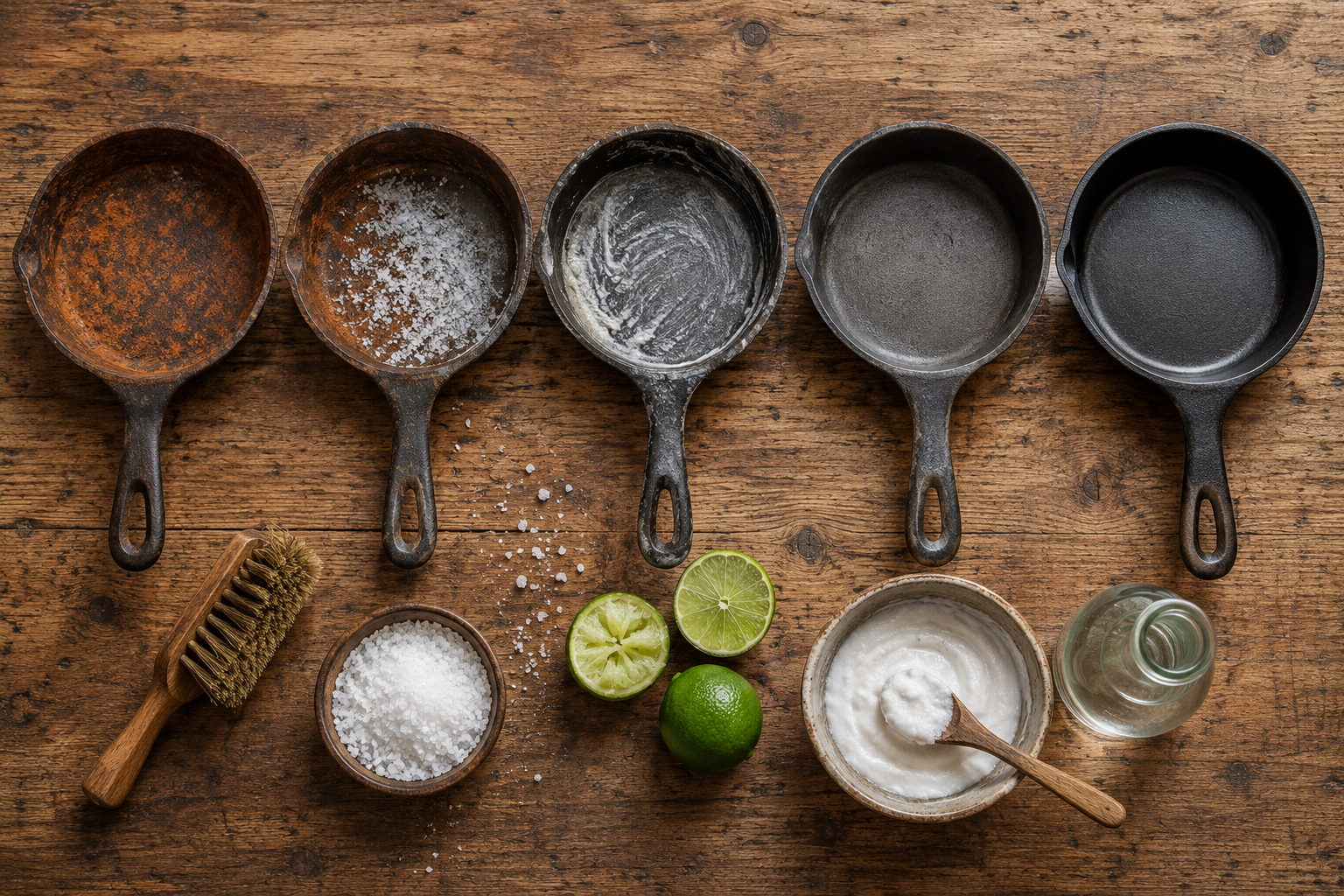
How to Safely De-Rust Antique Iron Cookware Without Using Harsh Chemicals: Step-by-Step
This is the core process I recommend for most antique cast iron pieces, combining the best of each natural method.
Step 1: Assess the rust level. Determine whether you are dealing with surface rust or pitting. This tells you how aggressive to be.
Step 2: Dry scrub first. Use a stiff brush to remove any loose, flaky rust before applying any liquid. This saves time and reduces the amount of acid treatment needed.
Step 3: Choose your method based on rust severity.
- Light rust: salt and lime scrub
- Moderate rust: baking soda paste left on for 20 minutes, then scrub
- Heavy rust: diluted vinegar soak for up to two hours
Step 4: Neutralize and rinse. After any acid treatment, scrub with baking soda paste, then rinse well with clean water.
Step 5: Dry completely. Place the pan on a stovetop burner over low heat for two to three minutes until all moisture evaporates. This step is non-negotiable.
Step 6: Re-season immediately. Apply a very thin layer of oil (flaxseed and canola both work well) to all surfaces, including the outside and handle. Wipe off the excess until the pan looks almost dry. Bake upside down in an oven at 450 to 500 degrees Fahrenheit for one hour. Repeat two to three times for a durable base layer.
Are There Any Risks of Damaging the Pan While De-Rusting
Yes, and knowing them upfront will save you from making a good pan worse. The most common risks when attempting to safely de-rust antique iron cookware without using harsh chemicals are:
- Over-soaking in vinegar: Creates new pitting. Stick to the two-hour maximum.
- Scrubbing with coarse steel wool aggressively: Can leave deep scratches that are harder to season over.
- Skipping the neutralizing step: Residual acid continues reacting with the iron after you remove it from the soak.
- Not drying thoroughly: Even a small amount of moisture left on bare iron will cause rust to return within hours.
- Using too much oil when re-seasoning: Thick oil pools become sticky and never cure properly. Thin layers are the key.
One risk that is often overstated: the pan cracking from heat. Cast iron can crack if exposed to sudden extreme temperature changes (called thermal shock), but normal oven seasoning at a steady temperature is completely safe.
How Do Professional Chefs Restore Vintage Cast Iron Cookware
Professional chefs and serious collectors often use electrolysis for the deepest restoration, which uses a low-voltage electrical current and a washing soda solution to pull rust off the iron without any abrasion. This method reaches into pits and crevices that scrubbing cannot. However, it requires a plastic tub, a battery charger, washing soda, and a sacrificial piece of steel, so it is more of a weekend project than a quick fix.
For day-to-day restoration, most professional cooks use the same natural methods described above, with one additional step: they often run the pan through a self-cleaning oven cycle before de-rusting. This burns off old, rancid seasoning and leaves a clean slate. The pan comes out gray and ashy, and then the rust removal and re-seasoning process begins fresh.
Can You Completely Restore a Rusty Pan to Its Original Condition
For surface rust, yes, a full restoration is achievable at home. The pan will look and perform like new after cleaning and several rounds of seasoning. For pitted iron, the texture of the cooking surface will remain slightly rough, but the pan is still fully functional and, with enough seasoning layers built up over time, can become nearly as smooth as it once was.
Antique cast iron from brands like Griswold and Wagner, made in the early to mid-1900s, was often machined to a smoother finish than modern cast iron. Collectors prize these pieces, and even heavily rusted examples are worth restoring rather than discarding.
Is It Worth Restoring an Old Cast Iron Skillet or Should I Just Buy New
In almost every case, restoring an antique cast iron skillet is worth the effort. A quality antique pan, once restored, will outperform most modern cookware in heat retention and even heating. New cast iron from major brands costs $30 to $100 or more, while antique pieces found at estate sales often sell for $5 to $20 even in rusty condition.
Restore if:
- The pan has no cracks or warping
- The rust is surface-level or moderate pitting
- The pan is a known brand or has sentimental value
Consider replacing if:
- The pan has a visible crack running through the cooking surface
- The bottom is warped and rocks on a flat surface
- The wall thickness is uneven from excessive previous grinding
A cracked cast iron pan is not safe to use on a stovetop and should not be restored for cooking purposes.
What Mistakes Do Beginners Make When Trying to Remove Rust
The most common beginner mistake is using undiluted vinegar and leaving the pan to soak overnight. This turns a surface rust problem into a pitting problem. The second most common mistake is skipping re-seasoning or doing it incorrectly, which means the pan rusts again within a week.
Other frequent errors:
- Using dish soap during the de-rusting process, which can interfere with the iron’s surface
- Storing the pan while still slightly damp
- Applying too much oil during seasoning and then wondering why the surface is sticky
- Giving up on a pan because it looks bad before cleaning; rust is almost always cosmetic
How Do I Prevent Rust from Coming Back After Cleaning
Prevention is straightforward once the pan is clean and seasoned. The goal is to keep moisture away from bare iron at all times.
Daily habits that prevent rust:
- Dry the pan immediately after washing, either with a towel or briefly on a warm stovetop
- Apply a very light wipe of oil after every use before storing
- Store in a dry cabinet, not under the sink or near a dishwasher
- Never soak cast iron in water, even briefly
- If stacking pans, place a paper towel between them to absorb any moisture
With these habits, a well-seasoned antique cast iron pan can go years without developing any rust at all.
How Expensive Are Professional Cast Iron Restoration Services
Professional restoration services, which typically use electrolysis and multiple rounds of seasoning, generally charge between $30 and $80 per pan as of 2026, based on listings from specialty cookware restoration shops. Some collectors and blacksmiths charge more for rare or large pieces.
For most home cooks, professional restoration is not necessary. The natural methods described in this guide cost under $5 in supplies and produce results that are functionally identical for everyday cooking. Professional services are worth considering for rare antique pieces with collector value, where you want the most thorough possible restoration.
Conclusion: Your Next Steps for Restoring Antique Cast Iron
Knowing how to safely de-rust antique iron cookware without using harsh chemicals is a practical skill that pays off every time you find a rusty pan at a thrift store or pull an old family skillet from the back of a cabinet. The process is not complicated, and the supplies are inexpensive.
Here is what to do next:
- Assess your pan today. Look for cracks or warping first. If the pan is structurally sound, it is worth restoring.
- Match your method to the rust level. Salt and lime for light rust, diluted vinegar for heavy rust, and always neutralize with baking soda after acid treatment.
- Dry and re-season immediately. Do not skip this step. Two to three oven seasoning rounds will give you a durable, non-stick surface.
- Build a maintenance habit. A 30-second wipe of oil after each use is all that stands between a beautiful pan and another round of rust removal.
Antique cast iron is among the most durable cookware ever made. With a few hours and a handful of pantry staples, you can bring a century-old skillet back to daily use and keep it there for another century.
Frequently Asked Questions
Can I use baking soda alone to remove rust from cast iron? Baking soda paste (mixed with a small amount of water) works well on light rust as a gentle abrasive and mild alkaline cleaner. It is less effective than vinegar on heavy rust but carries no risk of over-etching the metal.
Is it safe to cook in a cast iron pan that had rust on it? Yes, once the rust is fully removed and the pan is re-seasoned, it is completely safe to cook with. Small amounts of iron oxide (rust) are not toxic, but you should still remove all visible rust before cooking.
Can I put a rusty cast iron pan in the dishwasher to clean it? No. Dishwashers use prolonged exposure to hot water and detergent, which will strip any remaining seasoning and worsen rust. Always hand wash cast iron.
How many times do I need to season after de-rusting? Two to three rounds of oven seasoning is the minimum for a functional base layer. The pan will continue to improve with regular cooking use over time.
Does the type of oil matter for re-seasoning? Yes. Oils with a high smoke point and low saturated fat content, such as flaxseed, canola, or grapeseed oil, polymerize more effectively. Avoid butter or olive oil for the initial seasoning layers.
Can I use a potato instead of lime for the salt scrub method? Yes. A cut potato provides a firm scrubbing surface and contains mild oxalic acid, which helps lift rust. It is slightly less acidic than citrus but works well on very light rust.
Will vinegar damage the seasoning on areas that are not rusted? Yes, vinegar will strip seasoning wherever it contacts the pan. After de-rusting, you will need to re-season the entire pan, not just the areas that were rusted.
How do I know when all the rust is gone? Wipe the surface with a white paper towel after scrubbing. If the towel comes away clean with no orange or brown residue, the rust is fully removed.
Can I restore a cast iron pan that has been painted or coated? Antique cast iron was not typically painted. If you find a pan with paint, it may be a decorative piece not intended for cooking, or the paint was added later. Strip any non-food-safe coatings before using the pan for cooking.
Is electrolysis better than vinegar for de-rusting? Electrolysis is more thorough and reaches into pits and crevices that scrubbing cannot. However, it requires more setup. For most home cooks, diluted vinegar plus scrubbing produces excellent results without the extra equipment.
References
- Lodge Cast Iron. (2023). Cast Iron Care and Cleaning Guide. https://www.lodgecastiron.com/discover/cleaning-and-care
- Serious Eats. (2019). The Truth About Cast Iron Pans: 7 Myths That Need to Go Away. https://www.seriouseats.com/the-truth-about-cast-iron
- America’s Test Kitchen. (2021). How to Restore a Rusty Cast Iron Skillet. https://www.americastestkitchen.com/articles/cast-iron-restoration
- The Spruce Eats. (2022). How to Remove Rust from Cast Iron Cookware. https://www.thespruceeats.com/remove-rust-from-cast-iron-4580540
Read next: Cleaning Vintage Vinyl Records Using the Cheap Wood Glue Method. A closer look at clean vinyl records.