
Key Takeaways
- Always remove birds, food, and bedding before starting any cleaning process.
- White vinegar diluted with equal parts water is the safest, most accessible disinfectant for vintage wood.
- Bleach is not recommended for wooden bird cages because it can damage the wood grain and leave toxic residues.
- Mold on antique wooden cages requires targeted treatment with diluted hydrogen peroxide (3%), not bleach.
- Deep cleaning should happen at least once a month; spot cleaning should happen weekly.
- Signs of severe structural damage, deep rot, or persistent mold mean the cage may need replacement.
- Wooden cages carry more maintenance demands than metal cages and are best suited to larger, calmer bird species.
- Professional bird cage restoration typically costs between $75 and $300, depending on cage size and damage level (estimate based on general restoration trade pricing as of 2026).
- Water-damaged vintage wooden cages can often be restored if the damage is caught early and treated correctly.
- Never use essential oils, aerosol sprays, or scented cleaning products near any bird enclosure.
What Cleaning Products Are Safe for Old Wooden Bird Cages
The safest cleaning products for old wooden bird cages are diluted white vinegar, diluted hydrogen peroxide (3%), and bird-safe enzymatic cleaners. These options disinfect effectively without leaving chemical residues that could harm birds or degrade aged wood.
Here is a breakdown of what works and what to avoid:
Safe options:
- White vinegar diluted 1:1 with water (effective against bacteria and light mold)
- 3% hydrogen peroxide diluted 1:1 with water (stronger disinfectant, safe when fully dried)
- Enzymatic cleaners labeled bird-safe (look for products without phenols, chlorine, or alcohol)
- Mild dish soap (unscented, diluted) for surface grime, followed by a clean water wipe-down
Avoid these entirely:
- Bleach or chlorine-based products (toxic fumes, wood damage, residue risk)
- Ammonia-based cleaners
- Essential oil sprays or diffusers near the cage
- Aerosol disinfectants (propellants are dangerous to birds)
- Alcohol-based products on finished wood (strips protective coatings)
A common mistake is reaching for whatever disinfectant spray is under the sink. For vintage wooden cages, that shortcut can warp the wood, destroy the finish, and leave residues that linger long after the cage looks dry.
How to Safely Clean and Disinfect Vintage Wooden Bird Cages: Step-by-Step
Knowing the right products is only half the job. The method matters just as much, especially with aged wood that may already be fragile.
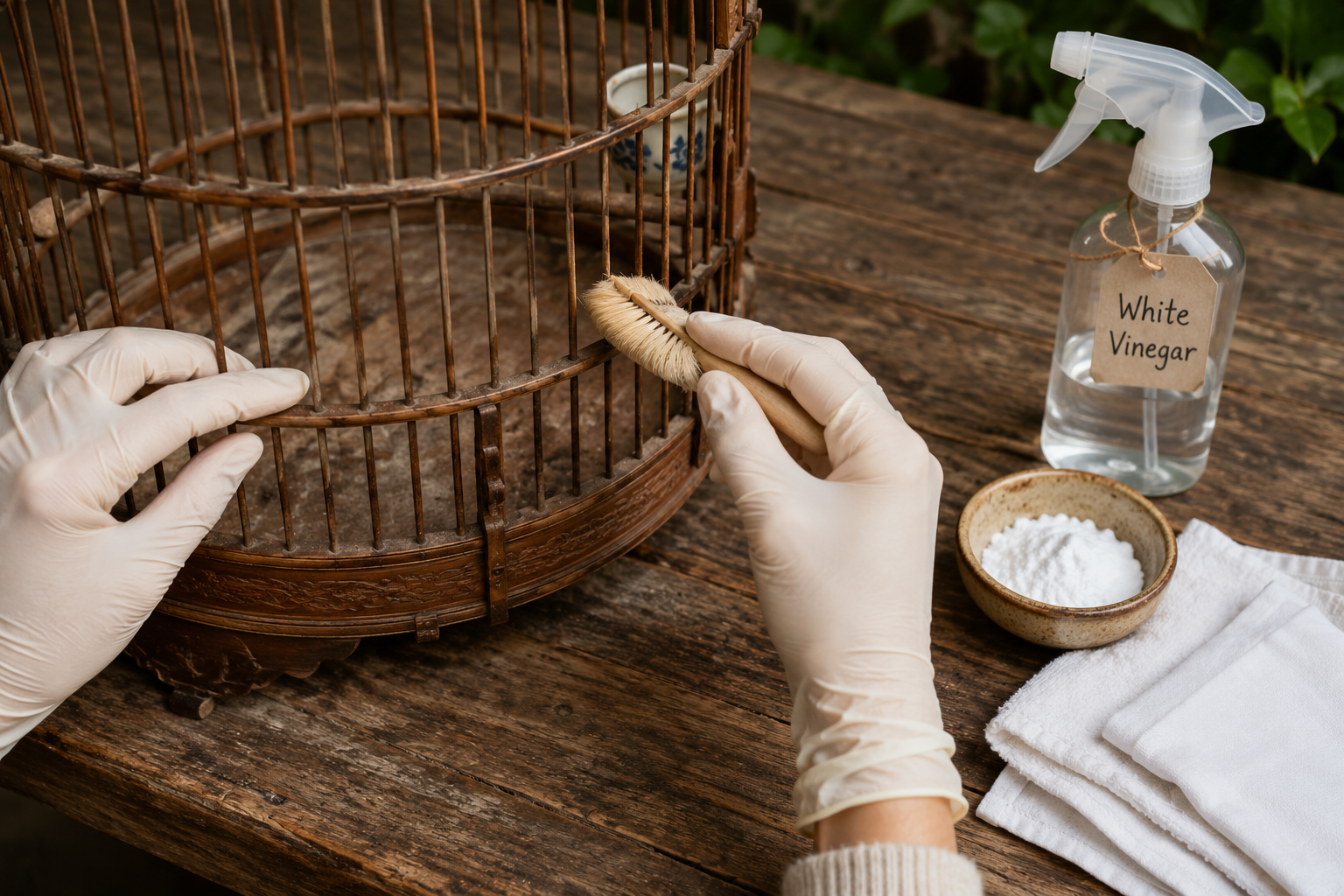
Before you start:
- Move all birds to a temporary, well-ventilated holding cage.
- Remove all food dishes, water bottles, perches, and toys.
- Shake or brush out loose debris (seeds, feathers, droppings) over a trash bag.
- Put on gloves. Bird droppings can carry bacteria like Salmonella and Chlamydia psittaci.
Cleaning process:
- Wipe down all wooden surfaces with a dry cloth first to remove loose dust and debris.
- Mix your cleaning solution (1 part white vinegar to 1 part water, or use a bird-safe enzymatic cleaner).
- Dampen (do not soak) a soft cloth or soft-bristled brush with the solution.
- Scrub bars, joints, perches, and tray surfaces gently. Pay attention to corners where droppings accumulate.
- Wipe away the cleaning solution with a clean damp cloth.
- Follow with a final wipe using a dry cloth to remove as much moisture as possible.
- Allow the cage to air-dry fully in a warm, ventilated area for at least 2 to 4 hours before returning birds.
Key rule: Never submerge or pressure-wash a vintage wooden cage. Excess moisture causes swelling, cracking, and mold growth inside the wood grain.
How Do I Remove Mold from an Antique Bird Cage
Mold on an antique bird cage should be treated with a diluted 3% hydrogen peroxide solution, applied with a soft brush, and allowed to sit for 10 minutes before wiping clean. Do not use bleach, which can drive mold deeper into porous wood while also releasing harmful fumes.
Step-by-step mold removal:
- Take the cage outdoors or to a well-ventilated space.
- Wear gloves and a dust mask to avoid inhaling mold spores.
- Mix 3% hydrogen peroxide with an equal part of water in a spray bottle.
- Apply directly to the moldy area and let it sit for 10 minutes.
- Scrub gently with a soft-bristled brush (an old toothbrush works well for carved details).
- Wipe clean with a damp cloth, then dry thoroughly.
- Let the cage air-dry in direct sunlight if possible, as UV light inhibits mold regrowth.
If mold has penetrated deeply into the wood (you can see discoloration that does not lift after two treatments), the affected section may be structurally compromised. At that point, replacement of individual bars or panels may be necessary.
Can I Use Bleach on Vintage Wood Bird Enclosures
No. Bleach is not safe for vintage wood bird enclosures. It breaks down wood fibers over time, causes discoloration, and leaves chlorine residues that are toxic to birds even after the cage appears dry. The porous nature of old wood makes it especially prone to absorbing and retaining bleach.
Even a well-rinsed wooden surface can off-gas chlorine for hours after bleach application. For birds with highly sensitive respiratory systems, this is a genuine health risk. Stick with vinegar, diluted hydrogen peroxide, or enzymatic cleaners instead.
Best Disinfectant Methods for Wooden Bird Cages Without Damaging Them
The best disinfectant method for wooden bird cages that avoids damage is a two-stage approach: a white vinegar wipe-down for routine cleaning, followed by a diluted hydrogen peroxide treatment for monthly deep disinfection. This combination handles bacteria, light mold, and odors without harming the wood or the bird.
Comparison of disinfection methods:
| Method | Effectiveness | Wood Safety | Bird Safety | Best For |
|---|---|---|---|---|
| White vinegar (1:1 water) | Moderate | High | High | Weekly cleaning |
| Hydrogen peroxide 3% (1:1 water) | High | Moderate | High (when dry) | Monthly deep clean |
| Enzymatic bird-safe cleaner | High | High | High | All-purpose use |
| Bleach (diluted) | Very High | Low | Low | Not recommended |
| Dish soap (unscented) | Low | High | High | Surface grime only |
The key constraint with any method: the cage must be completely dry before birds return. Moisture trapped in wood joints creates the exact conditions mold needs to grow.
How Often Should I Deep Clean a Vintage Wooden Bird Cage
A vintage wooden bird cage should receive a full deep clean at least once a month, with spot cleaning of droppings, food debris, and perch surfaces done weekly. Birds living in the cage full-time may require more frequent attention, particularly in humid climates where mold grows faster.
Suggested cleaning schedule:
- Daily: Remove uneaten food and replace water.
- Weekly: Wipe down bars, perches, and the cage floor with a diluted vinegar solution.
- Monthly: Full disassembly (where possible), deep scrub, disinfection, and thorough drying.
- Seasonally: Inspect all joints, check for early signs of mold or wood damage, and re-seal any bare wood with a bird-safe sealant if needed.
Skipping monthly deep cleans is one of the most common mistakes bird owners make with wooden cages. Unlike metal, wood absorbs odors and bacteria, so surface-level cleaning is not enough over time.
Common Mistakes People Make When Cleaning Old Bird Cages
The most common mistake is using household disinfectant sprays that contain phenols, chlorine, or alcohol, all of which are harmful to birds and damaging to old wood. Other frequent errors include not drying the cage fully before returning birds, and scrubbing too aggressively on carved or jointed areas.
Mistakes to avoid:
- Using scented or aerosol products anywhere near the cage
- Soaking the wood or using a hose to rinse the cage
- Returning birds to a damp cage
- Ignoring small mold spots until they spread
- Using steel wool or abrasive pads that scratch and open the wood grain to bacteria
- Skipping gloves when handling droppings
A personal note: I once watched a well-meaning bird owner use a popular kitchen disinfectant spray on a beautiful 1920s bamboo cage. Within two weeks, the joints had swollen, two bars had cracked, and the bird had developed mild respiratory symptoms. The cage was salvageable, but barely. The lesson was hard-won.
What Signs of Wood Damage Mean I Need to Replace My Bird Cage
Replace a vintage wooden bird cage when you see deep structural rot, bars that flex or snap under light pressure, persistent mold that returns within days of treatment, or joints that have separated and cannot be safely re-glued. Cosmetic wear and surface scratches are normal and do not require replacement.
Signs that indicate replacement or major repair:
- Soft, spongy wood that compresses when pressed (active rot)
- Black or green mold that returns after two full treatments
- Bars or joints that have cracked through, not just surface-checked
- Gaps in the cage structure large enough for a bird to escape or get stuck
- Evidence of pest infestation (wood boring insects, mites embedded in wood grain)
Signs that are cosmetic and manageable:
- Surface discoloration or staining
- Minor checking (hairline surface cracks) in dry climates
- Faded finish or worn paint
Can I Restore a Water-Damaged Vintage Wooden Bird Cage
Yes, a water-damaged vintage wooden bird cage can often be restored if the damage is caught early and the wood has not begun to rot. The process involves drying the cage completely, sanding lightly to remove raised grain, treating any mold, and re-sealing with a bird-safe wood sealant.
Restoration steps for water damage:
- Dry the cage immediately in a warm, ventilated area. Do not use a heat gun directly on old wood as it can crack.
- Once dry, inspect every joint and bar for soft spots or discoloration.
- Sand lightly with fine-grit sandpaper (220 grit) to smooth any raised grain.
- Treat any mold spots with diluted hydrogen peroxide as described above.
- Apply a thin coat of bird-safe wood sealant or beeswax finish to protect the wood going forward.
- Allow 24 to 48 hours of full drying time before any bird contact.
If the wood has already begun to soften or rot, restoration becomes a structural question. Individual bars can sometimes be replaced by a woodworker, which brings us to the cost question below.
How Much Does Professional Bird Cage Restoration Cost
Professional bird cage restoration typically costs between $75 and $300 for most vintage wooden cages, based on general woodworking and antique restoration trade pricing in 2026. Larger, more ornate cages with significant structural damage can run higher, sometimes $400 to $600 or more.
Factors that affect cost:
- Size and complexity of the cage
- Extent of mold, rot, or structural damage
- Whether replacement bars or panels are needed
- Finish work (re-staining, re-sealing, painting)
- Local labor rates
For antique collectors, professional restoration may be worth the cost to preserve the cage’s value. For a functional bird home, a DIY approach using the steps above is often sufficient for minor to moderate damage.
Are Vintage Wooden Bird Cages Safe for All Bird Species
Vintage wooden bird cages are not safe for all bird species. They work best for small to medium birds like canaries, finches, and doves that do not chew wood aggressively. They are generally not suitable for parrots, cockatiels, or other psittacines that chew and can ingest wood, paint, or old finishes.
Are wooden bird cages good for parakeets? Parakeets (budgerigars) fall into a gray area. They do chew, but less aggressively than larger parrots. A vintage wooden cage used for parakeets should be inspected carefully for old lead-based paint or toxic finishes, which were common before the 1970s. If the finish is unknown or unverified, re-seal or strip and re-finish before use.
By species suitability:
- Canaries and finches: Generally safe, low chewing risk
- Doves and small softbills: Generally safe
- Parakeets/budgies: Use with caution, verify finish safety
- Cockatiels and conures: Not recommended (aggressive chewers)
- African Greys, Amazons, Macaws: Not suitable for wooden cages
Difference Between Cleaning Wooden vs Metal Bird Cages
Wooden and metal bird cages require fundamentally different cleaning approaches. Metal cages (stainless steel or powder-coated) tolerate stronger disinfectants, more water, and scrubbing without damage. Wooden cages need gentler, moisture-controlled cleaning to avoid warping, mold, and structural weakening.
| Factor | Wooden Cage | Metal Cage |
|---|---|---|
| Disinfectant strength | Low to moderate only | Moderate to strong |
| Water tolerance | Low (damp cloth only) | High (can rinse) |
| Mold risk | High | Low |
| Cleaning frequency | Weekly spot + monthly deep | Bi-weekly deep |
| Drying time required | 2 to 4 hours minimum | 30 to 60 minutes |
| Longevity with proper care | High | Very high |
The trade-off with vintage wooden cages is aesthetic and historical value versus maintenance effort. They are genuinely beautiful objects, but they demand more consistent care than their metal counterparts.
FAQ
Q: Can I use a steam cleaner on a vintage wooden bird cage? No. Steam cleaners force moisture deep into wood grain, which causes swelling, cracking, and accelerates mold growth. They are safe for metal cages but should never be used on wood.
Q: How long should I wait before putting my bird back in a cleaned wooden cage? Wait at least 2 to 4 hours after cleaning, and confirm the wood is fully dry to the touch, including inside joints and corners. In humid conditions, wait longer.
Q: Is apple cider vinegar as effective as white vinegar for cleaning bird cages? White vinegar is preferred because it has a consistent acetic acid concentration (around 5%) and no added sugars or colorants. Apple cider vinegar can attract fruit flies and may leave residue on wood.
Q: Can I paint a vintage wooden bird cage to protect it? Yes, but only with bird-safe, water-based paint that is fully cured (typically 30 days after application). Avoid oil-based paints, lead-based paints, and any paint with zinc, which is toxic to birds.
Q: What is the safest way to dry a vintage wooden bird cage after cleaning? Air-dry in a warm, well-ventilated room or outdoors in indirect sunlight. Avoid direct heat sources like hair dryers or radiators, which can crack old wood.
Q: How do I know if my vintage cage has lead paint? Cages made before 1978 (in the United States) may have lead-based paint. Use a lead test swab kit, available at most hardware stores, before allowing any bird contact. If lead is detected, strip and refinish before use.
Q: Can I use coconut oil or olive oil to condition vintage wooden cage bars? Avoid food-based oils, which can go rancid, attract bacteria, and create a surface that traps debris. Use food-grade beeswax or a bird-safe wood conditioner instead.
Q: My vintage cage has a musty smell even after cleaning. What should I do? A persistent musty smell usually indicates mold or bacteria embedded in the wood grain. Treat with diluted hydrogen peroxide, allow full drying, then place the cage in direct sunlight for several hours. If the smell persists after two treatments, the wood may be too compromised for safe bird use.
Conclusion
Knowing how to safely clean and disinfect vintage wooden bird cages is the difference between a beautiful, functional bird home and a health hazard for both your bird and the cage itself. The core principles are straightforward: use gentle, bird-safe solutions, keep moisture controlled, dry thoroughly, and inspect regularly.
Your next steps:
- Audit your current cleaning products and replace anything containing bleach, phenols, or alcohol with diluted white vinegar or a bird-safe enzymatic cleaner.
- Set a monthly deep-clean reminder and a weekly spot-clean routine.
- Test any vintage cage for lead paint before introducing a bird.
- Inspect joints, bars, and the cage floor for early signs of mold or rot at each cleaning.
- If the cage has water damage or structural concerns, assess whether DIY restoration or professional help is the right call.
A well-maintained vintage wooden bird cage can last generations. The effort is modest once you have the right routine in place, and the reward is both a safe home for your bird and a preserved piece of craftsmanship worth keeping.
Read next: Senior Bearded Dragon Diet: Safe Soft Foods for Aging Reptiles. A closer look at senior bearded dragon diet.