
Quick Answer
Balancing a low-histamine diet with veganism is absolutely possible, but it requires careful food selection because many common vegan staples, such as fermented soy products, canned legumes, and vinegar-based foods, are high in histamine. The key is building meals around fresh, whole plant foods like freshly cooked lentils, quinoa, hemp seeds, and most fresh vegetables. With the right planning, vegans with histamine intolerance can meet their nutritional needs without triggering symptoms.
Key Takeaways
- Many popular vegan proteins, including tempeh, miso, soy sauce, and canned beans, are high in histamine and should be avoided or minimized.
- Freshly cooked legumes, hemp seeds, pumpkin seeds, and quinoa are among the safest protein sources for low-histamine vegans.
- Food freshness is critical: histamine levels rise as food ages, so cooking from scratch and eating promptly matters more than ingredient choice alone.
- Common nutritional gaps on this combined diet include vitamin B12, omega-3 fatty acids, zinc, and iron, all of which can be addressed through targeted supplementation.
- Symptoms of histamine intolerance include headaches, skin flushing, nasal congestion, digestive upset, and fatigue after eating.
- Meal prep should focus on batch-cooking fresh ingredients and freezing portions immediately to prevent histamine buildup.
- Most conventional vegan probiotic supplements contain histamine-producing bacteria strains and should be replaced with histamine-neutral alternatives like Lactobacillus rhamnosus.
- Improvements on a low-histamine diet are typically noticeable within two to four weeks, though full resolution of symptoms may take longer.
- Reading labels on pre-made vegan products is essential, as many contain vinegar, yeast extract, or fermented ingredients that spike histamine levels.
What Exactly Is a Low-Histamine Diet, and Can Vegans Do It?
A low-histamine diet limits foods that either contain high levels of histamine or trigger the body to release its own histamine. Vegans can absolutely follow this diet, though it requires replacing several standard plant-based staples with fresher, less-processed alternatives.
Histamine is a chemical compound found naturally in many foods, and it’s also produced by bacteria during fermentation, aging, or spoilage. People with histamine intolerance lack sufficient levels of the enzyme diamine oxidase (DAO), which normally breaks down histamine in the gut. According to a review published in the journal Nutrients (Maintz & Novak, 2007), histamine intolerance affects an estimated 1% of the population, with the majority being middle-aged adults.
For vegans, the challenge is specific. Many go-to plant-based foods, including tempeh, miso, soy sauce, nutritional yeast, and vinegar, are fermented or aged, which means they’re loaded with histamine. But this doesn’t make the combination impossible. It means shifting focus toward:
- Fresh, whole vegetables (most are naturally low in histamine)
- Freshly cooked legumes eaten the same day
- Grains like rice, quinoa, and oats
- Seeds such as hemp, flax, and pumpkin
- Fresh fruit (with some exceptions like citrus and strawberries)
The diet isn’t about eliminating all plant foods. It’s about choosing the right forms of those foods and handling them carefully.
Which Vegan Proteins Are Lowest in Histamine?
The safest vegan protein sources for people with histamine sensitivity are fresh, unfermented, and minimally processed. Fermented soy products are out, but several excellent alternatives remain.
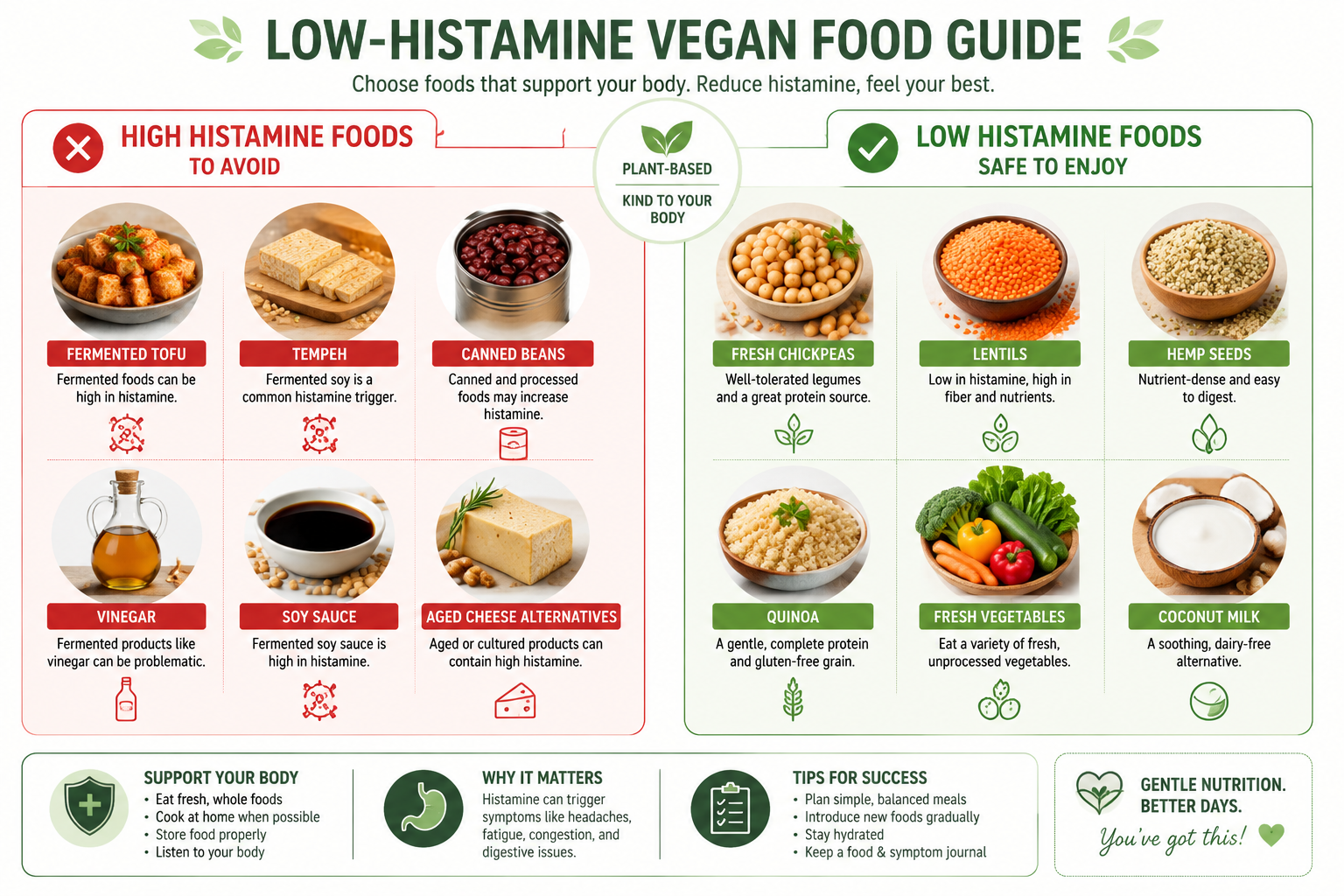
Here’s a practical breakdown:
Low-histamine vegan proteins (generally safe):
- Hemp seeds (also rich in omega-3s)
- Pumpkin seeds
- Freshly cooked lentils (eaten same day, not canned)
- Freshly cooked chickpeas
- Quinoa (a complete protein)
- Fresh tofu (not fermented; consume within 24 hours of opening)
- Sunflower seeds
- Chia seeds
High-histamine vegan proteins to avoid:
- Tempeh (fermented soy)
- Miso (fermented soy paste)
- Soy sauce and tamari
- Canned or jarred beans
- Fermented plant-based cheeses
- Nutritional yeast (a histamine liberator for many people)
A common mistake is assuming all tofu is safe. Fresh, plain tofu opened and eaten the same day is generally tolerated, but tofu that has been sitting in the fridge for two days is a different story. Histamine levels rise with time, even in refrigerated foods.
Can I Get Enough Protein as a Vegan with Histamine Issues?
Yes, getting adequate protein on a low-histamine vegan diet is achievable, but it requires more intentional planning than a standard vegan diet. The main challenge is that fermented soy products, which many vegans rely on heavily, are off the table.
A practical daily protein strategy might look like this:
- Breakfast: Hemp seeds added to oatmeal or a smoothie (3 tablespoons = approximately 10g protein)
- Lunch: Freshly cooked lentil soup (1 cup cooked lentils = approximately 18g protein)
- Dinner: Quinoa with roasted vegetables and pumpkin seeds (1 cup quinoa = approximately 8g protein)
- Snacks: Sunflower seed butter on rice cakes
This approach can realistically deliver 60 to 80 grams of protein per day for most adults, which meets the general recommendation of 0.8g per kilogram of body weight for sedentary adults. Athletes or highly active individuals may need to work with a registered dietitian to close the gap further.
What Foods Should I Absolutely Avoid on a Low-Histamine Vegan Diet?
On a low-histamine vegan diet, the foods to avoid fall into three categories: foods naturally high in histamine, foods that trigger histamine release in the body, and foods that block DAO enzyme activity.
Avoid these entirely or strictly limit:
| Category | Foods to Avoid |
|---|---|
| Fermented foods | Tempeh, miso, soy sauce, kimchi, sauerkraut, kombucha |
| Canned/preserved foods | Canned beans, canned tomatoes, canned coconut milk (some brands) |
| Histamine-releasing foods | Citrus fruits, strawberries, pineapple, kiwi, tomatoes, spinach, avocado, eggplant |
| DAO-blocking foods | Alcohol (including wine vinegar), energy drinks, black and green tea |
| Additives | Vinegar, artificial preservatives, food dyes, yeast extract |
| Aged/processed items | Nutritional yeast, store-bought vegan cheeses, most packaged vegan deli slices |
Note that “histamine-releasing” foods don’t contain histamine themselves, but they prompt the body to release its own stored histamine. Avocado and spinach are two foods that surprise many people in this category, since both are considered health foods in most contexts.
How Do I Meal Prep for Low-Histamine Vegan Meals?
Meal prep for low-histamine vegan eating centers on one rule above all others: cook fresh and freeze fast. Histamine accumulates in food as bacteria break down proteins over time, so leftovers sitting in the fridge for two or three days can become problematic even if the original ingredients were safe.

A practical low-histamine vegan meal prep system:
- Cook large batches of grains (quinoa, rice, millet) and portion into individual servings.
- Freeze portions you won’t eat within 24 hours immediately after cooling.
- Cook legumes from dried (not canned) and freeze in meal-sized portions right away.
- Prep fresh vegetables the day you plan to eat them, not days ahead.
- Use glass containers rather than plastic, and label everything with the date.
- Thaw frozen portions in the fridge overnight and eat the same day.
This system takes more effort than standard meal prep, but it becomes routine within a few weeks. I’ve spoken with people who manage this diet long-term, and most say the freezer is their best tool.
Batch-cook friendly low-histamine vegan meals:
- Lentil and vegetable soup (freeze in individual portions)
- Quinoa grain bowls with roasted root vegetables
- Chickpea and zucchini stew
- Millet porridge with blueberries and hemp seeds
What Cooking Methods Reduce Histamine in Plant Foods?
Cooking method matters less than food freshness, but certain techniques do help. Boiling and steaming are generally preferred over slow cooking, which gives bacteria more time to produce histamine at lower temperatures.
Key principles:
- Cook at high heat quickly rather than using slow cookers or long braises.
- Eat immediately after cooking when possible.
- Freeze, don’t refrigerate for anything beyond 24 hours.
- Avoid fermenting at home, including making your own kombucha, sourdough, or fermented nut cheeses.
- Rinse dried legumes thoroughly before cooking to reduce surface bacteria.
Interestingly, freezing does not destroy histamine that has already formed. This means freezing a food that has already been sitting out for a day won’t make it safe. The freeze-fast rule is about preventing histamine from forming in the first place.
Are There Nutritional Deficiencies I Need to Watch Out For?
A low-histamine vegan diet carries a real risk of several nutritional deficiencies, and addressing them proactively is important. The combination of veganism and histamine restrictions removes a wide range of foods, which narrows the nutrient pool considerably.
Key nutrients to monitor:
- Vitamin B12: Not found in plant foods; supplementation is non-negotiable for all vegans regardless of histamine status.
- Omega-3 fatty acids: Walnuts and flaxseeds are generally low-histamine, but algae-based DHA/EPA supplements are the most reliable source.
- Iron: Lentils and pumpkin seeds provide non-heme iron, but absorption is lower than heme iron. Pair with vitamin C-rich foods like bell peppers or broccoli.
- Zinc: Pumpkin seeds and hemp seeds are good sources, but zinc from plant foods is less bioavailable.
- Calcium: Fortified plant milks (oat, rice, or coconut) and calcium-set tofu can help, but check labels for additives.
- Iodine: Often overlooked; iodized salt or an iodine supplement is advisable since seaweed (a common vegan source) is high in histamine for some people.
Working with a registered dietitian who understands both veganism and histamine intolerance is genuinely worth the investment for anyone managing this combination long-term.
What Supplements Might Help Balance Nutrition on This Diet?
Several supplements are particularly useful for low-histamine vegans, both for filling nutritional gaps and for directly supporting histamine metabolism.
Recommended supplements:
- Vitamin B12 (methylcobalamin form): 1,000 mcg daily or as directed; essential for all vegans.
- Algae-based DHA/EPA: Provides omega-3s without fish oil; most algae supplements are low-histamine.
- DAO enzyme supplement: Taken before meals, this can help the body break down dietary histamine more effectively. Look for products derived from pea sprouts or kidney bean extract.
- Vitamin C: Acts as a natural antihistamine and supports DAO activity; 500 to 1,000 mg daily.
- Quercetin: A plant flavonoid that stabilizes mast cells and reduces histamine release; found in supplements and naturally in capers and onions.
- Zinc: Supports DAO enzyme function; 8 to 11 mg daily from a supplement if dietary intake is low.
- Magnesium: Often low in people with histamine intolerance; glycinate form is well-tolerated.
Always check supplement ingredients for fillers like citric acid, artificial colors, or yeast-based additives, which can themselves trigger reactions in sensitive individuals.
How Do I Know If I’m Having a Histamine Reaction to Food?
Histamine reactions typically appear within 30 minutes to two hours after eating a triggering food. The symptoms are wide-ranging, which is one reason histamine intolerance is frequently misdiagnosed as allergies, IBS, or anxiety.
Common symptoms of a histamine reaction:
- Headache or migraine
- Skin flushing, hives, or itching
- Nasal congestion or runny nose
- Digestive symptoms: bloating, cramping, diarrhea
- Heart palpitations
- Fatigue or brain fog
- Low blood pressure or dizziness
The pattern matters. If symptoms consistently appear after eating fermented, aged, or leftover foods, histamine intolerance is a likely cause. Keeping a detailed food and symptom diary for two to four weeks is the most practical first step before seeking a formal diagnosis.
A healthcare provider can test DAO enzyme levels through a blood test, though this test isn’t universally available. An elimination diet followed by structured reintroduction remains the gold standard for diagnosis, according to clinical guidelines reviewed in Nutrients (Comas-Basté et al., 2020).
Which Vegan Probiotics Are Safe for Histamine Sensitivity?
Most standard probiotic supplements and fermented vegan foods are problematic for people with histamine intolerance because they contain bacterial strains that produce histamine. However, a small number of strains are considered histamine-neutral or even histamine-degrading.
Probiotic strains generally safe for histamine sensitivity:
- Lactobacillus rhamnosus GG: Shown in research to support DAO activity without producing histamine.
- Bifidobacterium longum: Generally considered histamine-neutral.
- Bifidobacterium infantis: Another safe option.
Strains to avoid:
- Lactobacillus casei
- Lactobacillus bulgaricus
- Lactobacillus delbrueckii
When choosing a probiotic supplement, look for products that specifically list strains and avoid those marketed primarily around fermented foods. Kombucha, kefir alternatives, and most sauerkraut-based products are not suitable for histamine-sensitive vegans.
Are There Any Pre-Made Low-Histamine Vegan Products?
The market for pre-made low-histamine vegan products is still limited in 2026, but it’s growing. The safest approach is to read every label carefully, since many packaged vegan foods contain hidden histamine triggers.
What to look for on labels (red flags):
- Vinegar (any type)
- Yeast extract or autolyzed yeast
- Citric acid (can be a histamine liberator for some)
- Natural flavors (often fermentation-derived)
- Soy sauce or tamari
- Tomato paste or sun-dried tomatoes
Generally safer pre-made options:
- Plain rice cakes (check for no added vinegar)
- Canned coconut cream (some brands use no preservatives; check carefully)
- Frozen plain vegetables with no sauce
- Plain nut butters made from a single ingredient (sunflower seed butter, pumpkin seed butter)
- Oat-based cereals with no dried fruit or artificial additives
Specialty brands focused on low-histamine eating do exist, primarily in Europe and Australia. In the United States, the selection is smaller, but online retailers have expanded the options considerably.
How Long Does It Take to See Improvements on This Diet?
Most people notice meaningful symptom relief within two to four weeks of strictly following a low-histamine diet. Full resolution of symptoms, particularly chronic ones like migraines or persistent skin issues, can take two to three months.
The timeline depends on several factors:
- How strictly the diet is followed (even small amounts of high-histamine foods can reset progress)
- Whether DAO supplements are used alongside dietary changes
- Individual gut health and microbiome composition
- Whether other underlying conditions are present (mast cell activation syndrome, for example, requires additional medical management)
A common experience is feeling significantly better within the first two weeks, then accidentally eating a trigger food and experiencing a flare. This is actually useful information because it confirms the connection between histamine and symptoms, and it reinforces the importance of label-reading and food handling.
Common Mistakes People Make with Low-Histamine Vegan Eating
Understanding how to balance a low-histamine diet with veganism also means knowing where most people go wrong. These mistakes are extremely common, especially in the first few months.
- Keeping leftovers too long. Refrigerated cooked food accumulates histamine within 24 hours. Many people follow the right foods but eat day-old lentil soup and wonder why they still have symptoms.
- Trusting “vegan” labels. Vegan doesn’t mean low-histamine. Many vegan products are packed with vinegar, yeast extract, and fermented ingredients.
- Eliminating too many foods at once. Some people remove every possible trigger simultaneously, leading to a diet so restrictive it becomes nutritionally deficient. A structured elimination approach is safer.
- Ignoring supplements. Skipping B12 or DAO enzyme support makes the diet harder to sustain and increases health risks.
- Using nutritional yeast as a protein booster. Nutritional yeast is a histamine liberator and should be avoided, but many vegan recipes rely on it heavily.
- Assuming all fresh foods are safe. Avocado, spinach, and tomatoes are histamine releasers despite being fresh and unprocessed.
Conclusion
Balancing a low-histamine diet with veganism is genuinely challenging, but it’s far from impossible. The core principle is straightforward: prioritize fresh, whole, unfermented plant foods, cook from scratch, freeze quickly, and supplement strategically.
Actionable next steps:
- Start a food and symptom diary this week to identify your personal trigger foods.
- Clear your pantry of the main offenders: tempeh, miso, soy sauce, nutritional yeast, and canned beans.
- Stock your freezer with batch-cooked lentils, chickpeas, and quinoa portioned for single meals.
- Add a high-quality B12 supplement and consider a DAO enzyme supplement before meals.
- Book a consultation with a registered dietitian who has experience with both plant-based diets and histamine intolerance.
- Research histamine-neutral probiotic strains and replace any current probiotic supplements that contain histamine-producing bacteria.
The intersection of veganism and histamine intolerance is narrow, but it’s navigable. With the right framework, most people find that their symptoms improve substantially, and the diet becomes second nature within a few months.
Frequently Asked Questions
Is tofu safe on a low-histamine vegan diet? Fresh, plain tofu is generally tolerated if eaten within 24 hours of opening. Fermented tofu, marinated tofu, and tofu that has been refrigerated for more than a day should be avoided because histamine levels rise with time and fermentation.
Can I eat oats on a low-histamine vegan diet? Yes, plain oats are generally considered low-histamine and are a good breakfast staple. Avoid flavored oat products that contain dried fruit, artificial additives, or yeast-based ingredients.
Is nutritional yeast allowed? No. Nutritional yeast is a histamine liberator for most sensitive individuals and should be removed from a low-histamine vegan diet, even though it’s a popular protein and B12 source in standard vegan cooking.
Can I drink plant-based milks? Most plain, unsweetened plant milks (oat, rice, hemp, coconut) are low-histamine, provided they don’t contain additives like citric acid or carrageenan. Check labels carefully, as formulations vary by brand.
How do I get enough calcium without dairy or high-histamine foods? Calcium-set tofu (eaten fresh), fortified oat or rice milk, broccoli, kale, and bok choy are all good low-histamine calcium sources. A calcium supplement is also a reasonable backup if dietary intake is consistently low.
Are all fermented foods off-limits? Yes, for people with histamine intolerance, all fermented foods should be avoided during the elimination phase. This includes kombucha, sauerkraut, kimchi, miso, tempeh, and fermented nut cheeses, regardless of whether they are vegan.
What’s the difference between histamine intolerance and a mast cell disorder? Histamine intolerance is primarily a digestive issue caused by insufficient DAO enzyme activity. Mast cell activation syndrome (MCAS) is a broader immune condition involving multiple mediators beyond histamine. Both benefit from a low-histamine diet, but MCAS typically requires additional medical management.
Can children follow a low-histamine vegan diet? Children can follow this diet, but nutritional supervision is strongly recommended because the combination of restrictions can make it difficult to meet growing children’s protein, iron, calcium, and B12 needs without careful planning.
Is a low-histamine vegan diet expensive? It can be slightly more expensive than a standard vegan diet because it relies more on fresh produce and less on inexpensive canned or fermented staples. However, cooking from dried legumes and buying seasonal vegetables helps keep costs manageable.
Do I need to follow this diet forever? Not necessarily. Some people find that gut healing, DAO supplementation, and addressing underlying causes (such as gut dysbiosis or nutrient deficiencies) allows them to tolerate more foods over time. Others manage a lifelong sensitivity. Working with a healthcare provider helps determine the right long-term approach.
References
- Maintz, L., & Novak, N. (2007). Histamine and histamine intolerance. The American Journal of Clinical Nutrition, 85(5), 1185–1196. https://doi.org/10.1093/ajcn/85.5.1185
- Comas-Basté, O., Sánchez-Pérez, S., Veciana-Nogués, M. T., Latorre-Moratalla, M., & Vidal-Carou, M. C. (2020). Histamine intolerance: The current state of the art. Biomolecules, 10(8), 1181. https://doi.org/10.3390/biom10081181
- Schnedl, W. J., & Enko, D. (2021). Histamine intolerance originates in the gut. Nutrients, 13(4), 1262. https://doi.org/10.3390/nu13041262
Read next: Low-FODMAP Meal Prep Ideas for Flight Attendants: A Practical 2026 Guide. A closer look at low-fodmap meal prep.