
Key Takeaways
- Visual snow syndrome is a neurological condition, not an eye disease, and is thought to involve abnormal processing in the visual cortex.
- No FDA-approved medication specifically targets VSS as of 2026, but some treatments used for migraine and anxiety show partial benefit for certain patients.
- Reducing screen brightness, using tinted lenses, and managing stress are among the most consistently reported daily coping tools.
- VSS is generally considered stable in most patients, though triggers like sleep deprivation, caffeine, and anxiety can temporarily intensify symptoms.
- Neurologists and neuro-ophthalmologists with VSS experience are the most appropriate specialists to consult.
- VSS can affect driving, reading, and screen-based work, and may qualify for workplace accommodations depending on severity.
- Active online communities and patient advocacy groups provide significant peer support and up-to-date research information.
- Common management mistakes include over-relying on unproven supplements, avoiding all light exposure, and delaying specialist referral.

What Exactly Is Visual Snow Syndrome and Why Does It Happen
Visual snow syndrome is a neurological condition in which a person sees continuous static or flickering dots across their entire visual field, similar to the static on an old television screen. It is not caused by a problem with the eyes themselves but by abnormal activity in the brain’s visual processing areas, particularly the visual cortex.
Research published in the journal Brain by Schankin and colleagues (2014) identified VSS as a distinct clinical syndrome separate from migraine aura or other visual disorders. Brain imaging studies have shown hypermetabolism (overactivity) in the lingual gyrus and other visual cortex regions in VSS patients, suggesting the brain is processing visual information incorrectly rather than the eyes failing to capture it.
Core symptoms of VSS include:
- Persistent static or “snow” across the visual field (the defining feature)
- Palinopsia (visual afterimages that linger longer than normal)
- Photophobia (sensitivity to light)
- Nyctalopia (poor night vision)
- Entoptic phenomena such as floaters or blue field entoptic phenomenon
- Tinnitus (reported in a significant subset of patients)
- Depersonalization or derealization in some cases
VSS is distinct from a simple symptom. To meet the clinical definition, a person must have the persistent visual static plus at least two additional symptoms from the list above, and the symptoms must not be better explained by another condition.
How it differs from other visual disorders: Unlike macular degeneration or glaucoma, VSS shows no structural damage on standard eye exams. Unlike migraine aura, VSS is constant rather than episodic. This distinction matters because it shapes the entire treatment approach.
How Do Most People Manage Visual Snow Symptoms Day to Day
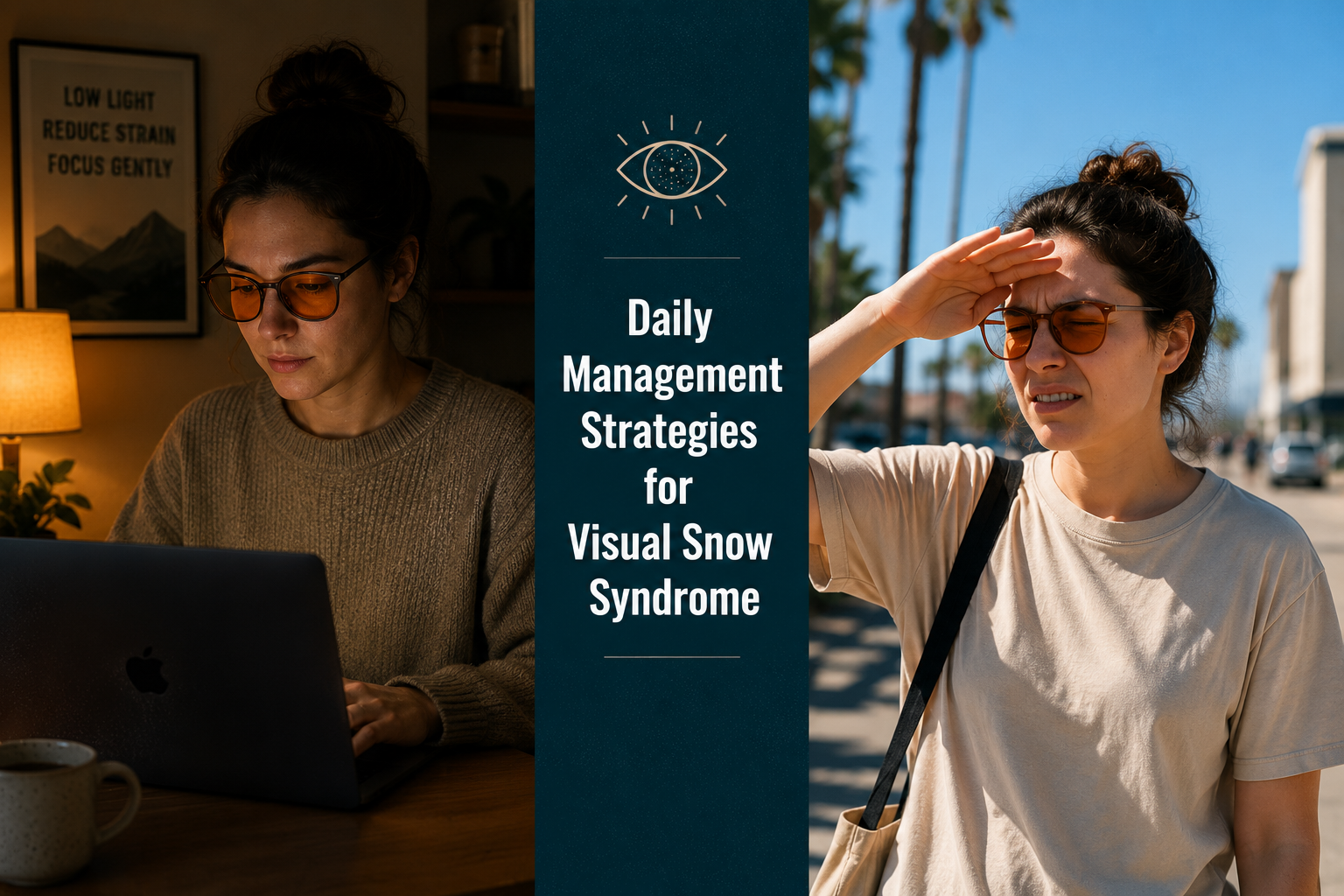
Most people manage VSS day to day through a combination of environmental modifications, sensory tools, and behavioral strategies rather than medication alone. The goal is to reduce the brain’s overall sensory load, which tends to make static and other symptoms less intrusive.
Based on patient-reported experiences documented by the Visual Snow Initiative (a nonprofit research and advocacy organization), the most commonly used daily strategies include:
Screen and lighting adjustments:
- Reducing screen brightness to 30-50% of maximum
- Enabling night mode or warm color temperature settings on all devices
- Using matte screen protectors to reduce glare
- Avoiding fluorescent lighting where possible; preferring warm LED or natural light
Tinted lenses: FL-41 tinted lenses (a rose-pink tint originally developed for migraine photophobia) are frequently reported to reduce light sensitivity and make visual snow feel less prominent in bright environments. These are available through optometrists and some online retailers.
Pacing and rest: Many people with VSS report that their symptoms feel worse during periods of visual overload, such as long screen sessions or crowded, visually busy environments. Taking regular breaks (the 20-20-20 rule: every 20 minutes, look at something 20 feet away for 20 seconds) reduces eye strain that can amplify perceived symptoms.
Mindfulness and attention redirection: Because VSS involves the brain’s interpretation of visual signals, focusing intensely on the static tends to make it feel worse. Cognitive techniques that redirect attention, including mindfulness-based stress reduction (MBSR), are used by some patients to reduce the distress caused by symptoms even when the symptoms themselves don’t change.
Are There Any Proven Treatments That Actually Reduce Visual Snow Effects
As of 2026, there is no FDA-approved treatment specifically for visual snow syndrome. However, several approaches have shown partial benefit in clinical reports and small studies.
Lamotrigine: An anticonvulsant medication sometimes used for migraine prevention. A small number of case reports have described symptom improvement in VSS patients, but no large controlled trial has confirmed this. It carries real side-effect risks and should only be considered under neurologist supervision.
Verapamil and other calcium channel blockers: Used in some VSS patients with concurrent migraine, with mixed results.
Cognitive behavioral therapy (CBT): CBT does not reduce the visual static itself but has strong evidence for reducing the anxiety, depression, and functional impairment that VSS can cause. For many patients, the distress surrounding symptoms is the primary driver of reduced quality of life, making CBT a high-value intervention.
What does not have strong evidence: Dietary supplements marketed for “visual snow” (such as high-dose magnesium or specific herbal blends) lack clinical trial support. Some patients report subjective benefit, but no controlled data exists as of 2026.
“The absence of a cure does not mean the absence of help. Managing the impact of VSS on daily functioning is a legitimate and achievable treatment goal.” – A framing consistently used by VSS patient advocacy groups.
Can Visual Snow Syndrome Get Worse Over Time or Is It Stable
For most people, VSS is a stable condition. The visual static itself does not typically progress in the way that degenerative eye diseases do. However, symptom intensity can fluctuate significantly based on triggers.
A survey-based study by Lauschke et al. (2016) found that the majority of VSS patients reported symptoms had been present for years without significant worsening of the core visual snow. That said, roughly a third of patients in various surveys report periods where symptoms feel more intense, usually tied to identifiable triggers.
Common triggers that temporarily worsen VSS symptoms:
- Sleep deprivation (one of the most consistently reported triggers)
- High caffeine or alcohol intake
- Anxiety and stress
- Prolonged screen exposure without breaks
- Illness or fever
- Recreational drug use, particularly psychedelics (VSS has a documented association with hallucinogen persisting perception disorder, or HPPD, in a subset of patients)
Edge case: A small number of patients do report gradual worsening over time. If symptoms are clearly and progressively deteriorating, this warrants re-evaluation by a neurologist to rule out other conditions that may have been misdiagnosed as VSS.
What Lifestyle Changes Help Minimize Visual Snow Symptoms
Consistent lifestyle changes are the backbone of coping strategies for living with visual snow syndrome daily. These changes won’t eliminate symptoms, but they reliably reduce the frequency and intensity of bad symptom days.
Sleep: Prioritizing 7-9 hours of quality sleep per night is one of the most impactful changes most VSS patients can make. Sleep deprivation is a top trigger, and improving sleep hygiene often produces noticeable symptom relief within days.
Stress management: Because VSS involves the nervous system’s processing of sensory input, chronic stress appears to amplify symptoms. Regular physical exercise, breathing techniques, and structured relaxation practices (yoga, progressive muscle relaxation) are all reasonable options.
Diet and hydration: No specific VSS diet exists, but staying well-hydrated and limiting caffeine and alcohol reduces known triggers. Some patients with concurrent migraine find that a low-tyramine diet (reducing aged cheeses, processed meats, and red wine) helps, since migraine and VSS frequently co-occur.
Screen hygiene: Beyond brightness settings, consider:
- Using dark mode on all apps and operating systems
- Enabling blue light filters (f.lux, built-in OS settings)
- Limiting total daily screen time where possible
- Avoiding screens for at least one hour before bed
Exercise: Moderate aerobic exercise is generally beneficial for neurological conditions and anxiety. Walking, swimming, and cycling are commonly well-tolerated. Intense exercise occasionally worsens symptoms temporarily in some patients, so it’s worth monitoring individual response.
Which Medical Specialists Understand and Treat Visual Snow Best
Neurologists and neuro-ophthalmologists are the most appropriate specialists for diagnosing and managing visual snow syndrome. General ophthalmologists and optometrists may rule out structural eye problems, but VSS is a neurological condition and requires neurological expertise for proper management.
Recommended specialist pathway:
- Start with an ophthalmologist or optometrist to rule out retinal or structural eye conditions.
- Request a referral to a neurologist, ideally one with experience in headache medicine or visual disorders.
- If available, a neuro-ophthalmologist (a specialist trained in both neurology and ophthalmology) is the most targeted choice.
The Visual Snow Initiative maintains a list of VSS-aware clinicians on their website (visualsnowinitiative.org), which is a practical starting point for patients who struggle to find informed providers.
Common mistake: Many VSS patients spend years seeing ophthalmologists who find nothing wrong and conclude there is no problem. If eye exams are normal but symptoms persist, pushing for neurological evaluation is the right next step.
How Expensive Are Typical Treatments for Visual Snow Syndrome
Treatment costs for VSS vary widely depending on the interventions used and insurance coverage. Because there is no single approved treatment, costs are largely driven by specialist consultations, diagnostic testing, and any off-label medications tried.
Estimated cost ranges (US, 2026, without insurance):
| Service | Approximate Cost |
|---|---|
| Neurologist consultation | $200 – $500 per visit |
| MRI brain scan (for ruling out other causes) | $500 – $2,500 |
| Neuro-ophthalmology consultation | $250 – $600 per visit |
| CBT therapy (per session) | $100 – $300 |
| FL-41 tinted prescription lenses | $150 – $400 |
| Off-label medications (lamotrigine, generic) | $10 – $60/month |
Most major insurance plans cover neurologist visits and MRI scans when medically indicated. CBT is increasingly covered under mental health parity laws. FL-41 lenses are typically not covered as a VSS treatment but may be partially covered if prescribed for photophobia.
For patients without insurance: Federally Qualified Health Centers (FQHCs) offer sliding-scale neurology referrals, and some academic medical centers run VSS-specific research clinics that provide evaluation at reduced or no cost.
Can Visual Snow Syndrome Impact Driving or Work Performance
Yes, VSS can meaningfully affect both driving and work performance, particularly in people with moderate to severe symptoms. Visual static, poor night vision, and light sensitivity all have direct implications for tasks that require sustained visual attention.
Driving: Night driving is the most commonly reported challenge. The combination of poor night vision, halos around lights, and visual static makes low-light driving genuinely hazardous for some VSS patients. Daytime driving is better tolerated by most, particularly with FL-41 or polarized lenses. Patients should honestly assess their own visual function and consult their neurologist before continuing to drive if symptoms are severe.
Work performance: Screen-heavy jobs (programming, data entry, graphic design) and jobs in bright or visually complex environments (retail, construction, healthcare) are most affected. Common accommodations that help include:
- Permission to use tinted lenses or screen filters
- Reduced screen brightness without IT policy barriers
- Flexible lighting in the workspace
- Remote work options to control the environment
- Reduced exposure to fluorescent lighting
Is Visual Snow Syndrome Considered a Disability for Work Accommodations
VSS can qualify for workplace accommodations under disability law in the US (Americans with Disabilities Act) and equivalent legislation in other countries, but it depends on severity and documented functional impact. VSS is not automatically listed as a recognized disability, so documentation from a neurologist or neuro-ophthalmologist is essential.
To request accommodations, an employee typically needs:
- A formal diagnosis from a qualified specialist
- Documentation of how symptoms specifically impair job-related functions
- A written accommodation request submitted to HR or an occupational health team
In the UK, VSS may qualify under the Equality Act 2010 if it has a substantial and long-term adverse effect on normal day-to-day activities. Similar frameworks exist in Canada and Australia.
What Triggers Can Make Visual Snow Symptoms More Intense
The most common triggers that intensify VSS symptoms are sleep deprivation, stress, caffeine, alcohol, and prolonged screen or bright light exposure. Identifying personal triggers is one of the most practical coping strategies for living with visual snow syndrome daily.
Keeping a symptom diary for 4-6 weeks, noting sleep hours, diet, stress levels, and screen time alongside symptom intensity, helps most patients identify their specific pattern. Once triggers are known, targeted avoidance is straightforward.
Less commonly recognized triggers:
- Dehydration
- Skipping meals (blood sugar drops)
- Hormonal fluctuations (some women report worsening around menstruation)
- Antihistamines and certain other medications (worth reviewing with a doctor)
- High-altitude environments
What Are Common Mistakes People Make When Trying to Manage Visual Snow
The most common mistake is spending months or years seeking an eye-based diagnosis and treatment when VSS is a neurological condition. This delays appropriate care and increases frustration.
Other frequent mistakes:
- Avoiding all light: Complete light avoidance can increase photophobia over time (similar to how avoiding movement worsens chronic pain). Gradual, controlled light exposure is better than total avoidance.
- Over-focusing on symptoms: Monitoring the static constantly reinforces the brain’s attention to it. Attention redirection techniques are more effective long-term.
- Trying unverified supplements without medical guidance: Some supplements interact with medications or have their own side effects.
- Isolating socially: VSS can cause anxiety about social situations involving bright lights or screens, but social withdrawal worsens mental health and quality of life.
- Not disclosing symptoms to employers: Many patients suffer in silence rather than requesting reasonable accommodations they are legally entitled to.
Are There Support Groups or Online Communities for People with Visual Snow
Yes, active and well-established communities exist for VSS patients. These communities are genuinely valuable, both for practical coping tips and for the psychological benefit of connecting with others who understand the condition.
Key resources:
- Visual Snow Initiative (visualsnowinitiative.org): The leading nonprofit dedicated to VSS research and patient support. Provides a clinician directory, research updates, and patient resources.
- Reddit r/visualsnow: A large, active community where patients share daily management strategies, medication experiences, and specialist recommendations.
- Facebook groups: Several VSS-specific groups with thousands of members provide peer support and experience sharing.
- Eye on Vision Foundation: Supports research into VSS and related conditions.
Online communities are particularly valuable for patients in areas with few VSS-aware specialists, as members often share which clinicians in different regions have VSS experience.
Conclusion
Living with visual snow syndrome is genuinely challenging, but it is manageable. The most effective approach combines neurological care, environmental modifications, stress management, and community support. No single solution works for everyone, but the coping strategies for living with visual snow syndrome daily outlined in this guide give a clear, evidence-informed starting point.
Actionable next steps:
- If you haven’t already, see an ophthalmologist to rule out structural eye conditions, then pursue a neurologist referral.
- Start a symptom diary this week to identify your personal triggers.
- Make one environmental change immediately: reduce screen brightness and enable night mode on all devices.
- Explore the Visual Snow Initiative website for a clinician directory and current research.
- Consider CBT if anxiety or distress around symptoms is affecting your daily functioning.
- Connect with the r/visualsnow community or a VSS Facebook group for peer support.
- If VSS is affecting your work, speak with HR about reasonable accommodations and gather documentation from your specialist.
Progress with VSS is rarely dramatic, but consistent, informed management does improve quality of life for most people. The condition is real, it is recognized by neurological science, and help is available.
Frequently Asked Questions
What is visual snow syndrome in simple terms? Visual snow syndrome is a neurological condition where a person sees constant static or “snow” across their entire vision, similar to an untuned TV. It is caused by abnormal brain processing, not eye damage.
Is visual snow syndrome rare? VSS is more common than previously thought. A 2020 population-based study estimated prevalence at approximately 2-3% of the general population, though many cases remain undiagnosed.
Can visual snow syndrome go away on its own? For most people, VSS is a long-term condition that does not resolve spontaneously. However, many patients find that symptoms become less distressing over time as they adapt and implement management strategies.
Does stress make visual snow worse? Yes. Stress and anxiety are among the most consistently reported triggers for symptom intensification. Stress management is a core part of daily coping for most VSS patients.
Are FL-41 tinted lenses worth trying for visual snow? Many VSS patients report meaningful relief from light sensitivity with FL-41 lenses, particularly in bright or fluorescent environments. They are low-risk and relatively affordable, making them a reasonable first-line tool to try.
Can children have visual snow syndrome? Yes. VSS has been reported in children and adolescents. Pediatric cases should be evaluated by a pediatric neurologist to rule out other conditions.
Is there a connection between migraine and visual snow syndrome? Yes. A significant proportion of VSS patients also have migraine. The two conditions appear to share neurological mechanisms, though VSS can occur without any migraine history.
Does caffeine make visual snow worse? Caffeine is a reported trigger for some VSS patients, particularly in high doses. Reducing or eliminating caffeine is a reasonable trial for anyone whose symptoms seem caffeine-sensitive.
Can visual snow syndrome be caused by drug use? In some cases, VSS appears after use of psychedelic drugs (LSD, psilocybin, MDMA), overlapping with a condition called HPPD. However, many VSS patients have no history of drug use, and the relationship is not fully understood.
What is the best diet for visual snow syndrome? No specific diet has been proven to treat VSS. General recommendations focus on staying hydrated, limiting alcohol and caffeine, and following a migraine-friendly diet if migraine is a co-occurring condition.
References
- Schankin, C.J., Maniyar, F.H., Digre, K.B., & Goadsby, P.J. (2014). “Visual snow – a disorder distinct from persistent migraine aura.” Brain, 137(5), 1419-1428. https://doi.org/10.1093/brain/awu050
- Lauschke, J.L., Plant, G.T., & Fraser, C.L. (2016). “Visual snow: A thalamocortical dysrhythmia of the visual pathway?” Journal of Clinical Neuroscience, 28, 123-127. https://doi.org/10.1016/j.jocn.2015.12.001
- Visual Snow Initiative. (2026). Patient resources and clinician directory. https://www.visualsnowinitiative.org
- Puledda, F., Schankin, C., & Goadsby, P.J. (2020). “Visual snow syndrome: A clinical and phenotypical description of 1,100 cases.” Neurology, 94(6), e564-e574. https://doi.org/10.1212/WNL.0000000000008909
Read next: Preventing Repetitive Strain Injuries in Professional Baristas: A Complete Guide. A closer look at repetitive strain for baristas.