
Key Takeaways
- Closed terrariums work by recycling moisture, which makes them ideal for miniature orchids that need 70-90% humidity.
- Not all orchids work in closed terrariums. Species like Lepanthes, Stelis, Dracula, and Restrepia are among the best choices.
- A proper drainage layer (gravel, activated charcoal, and sphagnum moss) is non-negotiable. Skipping it leads to root rot.
- Most beginner setups cost $40 to $120, depending on the vessel and plant selections.
- Closed orchid terrariums need indirect or artificial light for 10-14 hours per day. Direct sun will cook the plants.
- Watering is infrequent. A well-sealed terrarium may only need water added every 2-6 weeks, depending on seal tightness.
- Mold is the most common problem. Good airflow management and clean materials prevent most outbreaks.
- Miniature orchids can survive for 3-10 years or more in a well-maintained closed terrarium.
- You can mix compatible species, but research each plant’s temperature and light needs before combining them.
- This project is beginner-friendly with the right guidance, which is exactly what this guide provides.
What Exactly Is a Closed Terrarium and How Does It Work
A closed terrarium is a glass or acrylic container with a lid or tight-fitting seal that creates a miniature ecosystem. Inside, water evaporates from the substrate, condenses on the glass walls, and drips back down to the roots, creating a nearly self-sustaining water cycle.
This cycle is what makes closed terrariums so valuable for miniature orchids. Many of these species come from cloud forests in Central and South America, where humidity rarely drops below 70%. Replicating that environment on a windowsill is nearly impossible without a sealed enclosure.
How the water cycle works inside the terrarium:
- Plants transpire moisture through their leaves.
- That moisture condenses on the cooler glass walls.
- Condensation runs down and re-enters the substrate.
- The drainage layer prevents standing water from reaching roots.
The key difference between a closed and open terrarium is airflow. Open terrariums dry out quickly and suit succulents. Closed terrariums stay humid and suit moisture-loving plants like miniature orchids, mosses, and ferns.
A well-built closed terrarium can maintain 80-90% relative humidity without any external humidifier, making it one of the most efficient growing environments for cloud forest orchids.
Which Orchid Species Are Best for Small Terrariums
The best miniature orchids for closed terrariums are species that naturally grow in high-humidity, low-airflow environments and stay small enough to fit comfortably in a glass container. The top choices include Lepanthes, Stelis, Dracula, Restrepia, Masdevallia (cool-growing types), and Pleurothallis.
Top species by category:
| Species | Size | Temperature Preference | Bloom Habit |
|---|---|---|---|
| Lepanthes telipogoniflora | Under 2 inches | Cool to intermediate | Continuous bloomer |
| Stelis sp. | 1-3 inches | Cool to intermediate | Small, frequent flowers |
| Dracula vampira | 4-6 inches | Cool only | Dramatic, downward-facing blooms |
| Restrepia antennifera | 3-5 inches | Intermediate | Bright, long-lasting flowers |
| Masdevallia veitchiana | 4-6 inches | Cool only | Vivid orange blooms |
| Pleurothallis truncata | 2-4 inches | Intermediate | Delicate, tiny flowers |
Avoid these orchids in closed terrariums:
- Phalaenopsis (moth orchids) need lower humidity and more airflow.
- Cattleya and Dendrobium prefer drier conditions between waterings.
- Any orchid labeled “intermediate-high” or “warm-growing” will likely struggle in the cool, humid environment most closed terrariums produce.
Choose species based on your ambient room temperature. Cool-growing orchids (55-65°F / 13-18°C nights) need a cooler room or a cooling device. Intermediate growers (60-70°F / 15-21°C nights) are more forgiving for most homes.
What Tools and Supplies Do You Need to Get Started
You need a glass vessel, a layered substrate system, miniature orchid plants, a light source, and a few basic tools. The full list is shorter than most people expect.
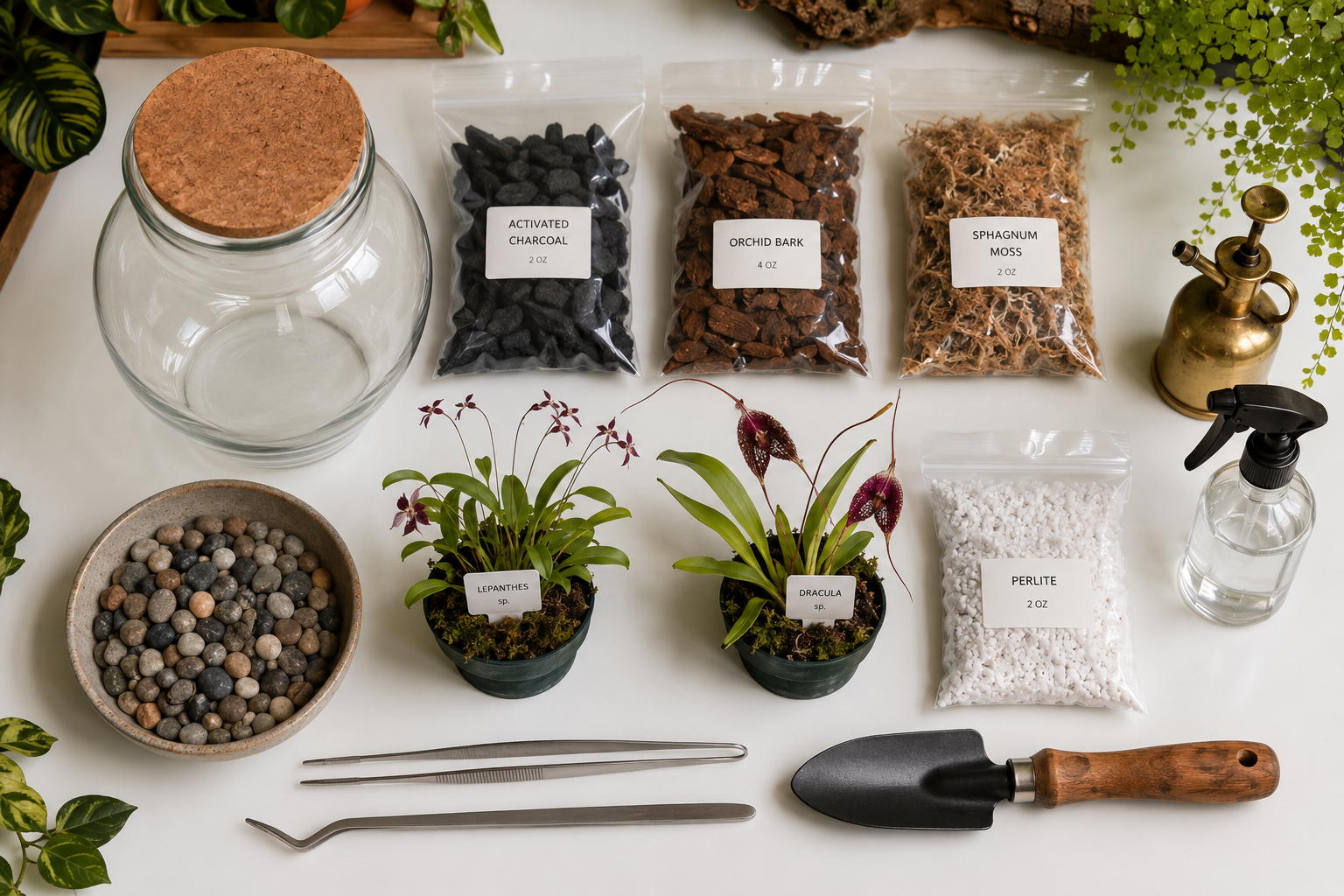
Essential supplies checklist:
- Glass container with a lid (apothecary jar, fish tank with glass top, or purpose-built terrarium)
- Drainage gravel or LECA (lightweight expanded clay aggregate)
- Activated horticultural charcoal (not aquarium charcoal with additives)
- Long-fiber sphagnum moss
- Fine orchid bark or a premixed orchid substrate
- Perlite (optional but helpful for aeration)
- Long-handled tweezers or tongs (for planting in deep vessels)
- A small spray bottle
- Isopropyl alcohol (for sterilizing tools)
- LED grow light or access to bright indirect natural light
Nice to have but not required:
- A digital hygrometer/thermometer to monitor conditions
- Aquarium-safe silicone for sealing gaps
- Decorative elements like driftwood, small rocks, or background moss
Sterilize all tools before use. Introducing bacteria or fungal spores on dirty tweezers is one of the fastest ways to ruin a new terrarium.
How Much Does It Cost to Build a Terrarium for Miniature Orchids
A beginner closed terrarium for miniature orchids costs between $40 and $120 to build from scratch, depending on the size of the vessel and the number of plants. A single-plant setup in a small apothecary jar can be done for under $50. A multi-plant display in a larger tank runs $80-$150 or more.
Estimated cost breakdown:
| Item | Estimated Cost |
|---|---|
| Glass vessel (medium apothecary jar) | $15-$35 |
| Drainage gravel or LECA | $5-$10 |
| Activated charcoal | $5-$8 |
| Sphagnum moss | $6-$12 |
| Orchid bark/substrate | $8-$15 |
| Miniature orchid plants (1-3 plants) | $10-$40 each |
| LED grow light (if needed) | $15-$50 |
| Tools (tweezers, spray bottle) | $5-$15 |
The biggest variable is the plants. Rare species like Dracula or Lepanthes can cost $20-$60 per plant from specialty vendors. Common Restrepia or Stelis species are often $10-$20. Buy from reputable orchid nurseries rather than general plant shops to ensure you get correctly labeled, healthy specimens.
What Soil and Drainage Layers Do Miniature Orchids Need
Miniature orchids in closed terrariums need a layered substrate system, not regular potting soil. The layers prevent waterlogging, filter toxins, and provide the right root environment. Standard potting mix will compact, retain too much water, and kill orchid roots within weeks.
The correct layer order from bottom to top:
- Drainage layer (1-2 inches): Gravel, LECA, or coarse perlite. This keeps roots above standing water.
- Separation layer (thin): A piece of mesh, weed fabric, or a thick layer of sphagnum moss to prevent substrate mixing with drainage.
- Charcoal layer (0.5 inch): Activated charcoal absorbs toxins and reduces anaerobic bacteria buildup.
- Substrate layer (2-3 inches): Fine orchid bark mixed with perlite and sphagnum moss. A common ratio is 60% bark, 20% perlite, 20% sphagnum.
- Top dressing (optional): Live moss, small stones, or decorative bark for aesthetics and moisture retention.
Miniature orchids are epiphytes in nature, meaning they grow on tree bark, not in soil. Their roots need to breathe. The substrate should hold some moisture but never become waterlogged or compacted.
Can I Use Any Glass Container or Do I Need Something Special
Almost any glass container with a closeable lid works, but the shape and size matter more than most beginners realize. A container that is too shallow will not hold enough substrate depth. One that is too narrow makes planting difficult and limits airflow management.
Best container types:
- Apothecary jars (wide-mouth, cork or glass lid): Excellent for 1-3 plants. Easy to find, affordable, and visually attractive.
- Fish tanks or aquariums (with a glass or acrylic lid): Best for larger displays with multiple species. A 5-10 gallon tank gives plenty of room.
- Purpose-built terrariums (hinged front door): Ideal for serious growers. Front access makes maintenance much easier than reaching in from the top.
- Large glass cloches: Good for single specimen plants, but watch for overheating near windows.
Avoid:
- Plastic containers (poor heat regulation, may off-gas)
- Colored or heavily tinted glass (blocks light)
- Containers with very narrow necks (nearly impossible to plant or maintain)
The container does not need to be perfectly airtight. A small gap around a cork lid is fine and can actually help prevent mold by allowing a tiny amount of fresh air exchange.
What Kind of Light and Temperature Do These Terrariums Require
Miniature orchids in closed terrariums need bright, indirect light or quality artificial grow lighting for 10-14 hours per day. Direct sunlight through glass is dangerous because it can raise internal temperatures to lethal levels within minutes.
Light options:
- LED grow lights: The most reliable option. Full-spectrum LEDs designed for plants work well. Position them 6-12 inches above the terrarium lid.
- Bright indirect window light: Works if you have a north or east-facing window with no direct sun exposure. South and west windows need a sheer curtain to diffuse light.
- Fluorescent T5 lights: An older but still effective option for larger setups.
Temperature guidelines:
- Cool-growing species: Daytime 65-72°F (18-22°C), nighttime 55-62°F (13-17°C)
- Intermediate species: Daytime 68-78°F (20-26°C), nighttime 58-65°F (14-18°C)
A 10-15°F (5-8°C) temperature drop at night is important for many miniature orchids to trigger blooming. If your home stays warm overnight, cool-growing species will struggle. Choose intermediate-growing species if your home stays above 65°F at night year-round.
How Often Do You Need to Water and Maintain a Closed Orchid Terrarium
A properly sealed closed terrarium may only need water added every 2-6 weeks. The internal water cycle handles most of the moisture needs. Maintenance beyond watering is minimal but consistent.
Signs the terrarium needs water:
- Condensation has disappeared from the glass for more than 48 hours.
- The substrate surface looks dry and pale.
- Moss is losing its bright green color.
Signs of too much water:
- Constant heavy condensation with no clear periods.
- Standing water visible in the drainage layer.
- Musty smell when you open the lid.
Routine maintenance tasks:
- Check for mold weekly, especially in the first month.
- Remove dead leaves or spent blooms promptly.
- Wipe condensation from the inside lid if it becomes too heavy.
- Fertilize lightly every 4-6 weeks using a diluted, balanced orchid fertilizer at 1/4 strength. Wipe any fertilizer residue from leaves.
- Trim moss if it overgrows and starts covering orchid crowns.
How Do You Prevent Mold and Fungus in a Sealed Orchid Ecosystem
Mold is the most common problem in closed terrariums, and it is almost always caused by one of three things: contaminated materials, too much moisture, or dead organic matter left inside. Preventing mold starts before you even plant anything.
Prevention steps:
- Sterilize all substrate materials by baking them at 250°F (120°C) for 20 minutes before use, or use commercially sterilized products.
- Clean the glass container with diluted hydrogen peroxide (3% solution) before assembly.
- Remove dead leaves, spent flowers, and any decaying material immediately.
- Do not overwater. If condensation is heavy and constant, crack the lid for a few hours to allow some moisture to escape.
- Use a small fan near the terrarium for 1-2 hours per day if mold becomes a recurring problem. This slightly reduces humidity but greatly improves air circulation.
If mold appears:
- Small white mold spots on substrate can be removed with a cotton swab dipped in 3% hydrogen peroxide.
- Mold on plant leaves is more serious. Remove affected leaves and treat the plant with a diluted fungicide safe for orchids.
- Persistent mold may require a full teardown, sterilization, and rebuild.
Are Closed Terrariums Good for Beginners or Too Complicated
Closed terrariums are beginner-friendly when you follow a structured approach. The self-regulating humidity actually makes them easier to maintain than open setups for high-humidity plants, because you water far less often and the environment stays stable.
The learning curve comes from two areas: choosing the right species and managing moisture balance in the first few weeks. Both are manageable with the guidance in this article.
Closed terrariums are a good fit if you:
- Travel frequently and cannot water plants daily.
- Live in a dry climate where maintaining humidity is otherwise difficult.
- Want a low-maintenance display plant that does not need daily attention.
- Are drawn to rare, unusual orchid species that are hard to grow conventionally.
Closed terrariums are harder if you:
- Do not have access to a reliable light source (natural or artificial).
- Live in a very warm home where cool-growing species would struggle.
- Are impatient with slow-growing plants. Miniature orchids grow slowly.
Can You Mix Different Types of Miniature Orchids in One Terrarium
Yes, you can mix different miniature orchid species in one terrarium, but only if they share compatible temperature, humidity, and light requirements. Mixing a cool-growing Dracula with a warm-growing Restrepia in the same container will result in one or both plants declining.
Safe combinations:
- Lepanthes + Stelis + Pleurothallis (all intermediate to cool, similar needs)
- Restrepia + Masdevallia (intermediate types only, check species-level requirements)
- Any combination of orchids with compatible mosses and small ferns
Mixing rules:
- Research each species individually before combining.
- Give each plant enough space so roots do not compete or tangle.
- Do not crowd the container. Overcrowding reduces airflow and increases mold risk.
- Add non-orchid plants like Selaginella moss or small ferns to fill gaps naturally without competing aggressively.
How Long Can Miniature Orchids Survive in a Closed Terrarium Environment
Miniature orchids can survive for 3-10 years or more in a well-maintained closed terrarium. Some growers report specimens thriving for over a decade in the same setup. Longevity depends on species selection, substrate quality, light consistency, and how quickly problems like root rot or mold are addressed.
The most common reason miniature orchids die in closed terrariums is not the environment itself but neglect of early warning signs: yellowing leaves, soft pseudobulbs, or persistent mold that goes untreated.
With this guide as your reference, most beginners can expect their first terrarium to stay healthy for at least 2-4 years before needing a substrate refresh or replanting.
Conclusion: Your Next Steps for Building a Closed Terrarium for Miniature Orchids
The ultimate guide to building a closed terrarium for miniature orchids comes down to a few core principles: choose the right species, build proper drainage layers, manage moisture carefully, and give your plants consistent light. None of these steps are complicated once you understand the reasoning behind them.
Here is what to do next:
- Choose your container first. A medium apothecary jar or a 5-gallon aquarium with a glass lid is a great starting point.
- Select one or two beginner-friendly species. Restrepia antennifera and Lepanthes species are forgiving, rewarding, and widely available from specialty vendors.
- Gather your substrate materials and sterilize them before assembly.
- Set up your light source before planting so you can confirm the light level is appropriate.
- Build the terrarium, plant carefully, mist lightly, and seal it. Then watch for condensation patterns over the first week to calibrate moisture levels.
- Keep a simple log of when you water, fertilize, and notice any changes. This makes troubleshooting much easier.
A well-built closed terrarium is one of the most rewarding plant projects you can take on in 2026. The combination of living art, botanical science, and low daily maintenance makes it genuinely satisfying for beginners and experienced growers alike.
Frequently Asked Questions
Do miniature orchids bloom in a closed terrarium? Yes. Many miniature orchid species bloom reliably in closed terrariums when their temperature, light, and humidity needs are met. Species like Lepanthes and Restrepia are known for near-continuous blooming in terrarium conditions.
Do I need to fertilize orchids in a closed terrarium? Yes, but very lightly. Use a balanced orchid fertilizer at 1/4 of the recommended strength every 4-6 weeks. The closed environment concentrates nutrients, so less is always more.
What is the best LED light for a closed orchid terrarium? A full-spectrum LED grow light with a color temperature of 5000-6500K works well. Brands like Barrina, Mars Hydro, and Jungle Dawn are popular among terrarium growers. Position it 6-12 inches above the container.
Can I use tap water in a closed terrarium? Filtered, distilled, or rainwater is strongly preferred. Tap water in many areas contains chlorine, fluoride, and minerals that can build up in the substrate and damage orchid roots over time.
How do I know if my terrarium has too much moisture? If condensation is so heavy that you cannot see the plants clearly through the glass, or if you notice standing water in the drainage layer, the terrarium has too much moisture. Crack the lid for a few hours to allow evaporation.
What is activated charcoal and why does it matter? Activated charcoal is a processed carbon material that absorbs toxins, reduces anaerobic bacteria, and helps keep the substrate “sweet” (free from harmful buildup). It is a standard layer in any closed terrarium build and should not be skipped.
Can I use a regular fish tank for a miniature orchid terrarium? Yes. A standard glass aquarium with a fitted glass or acrylic lid works very well. A 5-10 gallon tank gives enough depth for proper substrate layers and enough width for 3-6 miniature orchid plants.
How do I plant a miniature orchid in a deep container? Use long-handled tweezers or tongs to position the plant and tuck roots into the substrate. Some growers use a piece of bent wire or a chopstick to guide roots into place. Work slowly and avoid forcing roots.
Is it normal for leaves to touch the glass? Occasional contact is fine, but leaves that press against glass for extended periods can develop rot spots from condensation. Arrange plants so leaves have a small gap from the walls.
What should I do if an orchid dies inside the terrarium? Remove it promptly and completely, including all roots. Dead plant matter decays quickly in a humid sealed environment and can trigger mold outbreaks. Sterilize the area with diluted hydrogen peroxide before replanting.
References
- American Orchid Society. (2022). Growing Miniature Orchids. https://www.aos.org
- Hoshizaki, B. J., & Moran, R. C. (2001). Fern Grower’s Manual. Timber Press.
- Koopowitz, H. (2001). Miniature Orchids. Timber Press.
- Schofield, E. (2019). Terrariums: Gardens Under Glass. Cool Springs Press.
- Wikler, M. (2018). The New Terrarium: Creating Beautiful Displays for Plants and Nature. Ten Speed Press.
Read next: How to Safely Acclimate Tissue-Culture Rare Philodendrons at Home. A closer look at tissue culture philodendron care.