
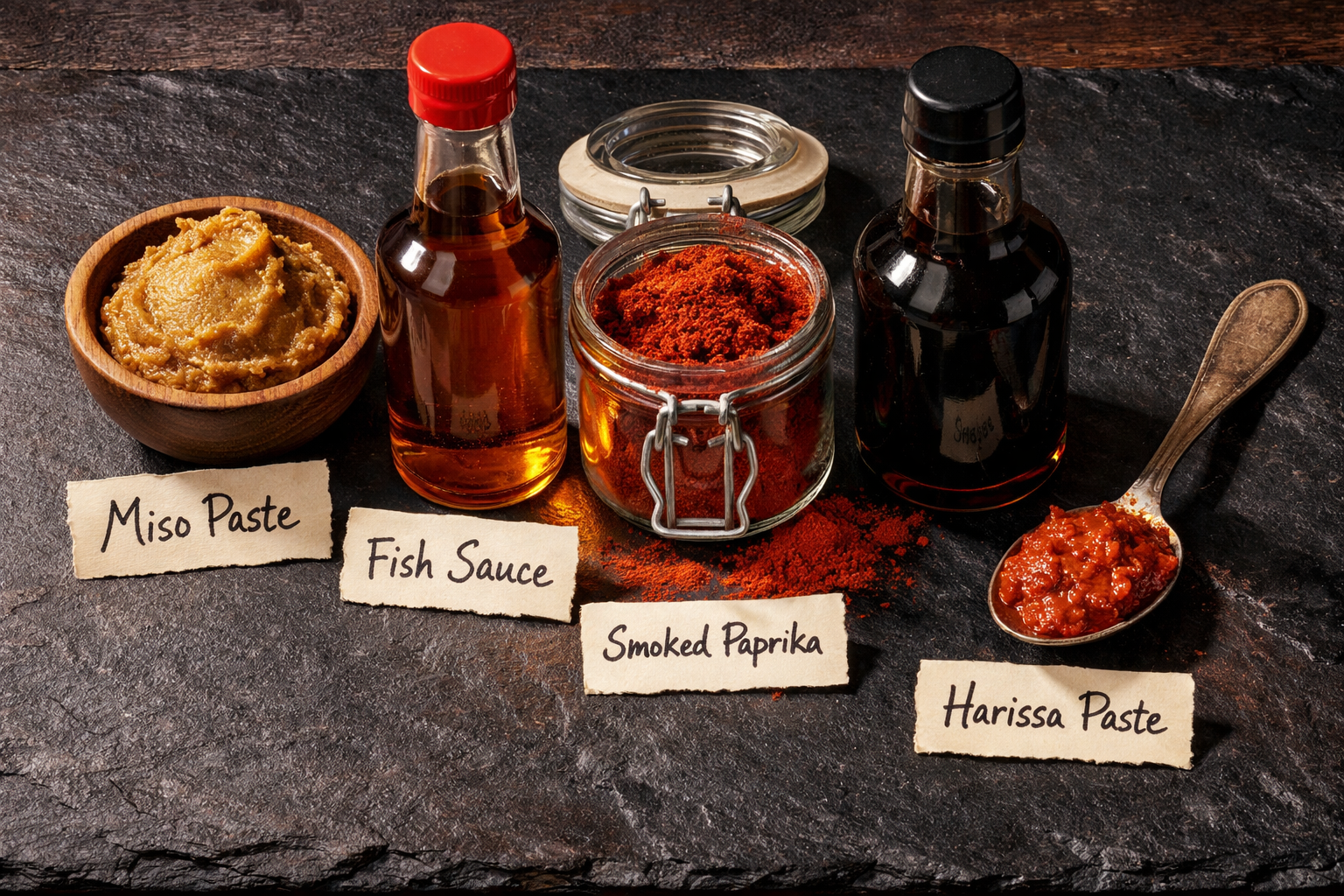
Five pantry ingredients — miso paste, fish sauce, smoked paprika, coconut aminos, and harissa — can dramatically improve the depth, complexity, and flavor of everyday home cooking with minimal effort. Each one works across a wide range of dishes, from weeknight soups to weekend marinades. Adding even one of these to your regular rotation can transform a flat, ordinary meal into something that tastes genuinely restaurant-quality.
Key Takeaways
- Miso paste adds deep umami richness to soups, sauces, and marinades — white miso is the mildest and most versatile starting point [1]
- Fish sauce is a fermented condiment that boosts savory depth in stir-fries, dressings, and braises; use it by the teaspoon, not the tablespoon [1]
- Smoked paprika delivers a subtle smokiness to roasted vegetables, rubs, and stews without adding heat [1]
- Coconut aminos is a gluten-free, slightly sweeter alternative to soy sauce, ideal for those avoiding gluten or soy [1]
- Harissa is a North African chili paste that adds warmth and complexity to dips, stews, and marinades, with heat levels that vary by brand [1]
- You don’t need to overhaul your cooking style — each ingredient can be added in small amounts to dishes you already make
- These ingredients are widely available at grocery stores, specialty food shops, and online retailers
- Interest in home cooking elevation strategies has grown noticeably through early 2026 [2]
- The biggest mistake home cooks make is using too much of any one of these ingredients at first — start small and adjust
- Keeping even two or three of these in your pantry gives you a reliable shortcut to more flavorful meals
Why Do Some Home-Cooked Meals Taste Flat?
Most home-cooked meals taste flat because they’re missing one thing: depth. Salt and pepper are essential, but they don’t build layers of flavor the way fermented, smoked, or concentrated ingredients do.
Professional chefs rely on a concept called “flavor building” — layering ingredients that hit different taste receptors at once. Umami (savory), acidity, smokiness, and heat all work together. When a dish only has salt and fat, it tastes one-dimensional.
The five ingredients covered in this guide each contribute a specific flavor dimension that’s hard to replicate with basic pantry staples. They’re not exotic or difficult to use — they’re just underused by most home cooks.
Common reasons meals fall flat:
- Relying only on salt for seasoning
- Skipping aromatics or using them too late in the cooking process
- Not building fond (browned bits) in the pan
- Missing an umami source
- No contrast — all richness, no brightness or heat
What Are the 5 Secret Ingredients That Elevate Your Home-Cooked Meals in No Time?
These five ingredients are the answer: miso paste, fish sauce, smoked paprika, coconut aminos, and harissa. Each one is shelf-stable, affordable, and versatile enough to use across dozens of different dishes.
Here’s a quick reference before we go deeper:
| Ingredient | Flavor Profile | Best Used In | Heat Level |
|---|---|---|---|
| Miso Paste | Salty, umami, slightly sweet | Soups, marinades, sauces | None |
| Fish Sauce | Pungent, deeply savory | Stir-fries, dressings, braises | None |
| Smoked Paprika | Smoky, earthy, mild | Rubs, roasted vegetables, stews | Low |
| Coconut Aminos | Slightly sweet, savory | Stir-fries, marinades, dressings | None |
| Harissa | Spicy, smoky, complex | Stews, dips, marinades | Medium–High |
Ingredient 1: Miso Paste — The Umami Powerhouse
Miso paste is a fermented soybean paste that adds a deep, savory richness to almost any dish. It’s been a cornerstone of Japanese cooking for centuries, but it works just as well in Western-style soups, pasta sauces, and even butter. [1]
There are three main types:
- White miso (shiro): Mildest and slightly sweet — the best starting point for beginners
- Yellow miso: A middle ground, slightly earthier than white
- Red miso (aka): Bold, intense, and best used in small amounts
How to use it:
- Whisk 1 teaspoon into a vinaigrette for instant depth
- Stir 1–2 tablespoons into a broth-based soup just before serving (don’t boil it — heat destroys beneficial enzymes)
- Mix with butter and garlic to create a compound butter for steak or roasted vegetables
- Add to a marinade for chicken, salmon, or tofu
💡 Quick tip: Miso is salty, so taste before adding extra salt to any dish you’ve added it to.
Common mistake: Adding miso too early in a recipe and then oversalting because the miso flavor hasn’t bloomed yet. Add it toward the end of cooking for the best result.
Ingredient 2: Fish Sauce — The Secret Behind Restaurant-Quality Savory Dishes
Fish sauce is a pungent, fermented condiment made from fish and salt, and it’s one of the most effective ways to add savory depth to a dish without anyone knowing it’s there. It smells strong straight from the bottle, but a small amount cooked into a dish adds a background richness that’s hard to pinpoint. [1]
It’s a staple in Thai, Vietnamese, and Filipino cooking, but it works equally well in:
- Pasta sauces (1 teaspoon in a tomato-based sauce is a revelation)
- Caesar dressing
- Braised meats
- Fried rice
- Roasted vegetables
Start with small amounts. A teaspoon is usually enough for a dish serving four people. Too much and the fishiness becomes noticeable — which is not what you want in a pasta sauce.
Choose X if: You want to add umami without any sweetness. Fish sauce is more savory and less sweet than miso or coconut aminos, making it better for bold, meaty dishes.
Ingredient 3: Smoked Paprika — Instant Smokiness Without a Grill
Smoked paprika is made from red peppers that have been dried and smoked over wood fires, giving it a deep, earthy smokiness that regular paprika simply doesn’t have. It’s one of the easiest ways to elevate your home-cooked meals in no time because it requires zero technique — just sprinkle and cook. [1]
It’s particularly effective for:
- Dry rubs for chicken, pork, or beef
- Roasted vegetables (toss cauliflower, potatoes, or chickpeas with olive oil and smoked paprika before roasting)
- Soups and stews (a teaspoon added to a lentil soup changes everything)
- Eggs — scrambled, fried, or shakshuka-style
“Smoked paprika is the spice I reach for when I want a dish to taste like it spent three hours over a charcoal grill, even if it only took 20 minutes on the stovetop.”
Use sparingly. A little goes a long way. Start with half a teaspoon per serving and adjust from there. Too much can make a dish taste bitter.
Edge case: If a recipe already calls for regular paprika, you can substitute smoked paprika 1:1 — but be aware it will shift the flavor profile significantly toward smoky. That’s usually a good thing.
Ingredient 4: Coconut Aminos — The Gluten-Free Flavor Booster
Coconut aminos is a sauce made from the fermented sap of coconut palms, and it works as a direct substitute for soy sauce with a slightly sweeter, less salty flavor profile. It’s gluten-free and soy-free, making it a practical choice for people with dietary restrictions. [1]
Despite its name, it doesn’t taste like coconut. The flavor is savory with a mild sweetness — closer to a light teriyaki than a straight soy sauce.
Best uses:
- Stir-fries (use 1:1 in place of soy sauce)
- Marinades for chicken or salmon
- Dipping sauces
- Grain bowls and salad dressings
Choose coconut aminos if: You follow a paleo, Whole30, or gluten-free diet, or if you find regular soy sauce too salty for your taste. It’s also a good option for people cooking for children who find soy sauce too intense.
Comparison note: Coconut aminos has about 90mg of sodium per teaspoon versus roughly 290mg in standard soy sauce. If you’re watching sodium intake, this is a meaningful difference.
Ingredient 5: Harissa — The North African Chili Paste That Does Everything
Harissa is a North African chili paste made from roasted red peppers, chili peppers, garlic, and spices like cumin and coriander. It adds heat, smokiness, and a complex spice profile all at once — making it one of the most efficient flavor-building tools in any pantry. [1]
Heat levels vary significantly by brand and region, so check the label before using a large amount. Some harissas are mild enough to use as a spread; others are genuinely hot.
Ways to use harissa:
- Stir into Greek yogurt for an instant dip or sauce
- Add to lamb, chicken, or chickpea stews
- Mix with olive oil as a marinade
- Spread on flatbread before adding toppings
- Swirl into hummus
Common mistake: Treating harissa only as a hot sauce. Its real value is in the layered spice flavor — the cumin, coriander, and roasted pepper notes — not just the heat. Even people who don’t love spicy food often enjoy harissa used in small amounts.
How Do You Use These 5 Ingredients Together to Elevate Your Home-Cooked Meals in No Time?
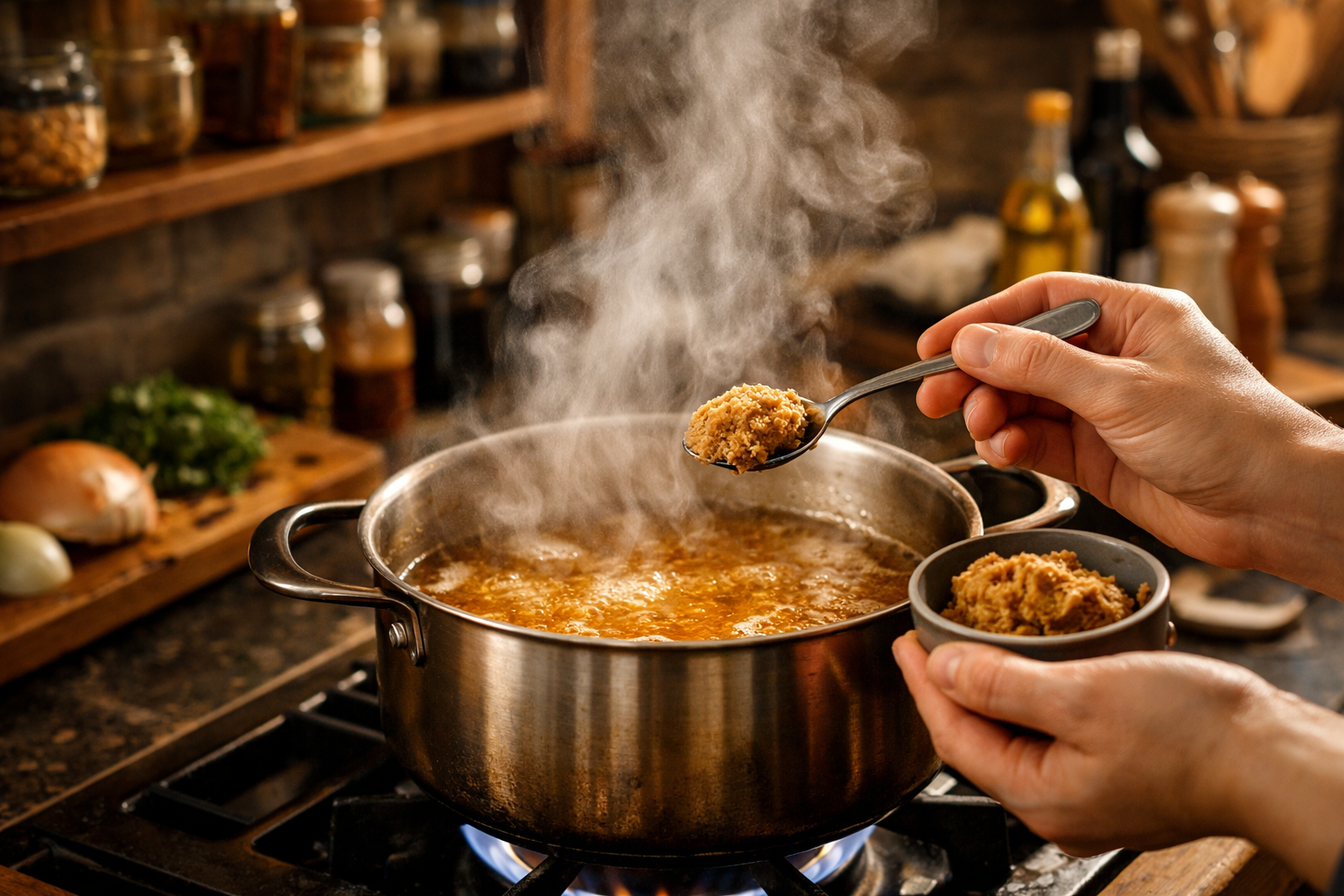
You don’t need to use all five at once — in fact, you shouldn’t. The goal is to pick one or two that complement the dish you’re already making.
Here’s a practical guide for common meal types:
For soups and stews:
- Add miso paste at the end for umami depth
- Stir in harissa for warmth and complexity
- A few drops of fish sauce can round out a broth-based soup
For stir-fries and grain bowls:
- Use coconut aminos as your base sauce
- Add fish sauce for extra savory depth
- Finish with smoked paprika if you want a smoky note
For roasted vegetables:
- Toss with smoked paprika and olive oil before roasting
- Drizzle with coconut aminos after roasting for a savory glaze
- Serve with a harissa yogurt dip on the side
For marinades:
- Combine miso, coconut aminos, and a touch of fish sauce for a deeply savory marinade for chicken or salmon
- Add harissa for heat
💡 Rule of thumb: Start with one new ingredient per meal. Taste as you go. These ingredients are concentrated, so a little patience and a small spoon will serve you better than guessing.
Where Can You Buy These Ingredients and What Do They Cost?
All five ingredients are widely available and reasonably priced. Most can be found at mid-to-large grocery stores, Asian grocery stores, specialty food retailers, and online.
| Ingredient | Typical Price Range | Where to Find It |
|---|---|---|
| Miso Paste | $4–$10 per tub | Grocery stores, Asian markets, online |
| Fish Sauce | $3–$8 per bottle | Grocery stores, Asian markets, online |
| Smoked Paprika | $3–$7 per tin | Grocery stores, spice shops, online |
| Coconut Aminos | $5–$12 per bottle | Health food stores, grocery stores, online |
| Harissa | $4–$10 per jar/tube | Grocery stores, Middle Eastern markets, online |
Storage notes:
- Miso paste keeps refrigerated for up to a year
- Fish sauce is shelf-stable and lasts for years
- Smoked paprika stays fresh in a cool, dark pantry for 1–2 years
- Coconut aminos can be stored at room temperature before opening, then refrigerated
- Harissa keeps refrigerated for 2–4 weeks after opening (cover with a thin layer of olive oil to extend shelf life)
FAQ
Q: Will fish sauce make my food taste fishy?
No — when used in small amounts and cooked into a dish, fish sauce adds savory depth without a noticeable fish flavor. The key is using no more than 1–2 teaspoons per dish serving four people.
Q: Is miso paste the same as miso soup?
No. Miso paste is the concentrated fermented ingredient. Miso soup is made by dissolving miso paste in dashi (a Japanese broth). You can use miso paste in many dishes beyond soup.
Q: Can I use coconut aminos if I’m not on a special diet?
Yes. Coconut aminos works for anyone who wants a slightly sweeter, less salty alternative to soy sauce. You don’t need to follow a specific diet to enjoy it.
Q: How spicy is harissa?
It depends on the brand. Mild harissas are closer to a roasted red pepper paste; hot versions can be quite spicy. Check the label, or start with a small amount and taste before adding more.
Q: Can I substitute smoked paprika for regular paprika?
Yes, in a 1:1 ratio. The dish will taste smokier, which is usually an improvement. Avoid using smoked paprika in dishes where a neutral paprika flavor is important, like certain Hungarian recipes.
Q: Are these ingredients suitable for vegetarians and vegans?
Miso paste, smoked paprika, coconut aminos, and harissa are all vegan. Fish sauce is not — it’s made from fish. Vegan fish sauce alternatives made from seaweed or mushrooms are available at health food stores.
Q: How long does miso paste last in the fridge?
Properly stored miso paste typically lasts 9–12 months in the refrigerator after opening. It may darken slightly over time but remains safe to use.
Q: Can I use all five ingredients in the same dish?
Technically yes, but it’s not recommended. Using multiple strong, fermented ingredients in one dish can make flavors muddy and overpowering. Choose one or two that complement the dish’s base flavors.
Q: What’s the easiest ingredient to start with?
Smoked paprika is the most beginner-friendly because it’s dry, easy to measure, and hard to overuse. Miso paste is a close second for anyone who cooks soups or sauces regularly.
Q: Do these ingredients work in baking?
Miso paste is the most useful in baking — it adds a subtle savory-sweet depth to cookies, caramel, and chocolate desserts. The others are generally better suited to savory cooking.
Conclusion
The fastest way to improve your cooking isn’t buying expensive equipment or mastering complicated techniques. It’s stocking your pantry with a handful of high-impact ingredients that do the heavy lifting for you.
Miso paste, fish sauce, smoked paprika, coconut aminos, and harissa are five of the most effective tools available to any home cook. Each one is affordable, shelf-stable, and versatile enough to use across dozens of different dishes. Together, they give you the ability to elevate your home-cooked meals in no time — without overhauling the way you cook.
Actionable next steps:
- Pick one ingredient from this list that matches the type of food you already cook most often
- Buy a small quantity and try it in a dish you make regularly
- Taste the difference before adding more — these ingredients are concentrated
- Once you’re comfortable with one, add a second to your pantry
- Over time, build a small collection of two or three that become your go-to flavor tools
You don’t need all five at once. Start with one. Cook with it a few times. That single change, used consistently, will make a noticeable difference in the quality of your meals.
References
[1] The Secret Ingredients That Will Elevate Your Cooking – https://grainofriceyeg.com/blog/the-secret-ingredients-that-will-elevate-your-cooking
[2] Mix Up The Everyday New Ways To Elevate At Home Cooking – https://www.globenewswire.com/news-release/2026/03/19/3259210/0/en/Mix-Up-the-Everyday-New-Ways-to-Elevate-At-Home-Cooking.html
Read next: Healthy Eating for People with Chronic Illnesses: A Practical 2026 Guide. A closer look at healthy eating with chronic illness.